Reputational Risks · 19 May 2026
GLP-1 Popularity Is Fuelling Unverified Peptide Promotion Online — and Raising Purity Concerns for Research Procurement
The clinical success of injectable GLP-1 drugs has triggered a surge of social media promotion for a much broader range of unverified peptides, with physicians warning that many products contain minimal active ingredient or outright contaminants. For research-procurement professionals, the same market dynamics create real supply-chain risks that standard vendor screening must address.
9 sources cited
Key takeaways
- Physicians are publicly warning that the commercial success of GLP-1 receptor agonists is driving a wave of unverified peptide promotion on social media, with some products found to contain very little active ingredient.
- Independent analyses have identified contamination, heavy-metal impurities, and misleading Certificates of Analysis as recurring problems in the direct-to-consumer peptide market.
- A newly discovered naturally occurring peptide called BRP, identified through AI-assisted screening at Stanford, has demonstrated potent appetite-suppressing activity in preclinical models — illustrating that the legitimate research pipeline for novel peptides remains active.
- CMS is expanding GLP-1 access under Medicare and Medicaid from mid-2026, which will further normalise peptide therapies in public discourse and likely intensify demand pressures on the supply chain.
- Research-procurement teams need documented purity controls — particularly HPLC confirmation and independent third-party CoA verification — to insulate legitimate programmes from the quality deterioration visible in consumer-facing channels.
Why GLP-1 success has become a quality-assurance problem
The remarkable clinical performance of semaglutide, tirzepatide, and the recently approved oral formulations has made the word "peptide" genuinely familiar to a lay audience for the first time. That familiarity is now being exploited commercially in ways that create identifiable risks for legitimate research procurement.
A report published on 18 May 2026 by Washington-based broadcaster 7News quotes Dr Julie Chen of Kaiser Permanente explaining that "the reason peptides have become really popular nowadays is because of the GLP-1 agonist medications that have become so effective and popular in treating diabetes as well as obesity." From TikTok to Instagram, influencers are marketing peptides as solutions for skin ageing, muscle growth, inflammation, and anti-ageing — an expansion of claimed indications that far outstrips the available clinical evidence.
The concern is not merely one of unsubstantiated claims. Dr Chen warned that independent analysis has found some products marketed as peptides to contain "only five percent peptides — the rest is just some sort of filler and can contain toxins." Injectable products are highlighted as especially problematic because impurities that would be benign if swallowed may carry serious systemic risk when introduced parenterally.
This is not a new phenomenon. Historical falsification analyses of consumer-facing peptide products have found purity figures as low as 5–75%, with heavy-metal concentrations exceeding safety thresholds by an order of magnitude in some samples. Certificates of Analysis from certain Chinese-sourced products have been found not to correspond to actual batch content, a problem that persists even as some suppliers invest in legitimate QA infrastructure.
The regulatory picture in mid-2026
The regulatory environment is in transition, which itself adds complexity. In late February 2026, HHS Secretary Robert F. Kennedy Jr. publicly stated his expectation that the FDA would move to make approximately 14 peptides more accessible through compounding channels, citing concerns that existing restrictions had fuelled unregulated procurement.
On the same day as the announcement, the FDA republished its interim 503A Bulks List, indicating its intent to remove twelve peptide bulk drug substances from Category 2 within seven calendar days. Critically, that announcement did not confirm placement on the Category 1 "May Compound" list, leaving those substances in a regulatory grey zone pending the FDA Pharmacy Compounding Advisory Committee review scheduled for 23–24 July 2026.
An FDA advisory committee meeting in July is expected to consider the regulation and oversight of these peptides, but prior PCAC meetings have not always produced favourable recommendations for compounding access. The 2024 advisory committee meetings resulted in the PCAC voting against inclusion of all previous peptides under review, finding that they posed unacceptable safety risks for compounding. The July 2026 meeting may produce a different outcome under the current political environment, but this remains speculative until formal guidance is published.
In the UK, the MHRA framework is unchanged: supply for research-use only, with no therapeutic claims, remains lawful under existing medicines legislation. MHRA enforcement activity against mis-marketed products is, however, increasing, making accurate labelling and documented research-use disclaimers operationally important for UK suppliers and their customers.
New pipeline research: a legitimate reason for interest
Amid the noise, there is genuine science. Scientists at Stanford Medicine have identified a naturally occurring peptide of just 12 amino acids, named BRP (BRINP2-related-peptide), which produced an appetite-suppressing response approximately tenfold stronger than GLP-1 in laboratory neural cell assays. The molecule was identified using an AI tool called Peptide Predictor, which scanned all 20,000 human protein-coding genes to identify candidate prohormone cleavage products.
In animal studies, BRP reduced food intake and body weight while avoiding several side effects commonly associated with semaglutide, including nausea and muscle loss. The work is at a very early preclinical stage — it has not been studied in humans — but it illustrates that AI-assisted identification of endogenous peptides is an active and credible area of discovery. Research teams with access to verified reference compounds will need to distinguish emerging legitimate targets from the wider consumer-market proliferation.
The access expansion context
One structural reason the peptide supply chain faces intensifying demand is the rapid expansion of GLP-1 prescribing at the population level. The Centers for Medicare & Medicaid Services announced on 6 May 2026 that eligible Medicare Part D beneficiaries will gain access to certain GLP-1 medications for $50 per month from 1 July 2026 through to 31 December 2027, under the Medicare GLP-1 Bridge demonstration programme.
Separately, Medicaid coverage under the BALANCE model launched as early as May 2026, expanding the insured population who can access these compounds. Greater mainstream familiarity with GLP-1 peptides at the prescribing level is likely to sustain public appetite for adjacent unverified peptides marketed through social channels — amplifying the supply-chain pressures described above.
Practical guidance for research-procurement teams
Several measures remain the most reliable defence against the quality problems now prominently associated with the consumer peptide market:
Third-party CoA verification. Request that Certificates of Analysis are independently verified against the batch being supplied, not simply reproduced from a manufacturer template. HPLC purity traces should accompany every order.
Mass spectrometry confirmation. For peptides where sequence fidelity is critical to experimental validity, LC-MS/MS confirmation of molecular identity — not just purity percentage — should be a contractual requirement. This is particularly important for longer-chain peptides where synthesis errors produce near-isomers with distinct biological profiles.
Supplier audits. The FDA's primary concerns centre on whether compounded peptides meet quality standards and whether safety and efficacy can be maintained outside formal approval pathways. Applying a similar audit standard to research-use suppliers — reviewing their in-house QA infrastructure, not just the documentation they issue — is sound procurement practice.
Regulatory status monitoring. With the July 2026 PCAC meeting likely to shift the Category 1/2 landscape for several peptides, procurement teams should track FDA guidance updates and adjust approved-vendor lists accordingly. Any reclassification affects not just legality in the US compounding market but signals broader regulatory attitudes that may anticipate MHRA posture.
Physicians and regulatory experts are consistent on one point: the social media-driven expansion of peptide use has made the "research-use only" designation more important to enforce rigorously, not less — because blurred boundaries expose legitimate suppliers and their clients to reputational and regulatory risk alongside the more immediate physical risks facing uninformed end users.
Sources: 7News (18 May 2026) · ScienceDaily / Stanford Medicine — BRP peptide (April 2026) · Frier Levitt — FDA 503A bulks update (April 2026) · Amanecia Health — PCAC July 2026 schedule · Elite NP — Category 2 reclassification overview · AHA News — CMS Medicare GLP-1 Bridge (May 2026) · CMS BALANCE Model · PeptideLaws.com — FDA regulatory framework 2026 · BSR Intelligence — March–May 2026 briefing
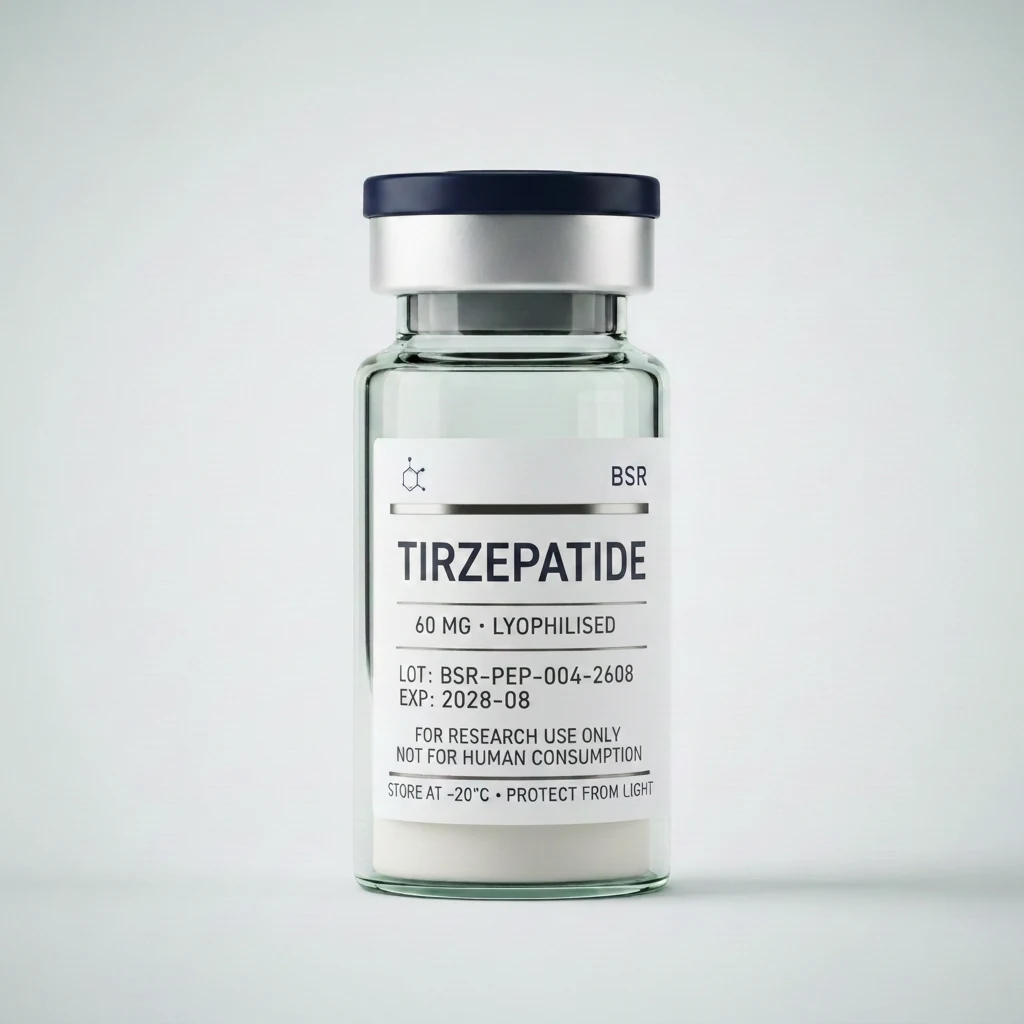
Research-grade material, HPLC verified, certificate of analysis with every order.
The week's Intelligence in one email, every Friday morning.
Regulatory moves, trial readouts, supply-chain news. No product pitches. Unsubscribe in one click.
More in Reputational Risks
FDA's September 2026 Peptide Vendor Sweep: Five Warning Letters, the "Research-Use Only" Labelling Test, and What It Means for Legitimate Suppliers
22 Sep 2026
Three Texas Recalls in Six Weeks: How Dietary-Grade Glutathione API Triggered a Compounding Safety Crisis — and What State Boards Are Now Saying About Research-Grade Peptides
17 Sep 2026
FDA's September 2026 Peptide Vendor Sweep: Five Warning Letters, One Clear Doctrine on "Research Use Only" Claims
11 Sep 2026