Healing & repair
Compounds studied for cytoprotective and tissue-repair activity in cell-based and animal models.
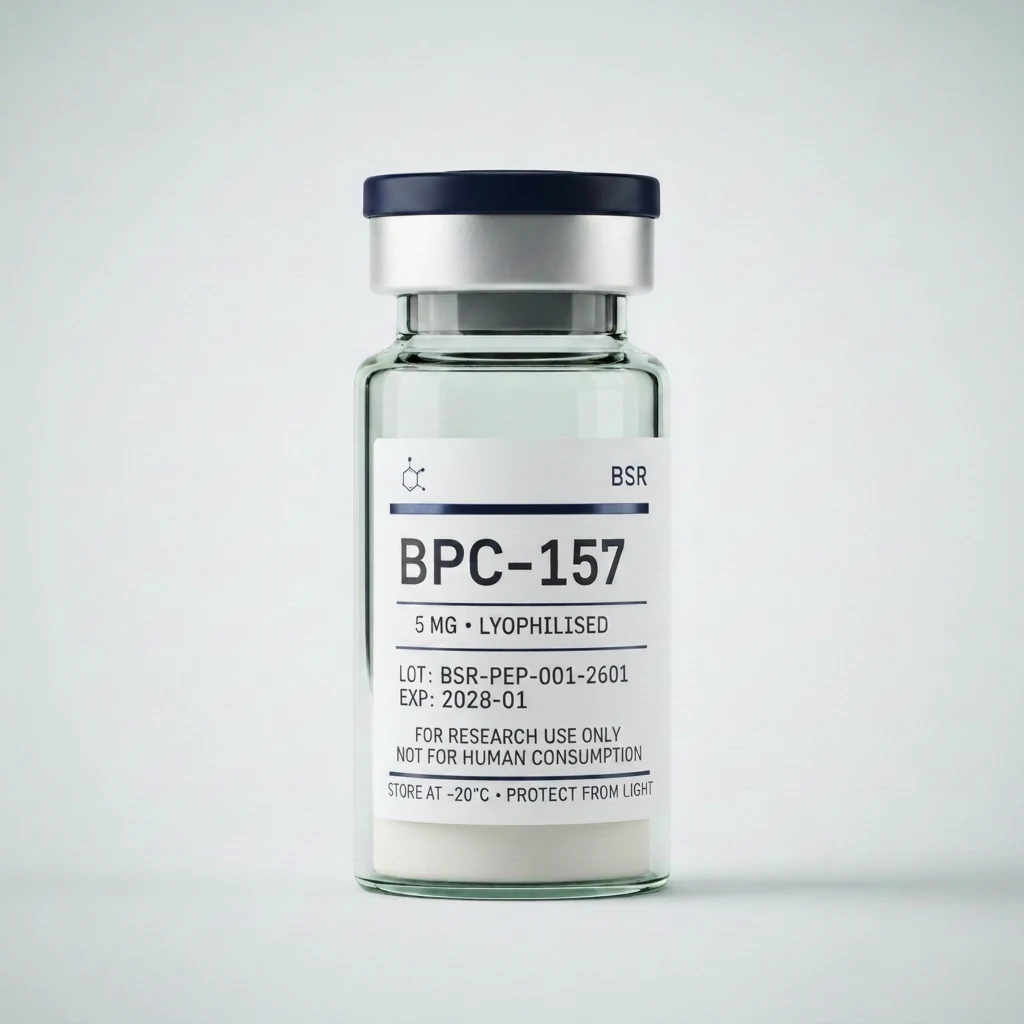
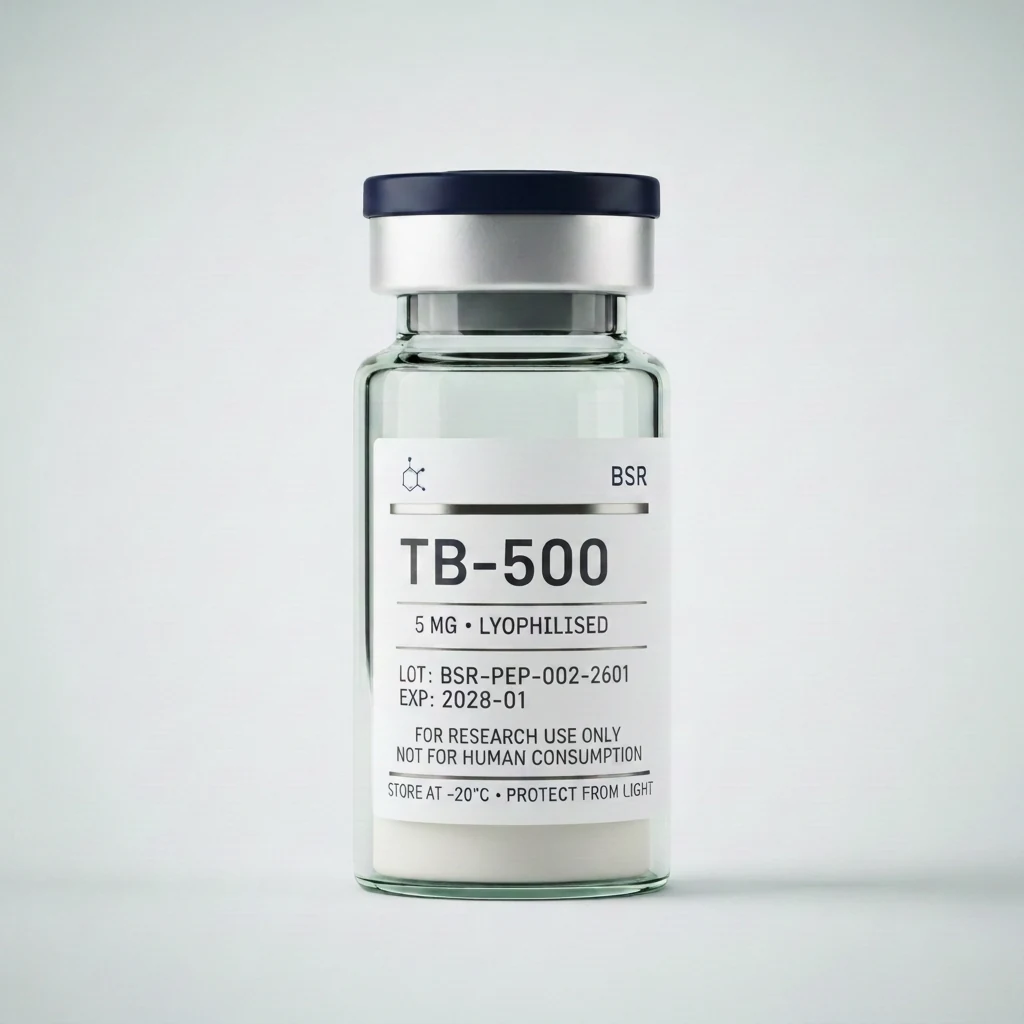
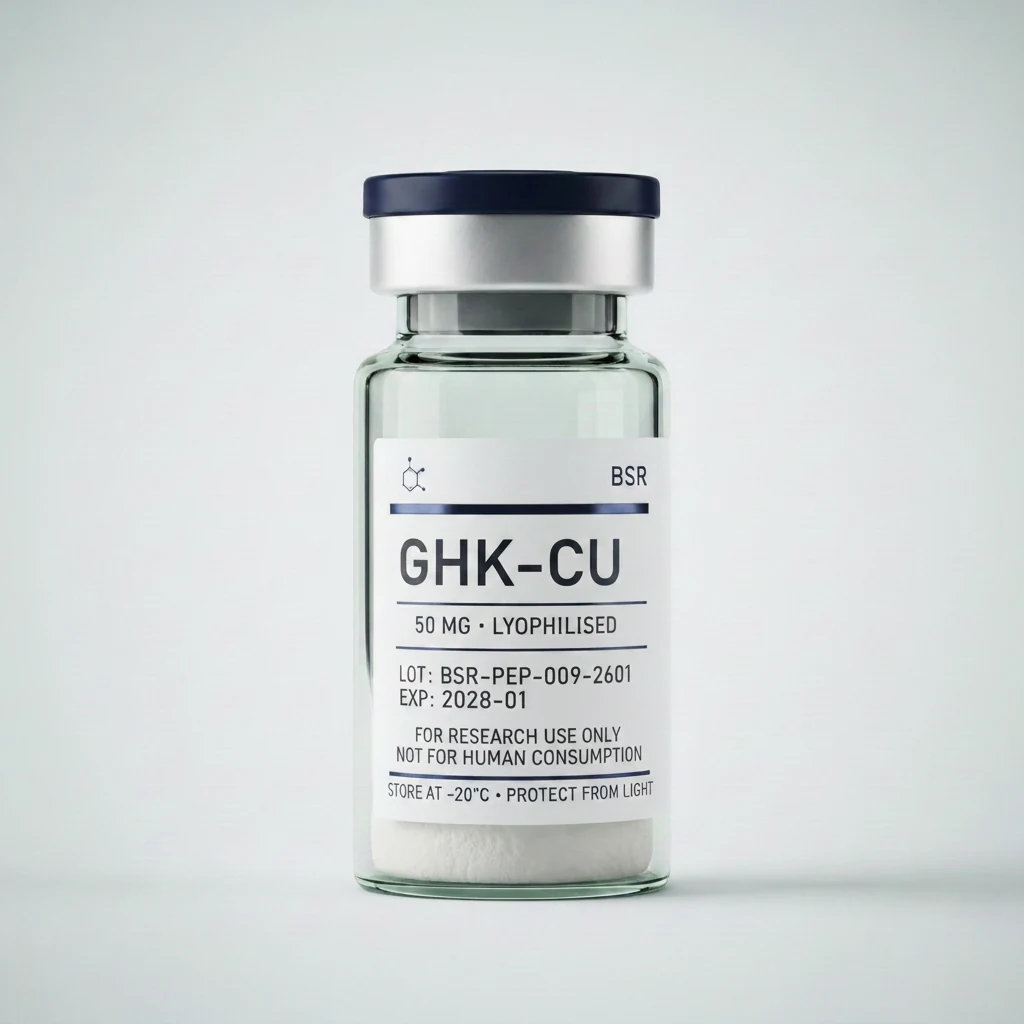
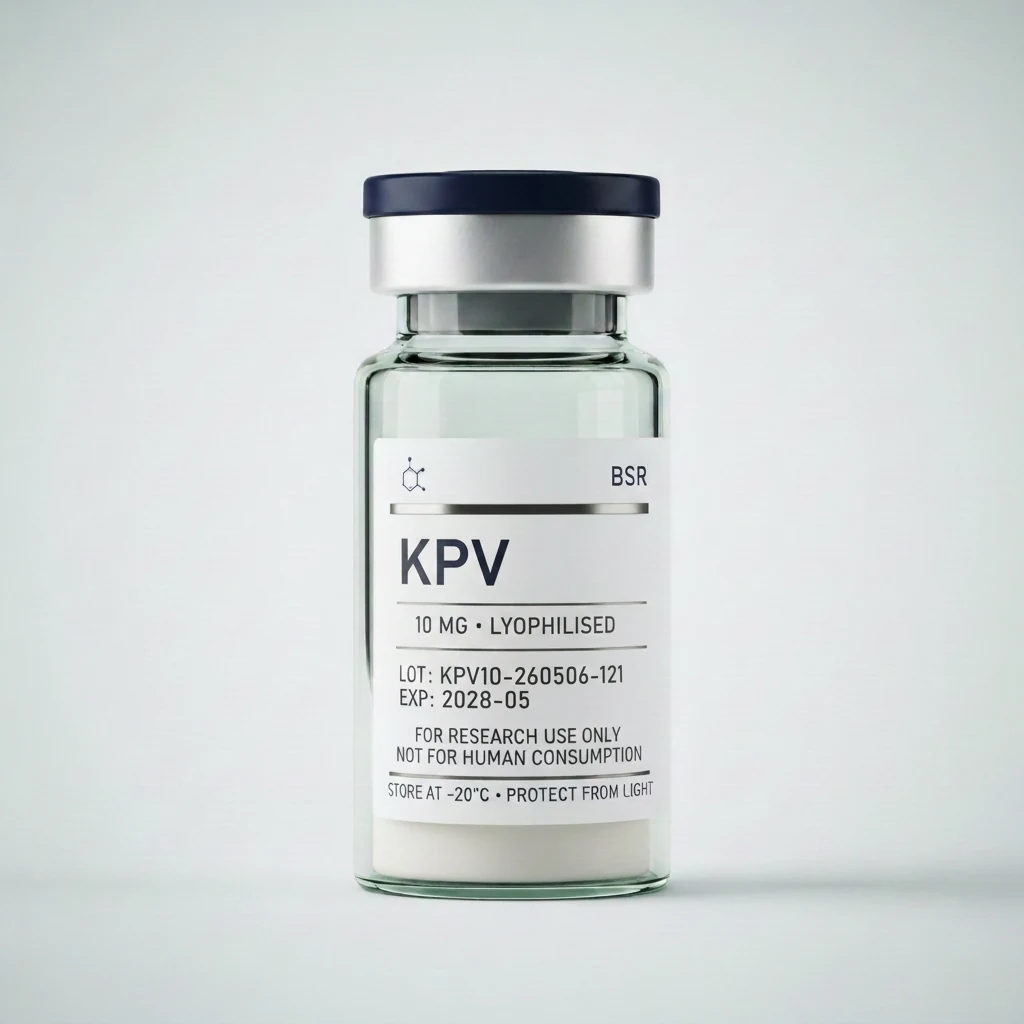
This group covers the most heavily studied research peptides in the catalogue. BPC-157, a pentadecapeptide from gastric juice, and TB-500, the active fragment of thymosin beta-4, both appear across wound-healing and angiogenesis literature. GHK-Cu is a copper-binding tripeptide investigated for its role in extracellular matrix remodelling — it is supplied as a blue lyophilised powder, which is the copper complex rather than a contaminant. KPV, the C-terminal tripeptide of alpha-MSH, is the smallest compound in the catalogue and is studied for anti-inflammatory activity in mucosal and intestinal models.
Choosing a size. Vial sizes exist because reconstitution volume drives how long a vial stays viable once opened. Where a protocol calls for repeated small volumes, several smaller vials will outlast one large one.