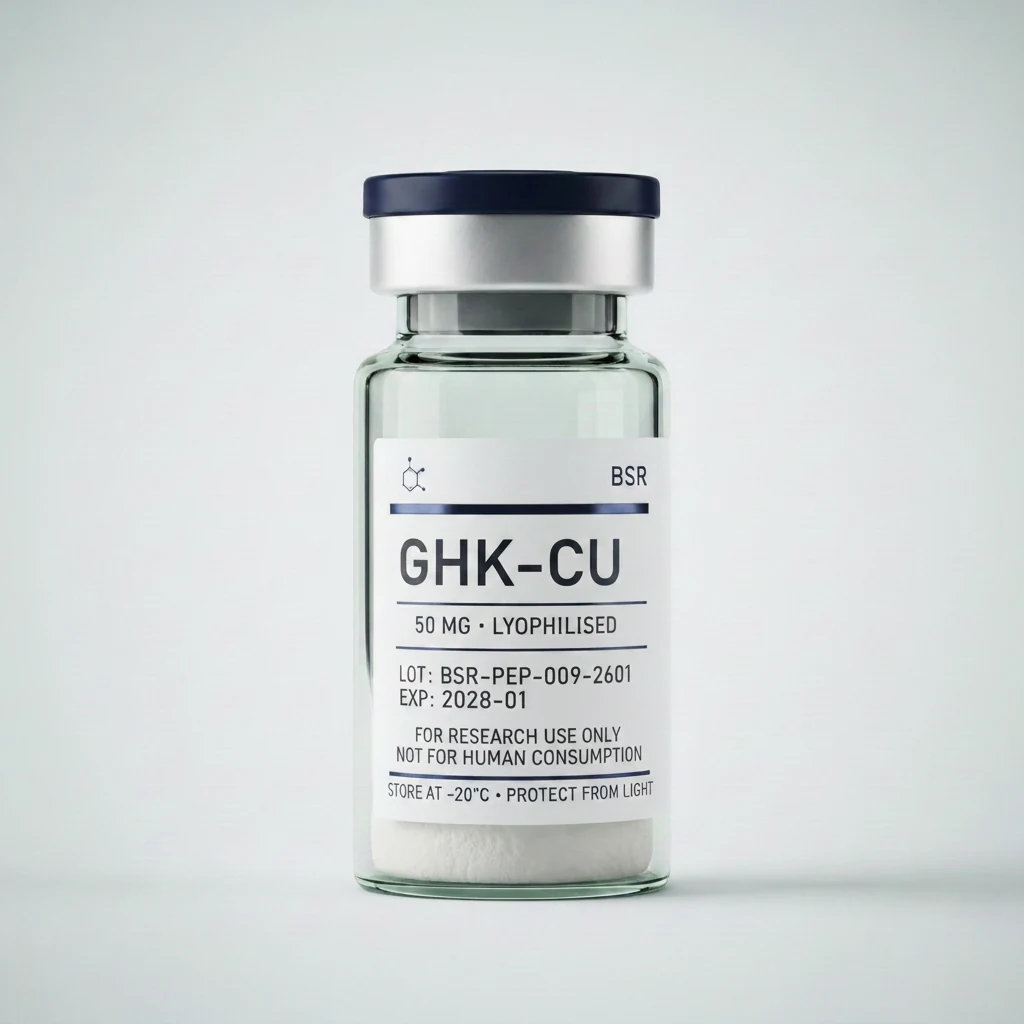
A naturally occurring tripeptide-copper complex. Extensive published literature covers its role in wound healing, collagen synthesis modulation, and antioxidant activity in dermal fibroblast models.
Add sterile bacteriostatic water to the vial to achieve your target working concentration.
Storage conditions: -20°C, dry
Form: Lyophilised
Solubility: Water
Current batch: CU100-260429-078
HPLC purity: 99.51%
MS verified: Yes
Expiry: Apr 2028
The certificate of analysis for this batch is issued with your order.
C₁₄H₂₄N₆O₄ · 340.4 Da
GHK-Cu Copper Peptide (GHK-Cu)
out of stock
Free shipping on orders over £75
Working out volumes? Peptide calculator · Reconstitution guide
CU100-260429-078 · HPLC 99.51%
The batch code matches the vial you will receive. Full analysis — purity, mass spectrometry, residual solvents and microbial limits — is issued with your order.
| Content | 50mg |
| Purity | 99.51% HPLC |
| Form | Lyophilised |
| Storage | -20°C, dry |
| Sequence | Gly-His-Lys |
| Solubility | Water |
Same-day dispatch — order within
Same-day dispatch before 3pm, Mon–Fri. Next dispatch .
via Royal Mail Tracked 24
GHK-Cu
50mg · £27.99
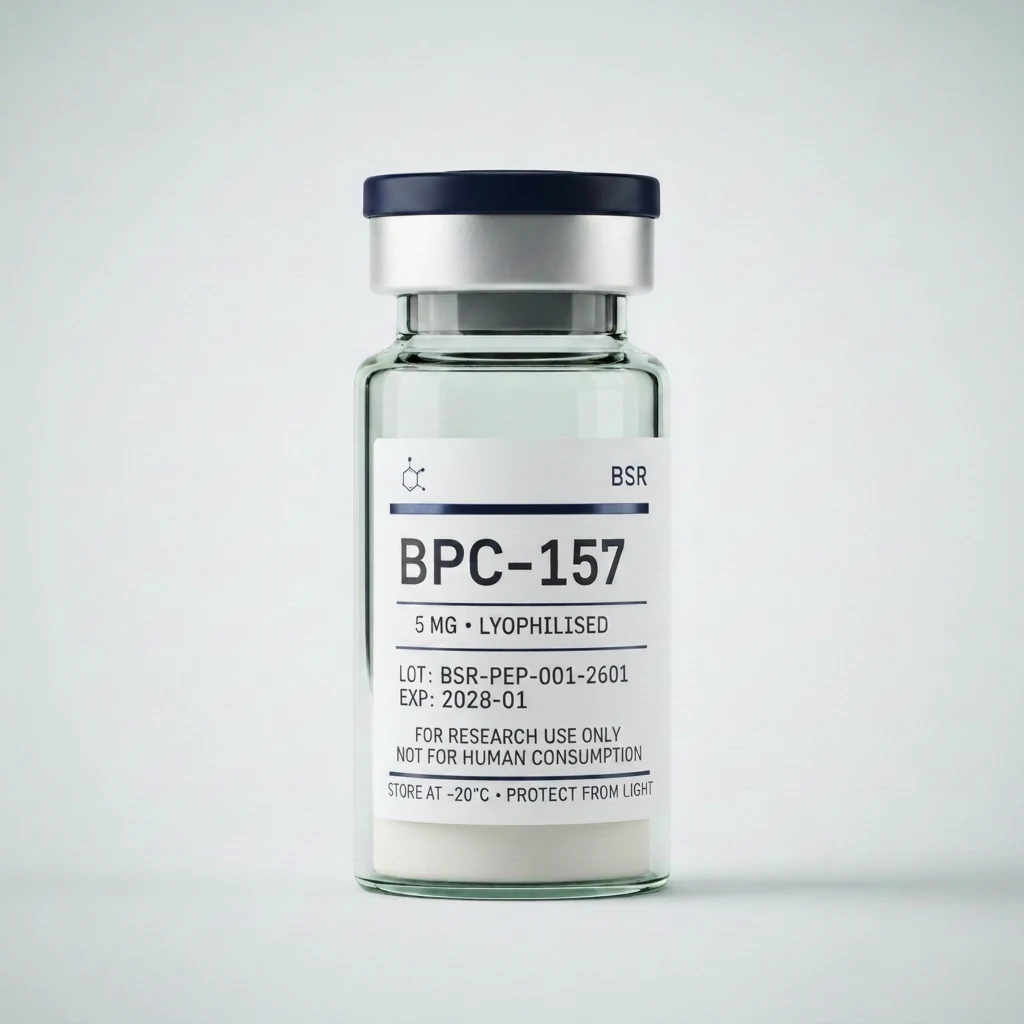
GHK-Cu is the copper complex of a naturally occurring human tripeptide, glycyl-L-histidyl-L-lysine. It is supplied as a blue lyophilised powder: the colour is the copper complex itself and is expected, not a sign of contamination.
The research literature on GHK goes back decades. Pickart reviewed its role in tissue remodelling in the Journal of Biomaterials Science in 2008, and Siméon and colleagues examined its effect on matrix metalloproteinase expression in wound models in the Journal of Investigative Dermatology.
Mechanism in the literature
Published work centres on extracellular matrix remodelling — the modulation of matrix metalloproteinases and their inhibitors during the phases of wound repair — and on the peptide's copper-binding capacity, which is treated as integral to its activity rather than incidental to it.
The evidence base is drawn from cell culture and animal wound models. GHK-Cu holds no marketing authorisation as a medicine, and material supplied here is for laboratory research only.
Handling and reconstitution
Supplied lyophilised at 50mg, 100mg and 200mg. Reconstitute as for other lyophilised peptides — room temperature first, diluent down the vial wall, swirl rather than shake. The solution retains the blue colour of the copper complex.
Storage and stability
Stored at -20°C, protected from light, two-year retest date on the certificate. Reconstituted material is refrigerated and used within a short window.
Common questions
Why is GHK-Cu blue?
The blue colour is the copper complex. GHK-Cu is glycyl-L-histidyl-L-lysine bound to copper, and the certificate specifies a blue lyophilised powder as the expected appearance. A white GHK powder would suggest the copper complex is absent.
What purity is BSR's GHK-Cu?
The current batch tests at 99.51% by HPLC with identity confirmed by LC-MS at 402.2 Da against a theoretical 401.90. The certificate is issued with your order.
Which vial size should I choose?
GHK-Cu is supplied in larger quantities than most peptides here — 50mg, 100mg and 200mg — because the concentrations used in the published work are correspondingly higher. The choice follows your protocol volumes rather than a cost calculation.
- Pickart L. (2008) — The human tri-peptide GHK and tissue remodeling, Journal of Biomaterials Science Polymer Edition
- Siméon A. et al. (1999) — Expression and activation of matrix metalloproteinases in wounds: modulation by GHK-Cu2+, Journal of Investigative Dermatology
Cited as research context. BSR has no involvement in these studies and they do not constitute claims about this product.
No reviews of this compound yet. Reviews come only from customers who have bought it.
Sign in to review a compound you have bought.