Pharma & GLP-1 · 09 Jun 2026
ADA 86th Scientific Sessions: What the June 2026 Phase 3 Wave Means for Peptide and GLP-1 Research Procurement
The American Diabetes Association's 86th Scientific Sessions closed in New Orleans on 8 June 2026 with pivotal Phase 3 data for retatrutide, orforglipron, and CagriSema, alongside a formal revision to the ADA Standards of Care that repositions cardiovascular and kidney risk reduction as co-primary treatment goals. The meeting reshapes the near-term clinical and procurement landscape for GLP-1 and next-generation peptide-based therapeutics.
12 sources cited
Key takeaways
- The ADA's 86th Scientific Sessions (5–8 June 2026, New Orleans) produced pivotal Phase 3 data for retatrutide, orforglipron, and CagriSema, presented simultaneously in peer-reviewed journals.
- The 2026 ADA Standards of Care formally elevated cardiovascular and kidney risk reduction to co-primary treatment goals alongside glycaemic control, ending decades in which HbA1c was the dominant benchmark.
- Retatrutide's TRIUMPH-1 trial confirmed average weight loss of 28.3% at 80 weeks, alongside signals across sleep apnoea, osteoarthritis, and type 2 diabetes.
- Orforglipron's ACHIEVE-3 head-to-head demonstrated superiority over oral semaglutide in both A1c reduction and weight loss at 52 weeks.
- A preclinical peptide tetra-agonist (PTT-A), targeting four receptors simultaneously, outperformed tirzepatide on fat mass reduction while preserving lean mass — a finding with implications for next-generation peptide design.
- For procurement professionals, the meeting signals an accelerating pipeline requiring broader analytical and reference standard provision across novel peptide architectures.
Meeting context
The American Diabetes Association's 86th Scientific Sessions closed on 8 June in New Orleans after four days of late-breaking Phase 3 data that, according to reporting from TechTimes, "directly change what clinicians should demand of diabetes treatment." The meeting featured full readouts from five separate drug programmes and the simultaneous publication of key results in peer-reviewed journals, making it the most data-dense ADA meeting in recent years for the incretin class.
For UK research-procurement professionals, the sessions carry direct relevance: the compounds debated in New Orleans drive global demand for reference standards, analytical reagents, and research-grade peptide materials used in assay development, biomarker validation, and pharmacokinetic work.
Standards of Care revision: cardiorenal goals elevated
The most structurally significant development at the meeting was not a clinical trial result but a policy document. The 2026 ADA Standards of Care, released at the meeting, formally elevated cardiovascular and kidney risk reduction to a co-primary treatment goal alongside glycaemic control — ending the long-standing convention in which HbA1c served as the dominant measure of therapeutic success.
According to Pharmacy Times coverage of the meeting, GLP-1 receptor agonists and SGLT2 inhibitors are now positioned as "core cardiorenal protective therapies irrespective of A1C." The updated guidance recommends that, for patients with symptomatic heart failure with an ejection fraction of 40% or greater, a GLP-1 receptor agonist should be added alongside SGLT2 inhibitors, ACE inhibitors or ARBs, and finerenone, according to touchCARDIO.
The ADA Standards of Care published in Diabetes Care frame treatment with SGLT inhibitors and GLP-1 receptor agonists as "a fundamental element of risk reduction and a core pharmacological strategy" for improving cardiovascular and kidney outcomes in type 2 diabetes — language materially stronger than prior editions. This formalises the direction that prescribers and payers in the UK and EU have been moving since semaglutide received EMA and MHRA approvals for chronic kidney disease and metabolic-dysfunction-associated steatohepatitis (MASH).
Retatrutide: TRIUMPH-1 and TRANSCEND-T2D-1 full data
The retatrutide symposium on 6 June drew the largest audience of the week, according to TechTimes. Eli Lilly confirmed that TRIUMPH-1, the pivotal Phase 3 obesity trial, enrolled 2,339 adults and that retatrutide delivered average weight loss of 28.3% (approximately 70.3 lbs) at 80 weeks — reinforcing top-line data released in late 2025.
The TRANSCEND-T2D-1 results, simultaneously published in The Lancet, showed retatrutide lowered HbA1c by up to an average of 2.0% and body weight by up to an average of 16.8% at 40 weeks in adults with type 2 diabetes, according to Lilly's press release. The drug additionally produced improvements across knee osteoarthritis pain and moderate-to-severe obstructive sleep apnoea — a complication profile with implications for label breadth at NDA submission.
The safety narrative was largely consistent with the incretin class, though TechTimes noted that urinary tract infections appeared in 7.5–8.8% of retatrutide participants versus 5.3% on placebo in TRIUMPH-1, prompting investigators to flag the signal for further evaluation ahead of regulatory submission. Retatrutide's triple mechanism — activating GIP, GLP-1, and glucagon receptors — places it in a pharmacologically distinct category from approved dual agonists such as tirzepatide, and its peptide structure means it requires injectable delivery.
Orforglipron: ACHIEVE series confirms superiority over oral semaglutide
Eli Lilly's ACHIEVE programme presented three readouts at the Monday symposium. The ACHIEVE-3 trial showed orforglipron (Foundayo) was superior to oral semaglutide in type 2 diabetes, delivering better A1c reduction and 73.6% greater relative weight loss at 52 weeks. ACHIEVE-2 demonstrated orforglipron lowered HbA1c by up to 1.7% compared with 0.8% for dapagliflozin at 40 weeks. ACHIEVE-5, enrolling adults with a mean diabetes duration of 15 years who were already on titrated insulin glargine, showed orforglipron added to basal insulin reduced HbA1c by 1.54–2.05% versus 0.77% for placebo.
Orforglipron is a synthetic small molecule, not a peptide. As TechTimes noted, it "binds inside the GLP-1 receptor's transmembrane domain rather than the extracellular pocket where peptide agonists bind," and does not require injection, fasting, or an absorption enhancer. Approved in April 2026 for weight management under the brand name Foundayo, it launched at $149 per month for self-pay patients in the US market. This structural difference from peptide-based GLP-1s means it has no direct research-use analogue; however, competitive assay development and mechanistic research programmes will require reference peptides covering the receptor-binding domains against which orforglipron is benchmarked.
CagriSema: REIMAGINE trials debut
Novo Nordisk presented the first detailed results of the REIMAGINE trials of CagriSema — the fixed-ratio combination of the amylin analogue cagrilintide and semaglutide — at the meeting. HCPLive reported that the REIMAGINE programme presented data across monotherapy, component comparison, and basal-insulin add-on strategies, informing positioning in both type 2 diabetes and obesity indications. CagriSema was submitted to the FDA for weight loss in late 2025, according to ADA Meeting News.
Prior comparison data showed CagriSema outperformed semaglutide alone for glucose and weight loss in people with type 2 diabetes, though it underperformed against tirzepatide for weight loss, according to Medscape. The amylin-component cagrilintide is itself a peptide analogue, and its combination with a GLP-1 receptor agonist represents an increasingly active area of research into synergistic peptide mechanisms.
Preclinical horizon: peptide tetra-agonism and lean mass preservation
Beyond approved and near-approval agents, a session at the meeting presented preclinical data with direct relevance to next-generation peptide design. Medscape reported that researchers at Pep2Tango Therapeutics developed PTT-A, a novel long-acting peptide tetra-agonist targeting four receptors — GLP-1, GIP, amylin, and calcitonin — and compared it against tirzepatide and CagriSema in diet-induced obese rats over 21 days.
At the higher dose, PTT-A produced a 19% reduction in body weight versus the vehicle, compared with 12% for both tirzepatide and CagriSema. More notably, PTT-A "preserved muscle mass" while both tirzepatide and CagriSema showed "significant skeletal muscle loss on carcass analysis and MRI." PTT-A also demonstrated superior improvements in glucose, insulin, and triglyceride levels.
This lean mass finding directly addresses what TechTimes described as "one of the industry's key unsolved challenges" — the observation that roughly 20–40% of total weight lost across the GLP-1 class consists of lean, rather than fat, mass. Clarivate analysts have identified muscle preservation as a critical differentiator for next-generation obesity drugs.
GLP-1 litigation and adherence context
The meeting's clinical optimism sat alongside structural challenges for the drug class. TechTimes noted that more than 4,400 lawsuits have been filed against Eli Lilly and Novo Nordisk in multidistrict litigation alleging failure to warn about gastroparesis and vision loss linked to semaglutide and tirzepatide products. Neither orforglipron nor retatrutide is named in that litigation.
Separately, AJMC noted that real-world GLP-1 persistence remains constrained, with adherence declining from 65% at 120 days to 34% at one year, with out-of-pocket cost driving discontinuation. These adherence data inform the research rationale for peptide combinations and long-acting formats designed to reduce injection burden.
Implications for research procurement
The ADA 2026 meeting establishes a pipeline direction with several practical consequences for UK research laboratories:
Peptide reference standards. Retatrutide's NDA pathway and CagriSema's pending FDA review will generate demand for high-purity reference-grade peptides corresponding to their active sequences, cagrilintide (a 14-amino-acid amylin analogue), and related analogues for pharmacokinetic assay validation.
Lean mass assay development. The emerging interest in muscle preservation — driven by the PTT-A preclinical data and industry-wide pressure on lean mass outcomes — creates demand for myokine and satellite-cell markers as secondary endpoints, and for peptide standards against which preservation claims are tested.
Cardiovascular biomarker work. The ADA Standards of Care revision to a cardiorenal co-primary framework will expand the set of cardiovascular biomarkers included in GLP-1 outcomes trials, requiring additional validated reagents.
Competitor binding assays. Orforglipron's approval as a non-peptide GLP-1 agonist with a transmembrane binding mode means that receptor pharmacology laboratories will require peptide standards for competitive displacement assays, even though orforglipron itself is not peptide-derived.
Laboratories sourcing GLP-1 peptide analogues for research use should note that the FDA's proposed permanent exclusion of semaglutide, tirzepatide, and liraglutide from the 503B outsourcing bulks list — with a public comment deadline of 29 June 2026 — does not affect research-use-only procurement, which remains governed by separate chemical supply frameworks in the UK under MHRA oversight.
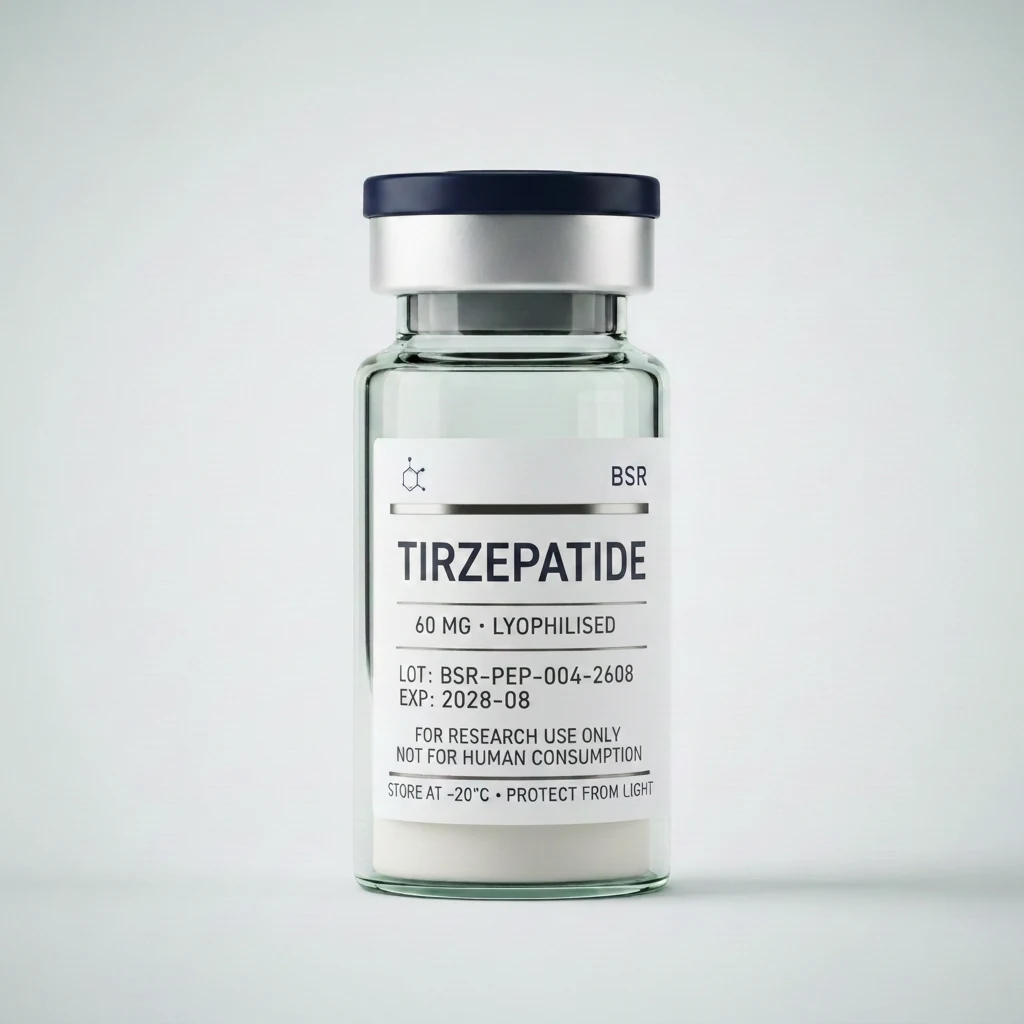
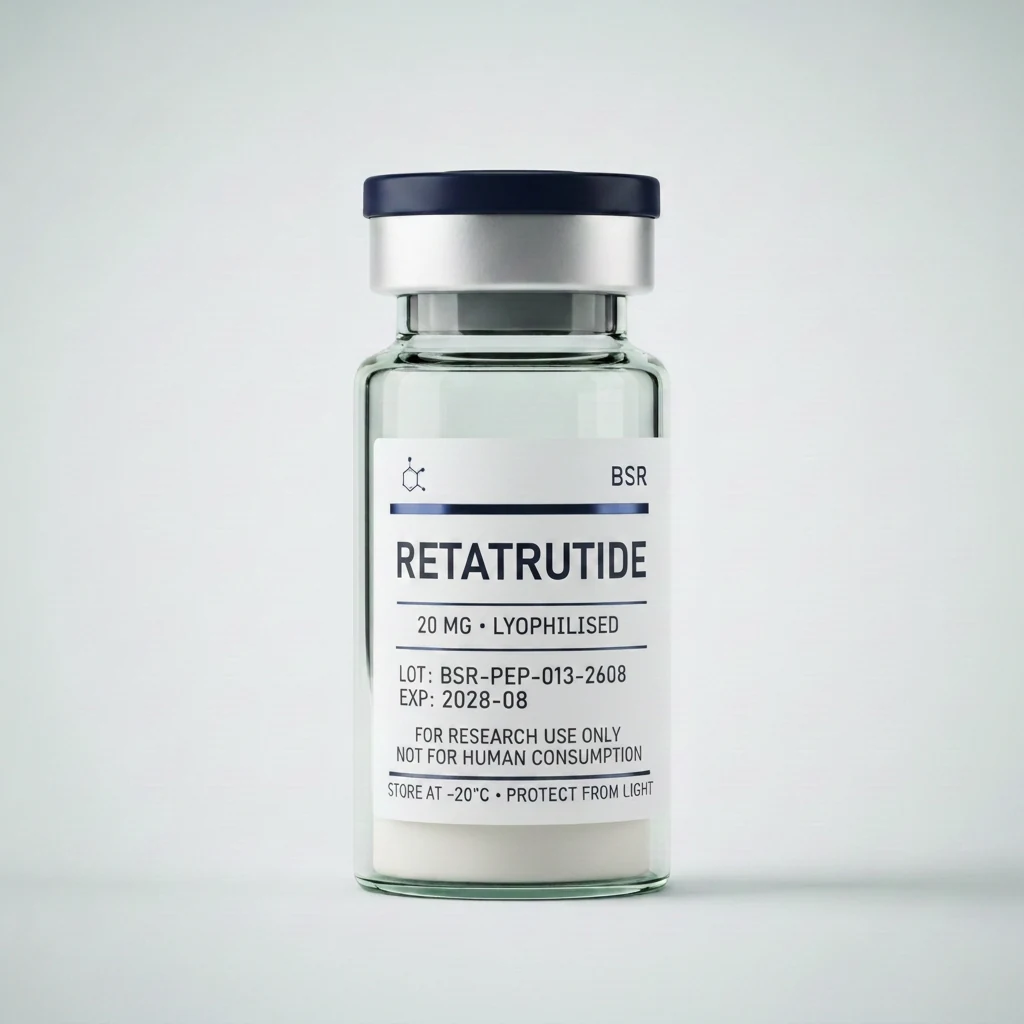
Research-grade material, HPLC verified, certificate of analysis with every order.
The week's Intelligence in one email, every Friday morning.
Regulatory moves, trial readouts, supply-chain news. No product pitches. Unsubscribe in one click.
More in Pharma & GLP-1
Novo Nordisk Bets €1.165 Billion on Atomic-Layer Deposition to Convert Semaglutide Into a Once-Quarterly Injectable
08 Oct 2026
Lilly at EASD 2026: Retatrutide's TRIUMPH-2 Phase 3 Readout, Foundayo's Lancet Cardiovascular Data, and What eloraTZP Signals for the Next Generation of Incretin Combinations
01 Oct 2026
Novo Nordisk Licenses Hengrui's Once-Weekly Oral GLP-1/GIP Dual Agonist HRS-1596 in a Deal Worth Up to $2.6 Billion
30 Sep 2026