Research Pipeline · 08 Jun 2026
CJC-1295 and Ipamorelin: The GH Secretagogue Stack at the Centre of the 2026 Compounding Review
CJC-1295 and Ipamorelin are the most widely referenced growth hormone secretagogue combination in peptide research, but their regulatory status has been in flux for nearly three years. With their Category 2 nominations withdrawn as of April 2026 and the PCAC review scheduled for July 23–24, procurement teams need a clear picture of the pharmacology, the evidence landscape, and what the regulatory calendar means in practice.
9 sources cited
Key takeaways
- CJC-1295 and Ipamorelin operate through complementary but distinct pathways on the growth hormone axis, making the combination a dual-receptor model of particular interest in GH physiology research.
- Neither compound is FDA-approved; both were placed on the FDA's Category 2 restricted compounding list in October 2023 and remained effectively off-limits to licensed pharmacies until late April 2026.
- Following the withdrawal of their Category 2 nominations, both peptides were formally removed from that list by approximately 23 April 2026 — but they have not yet been added to Category 1, leaving them in a regulatory grey area.
- The FDA's Pharmacy Compounding Advisory Committee (PCAC) is scheduled to meet on 23–24 July 2026 at the agency's White Oak Campus to consider seven peptides for inclusion on the Section 503A Bulk Drug Substances list; CJC-1295 and Ipamorelin are among the compounds whose status is under active review.
- In the UK, neither compound holds an MHRA marketing authorisation. Their use in British research settings falls under the "research use only" (RUO) framework, and procurement teams should conduct ongoing supplier due diligence.
What CJC-1295 and Ipamorelin are
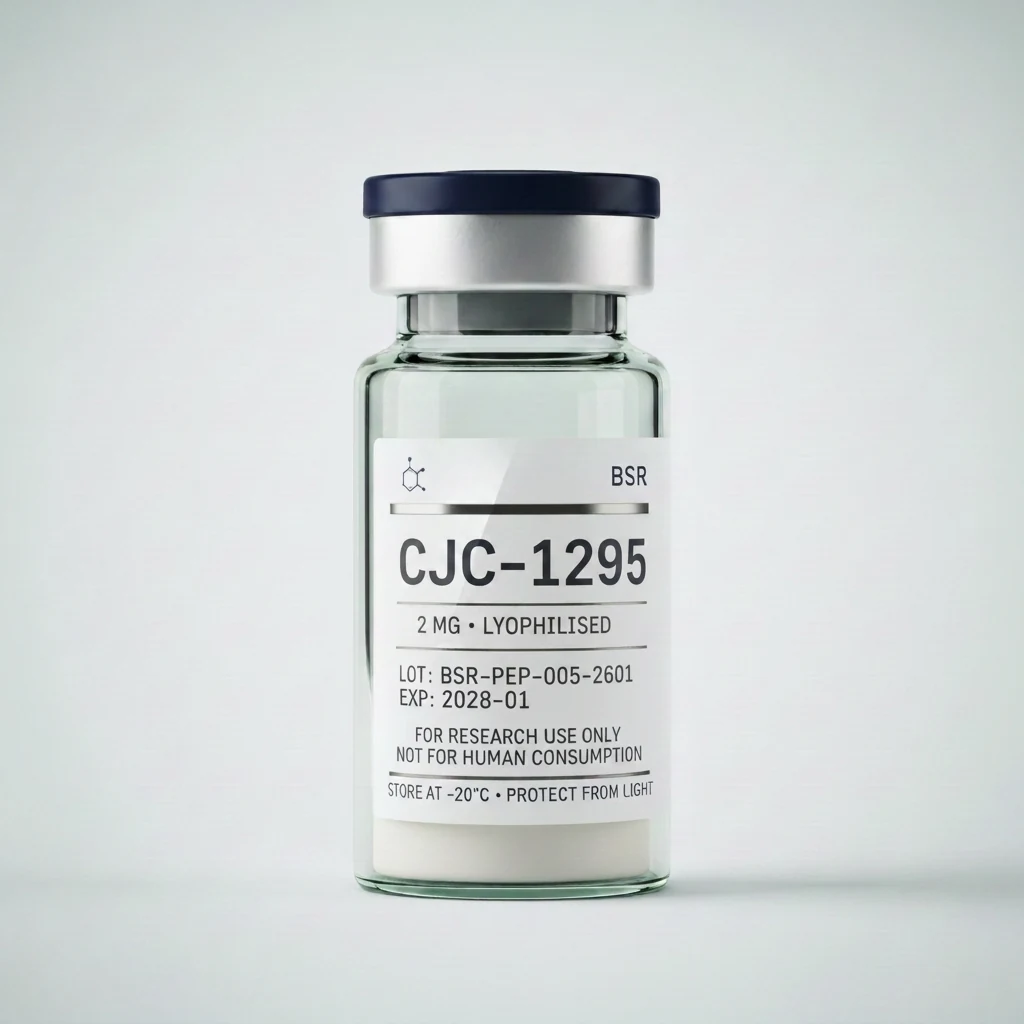
CJC-1295 is a synthetic analogue of growth hormone-releasing hormone (GHRH), the endogenous 44-amino-acid neuropeptide produced in the hypothalamus that drives growth hormone (GH) synthesis and secretion in the anterior pituitary. Source Peptides notes that CJC-1295 pairs a GHRH analogue with a selective ghrelin receptor agonist, producing a dual-receptor model for studying amplified, physiologically patterned GH pulses in preclinical settings.
The compound exists in two principal forms. CJC-1295 with DAC (drug affinity complex) incorporates an albumin-binding chemistry that, according to published pharmacokinetic data, extends the half-life to approximately six to eight days, producing near-continuous GHRH receptor stimulation. CJC-1295 without DAC — also referred to as Modified GRF (1-29) — retains the DPP-IV resistant backbone without that albumin chemistry, yielding a half-life of approximately 30 minutes and discrete, pulsatile GH release that more closely mirrors endogenous rhythms. Spartan Peptides notes that most stacking research uses the No DAC form precisely because pulsatile release is considered the more physiologically authentic pattern.
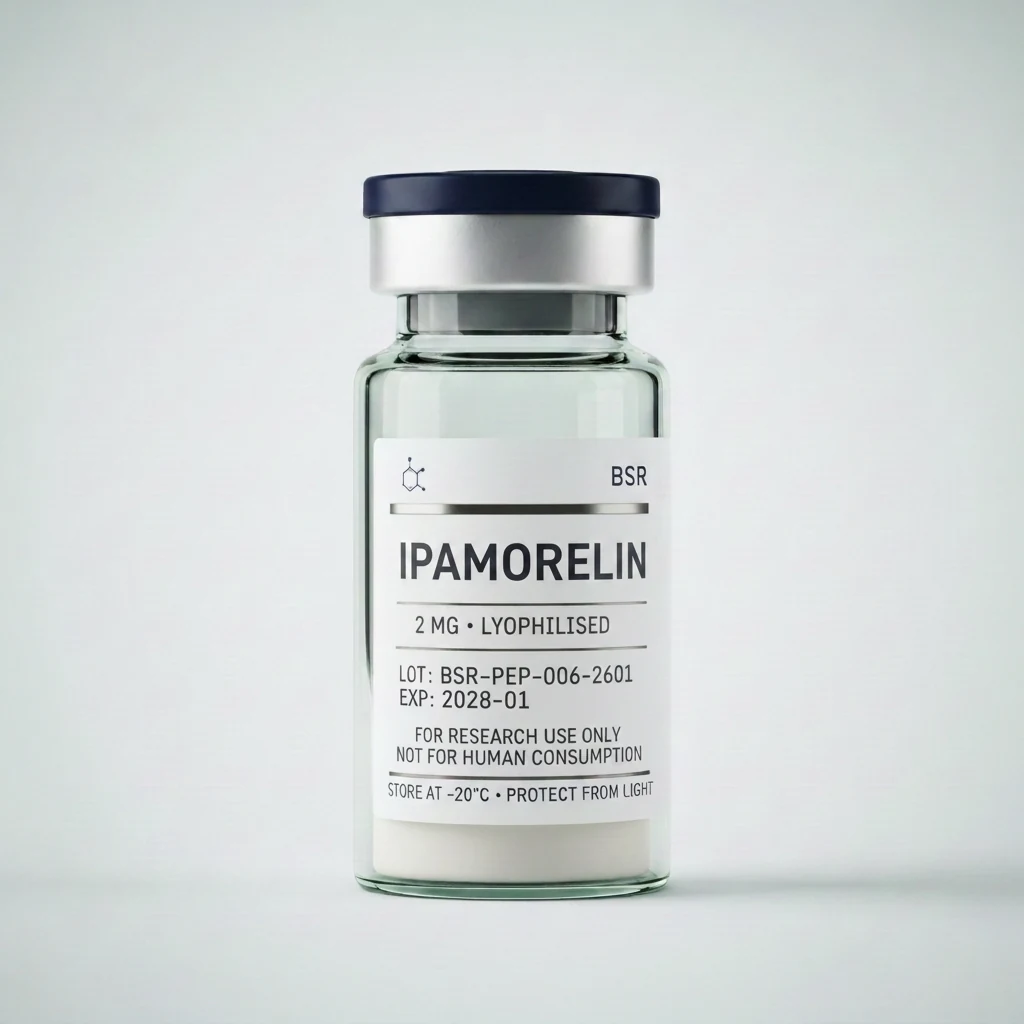
Ipamorelin is a pentapeptide (Aib-His-D-2-Nal-D-Phe-Lys-NH₂) that acts as a selective growth hormone secretagogue through the ghrelin receptor (GHS-R1a) — a separate pathway from GHRH. Source Peptides describes the combined stack as a dual-receptor model: CJC-1295 increases the amplitude of GH pulses via the GHRH pathway, while Ipamorelin signals through the ghrelin receptor to trigger GH release, with both acting on the same pituitary somatotroph cells. The rationale for co-administration is that stimulating two distinct receptor populations simultaneously produces synergistic GH output whilst preserving the pulsatility that characterises physiological secretion.
Ipamorelin was specifically designed to provide robust GH release without the hormonal cross-reactivity — particularly the cortisol and ACTH elevation — associated with earlier growth hormone-releasing peptides (GHRPs) such as GHRP-2 and GHRP-6. This selectivity profile has made it the preferred GHRP in combination research protocols. The half-life of approximately two hours closely matches that of CJC-1295 No DAC, which is why the No DAC/Ipamorelin pairing is now regarded as the standard combination for acute GH dynamics studies.
The clinical evidence base
The evidence supporting CJC-1295 in humans is narrow but not absent. A 2006 study — PMID 18057000 — documented elevated GH and IGF-1 levels and changes in body composition parameters that have informed the design of longer-term combination research protocols. Spartan Peptides notes that the specificity of the CJC-1295 response — acting exclusively on GHRH receptors — is considered an advantage over exogenous GH administration because it preserves the feedback regulation of the hypothalamic-pituitary axis.
Ipamorelin was evaluated by Novo Nordisk in early clinical work, and animal and small human studies have demonstrated GH stimulation with a relatively favourable cortisol profile compared with earlier secretagogues. However, Nationwide Peptides notes that post-2020 evidence is largely indirect, drawing on class-effect data from tesamorelin — the only FDA-approved GHRH analogue, indicated for HIV-associated lipodystrophy — rather than CJC-1295-specific trials. Efficacy for weight loss, anti-ageing, or performance enhancement applications remains investigational and has not been established in adequately powered controlled trials.
The safety dataset for CJC-1295 derives from approximately 300 trial participants, and Nationwide Peptides identifies dose-related risks. Importantly, the FDA cited potential heart-related adverse events in available CJC-1295 safety data as part of its rationale for the 2023 Category 2 placement — a consideration that will inevitably feature in the July PCAC review. The FDA Law Blog notes that a federal lawsuit brought by Evexias and Farmakeio under the Administrative Procedure Act dealt specifically with four peptides: AOD-9604, CJC-1295, Ipamorelin acetate, and Thymosin Alpha-1 — a challenge that cited a lack of transparency concerning their original Category 2 placement.
The regulatory timeline: from Category 2 to grey area
In October 2023, the FDA designated CJC-1295 and Ipamorelin as Category 2 bulk drug substances, effectively prohibiting their compounding by licensed pharmacies for human use. The FDA cited concerns including potential cardiac adverse events in available safety data, immunogenicity risk, and insufficient clinical evidence.
The situation shifted in April 2026. According to Orrick, on 15 April 2026 the FDA announced it would remove 12 peptide bulk drug substances from Category 2, with formal removal taking effect approximately 23 April 2026, after the nominators of those substances withdrew their nominations. CJC-1295 and Ipamorelin were among the compounds affected.
However, removal from Category 2 does not by itself place these substances on the 503A bulks list or in Category 1. Orrick notes that "the peptides will exist in a regulatory gray area until the PCAC meets and the FDA takes final action," and that compounding pharmacies should exercise caution until their status is formally determined. This is a critical distinction for procurement teams: the April 2026 action lifted the "significant safety risk" designation, but it did not restore a legal pathway for compounding at scale.
The July 23–24, 2026 PCAC meeting is the next formal procedural step. The FDA Law Blog cautions that even if the PCAC recommends adding CJC-1295 and Ipamorelin to Category 1, and even if the FDA agrees, notice-and-comment rulemaking would still be required — a process that under standard timelines can take more than a year. Pharmacy Times confirms that compounding pharmacies are unlikely to resume production at scale until formal FDA guidance is published, raw materials are sourced, and batch validation is complete. Written public comments for the July meeting must be submitted by 9 July 2026; requests for oral presentations must be lodged by 30 June 2026, according to Orrick.
MHRA status and UK procurement considerations
Neither CJC-1295 nor Ipamorelin holds a marketing authorisation from the MHRA, and neither appears on the UK's list of licensed medicinal products. In UK research settings, both are procured under the "research use only" designation — a framework that permits acquisition for bona fide scientific investigation but provides no route to human administration outside an authorised clinical trial.
UK procurement teams should note that the FDA's April 2026 Category 2 removal has no direct bearing on MHRA enforcement posture. The MHRA operates its own regulatory framework, and the two agencies' classifications do not automatically align. Given the MHRA's heightened attention to the UK peptide clinic sector — as evidenced by its April 2026 investigation activity — laboratories should ensure supplier due diligence documentation is current, Certificates of Analysis are verified by independent HPLC and mass spectrometry data, and storage and handling records are maintained to audit standard.
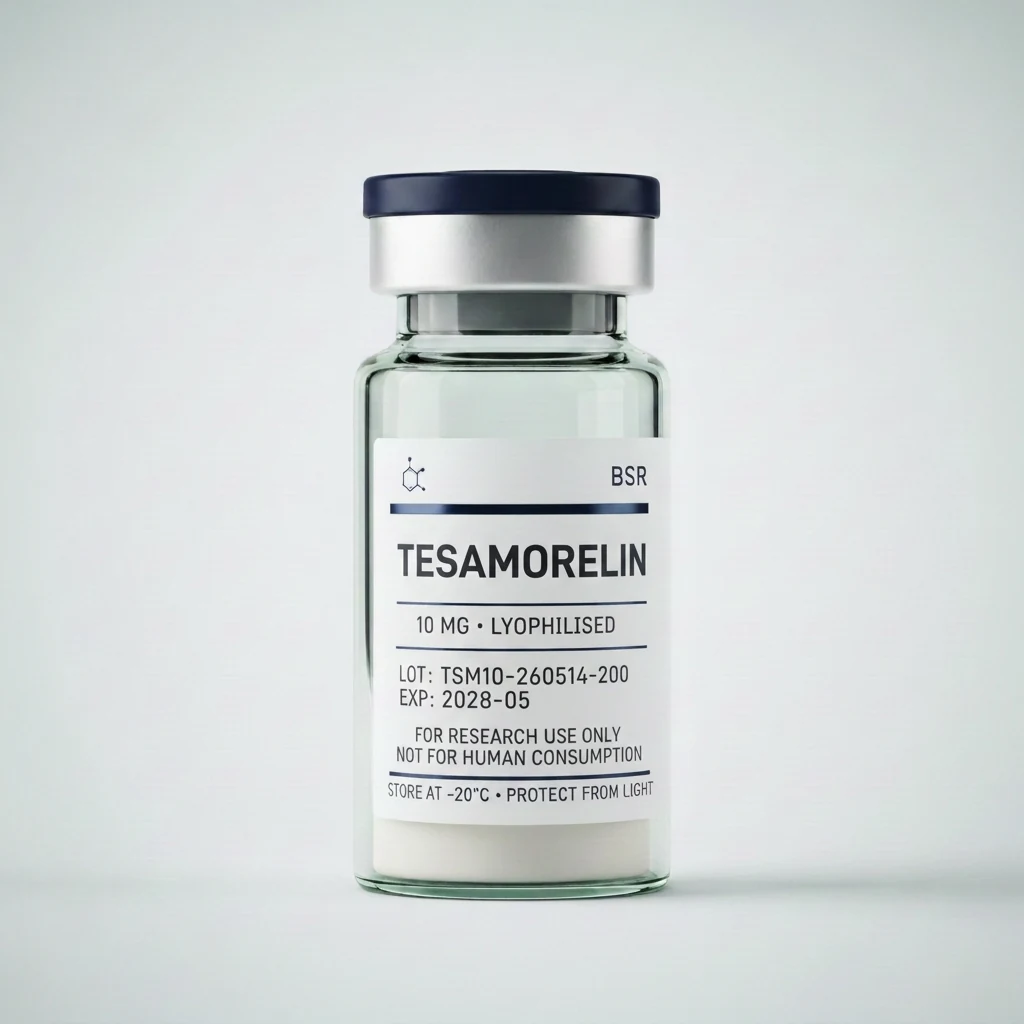
The only approved GHRH analogue against which class-effect comparisons can meaningfully be drawn remains tesamorelin, which received FDA approval for HIV-associated lipodystrophy in 2010 following two Phase 3 randomised controlled trials. PeRx Peptides describes it as "the only GHRH analog that has completed this process," and it remains a useful regulatory and pharmacological benchmark for assessing what full clinical validation of a GHRH analogue actually requires.
What the July PCAC review will not resolve
The PCAC meeting is a procedural milestone, not an endpoint. Even a favourable PCAC recommendation would leave several open questions relevant to research procurement:
- Evidence standard: The July review will assess whether the available evidence is sufficient to support 503A compounding eligibility — a lower bar than FDA drug approval, which requires Phase 3 randomised controlled trial data. Compounding eligibility does not confer validated indications, standardised dosing, or an established benefit-risk profile.
- Quality sourcing: If CJC-1295 and Ipamorelin do eventually reach Category 1, pharmacies will need to source pharmaceutical-grade API from FDA-registered manufacturers accompanied by valid Certificates of Analysis. Orrick notes this as a condition of 503A compliance.
- UK implications: Any US compounding decision does not automatically alter the position of these compounds in UK or EU research supply chains. Separate regulatory developments would be required to change their status in Britain.
For research-procurement teams sourcing either compound today, the operative position is unchanged from early 2026: both peptides remain unapproved, both are available only through RUO suppliers for laboratory investigation, and the July 2026 PCAC calendar represents the earliest plausible trigger for a formal US status change — with actual compounding access likely further out.
Research-grade material, HPLC verified, certificate of analysis with every order.
The week's Intelligence in one email, every Friday morning.
Regulatory moves, trial readouts, supply-chain news. No product pitches. Unsubscribe in one click.
More in Research Pipeline
Thymosin Alpha-1: What 35 Countries of Clinical Use and a Lopsided PCAC Vote Mean for Research Access in 2026
07 Oct 2026
Viking Therapeutics Initiates Oral Maintenance Dosing Study for VK2735: What the GLP-1/GIP Dual Agonist's Two-Part Programme Tells Researchers About the Weight-Regain Problem
06 Oct 2026
GHK-Cu: What a Fresh Diabetic Wound Study and a Recruiting Phase 2 Trial Mean for the Copper Peptide's Research Standing
03 Oct 2026