Research Pipeline · 03 Oct 2026
GHK-Cu: What a Fresh Diabetic Wound Study and a Recruiting Phase 2 Trial Mean for the Copper Peptide's Research Standing
A new Carbohydrate Polymers study and a Phase 2 wound-healing trial currently recruiting signal renewed preclinical and early clinical momentum for GHK-Cu. Here is what laboratory procurement teams need to know about the peptide's mechanism, evidence base, and regulatory position in the UK and US.
10 sources cited
Key takeaways
- A study published 1 October 2026 in Carbohydrate Polymers incorporated GHK-Cu into a multi-component diabetic wound hydrogel, demonstrating potent antibacterial activity, enhanced macrophage polarisation towards a reparative phenotype, and accelerated wound closure in animal models.
- A Phase 2 randomised, double-blind, split-wound study — trial identifier NCT07437586, sponsored by Hudson Biotech — began recruiting in February 2026 and is evaluating a topical GHK-Cu gel for acute skin wound healing in healthy adults; primary completion is estimated for February 2027.
- An April 2026 review in Quality in Sport concluded that GHK-Cu holds therapeutic potential in wound healing and tissue repair, but acknowledged that large-scale randomised controlled trials are currently absent.
- GHK-Cu has no approved medicinal product status in the UK (MHRA), the US (FDA), or the EU (EMA). Topical cosmetic applications are legally distinct from therapeutic claims.
- The peptide is not among those reviewed by the FDA's Pharmacy Compounding Advisory Committee (PCAC) in July 2026, which means it sits outside both the Category 1 and Category 2 compounding frameworks relevant to 503A pharmacies.
What GHK-Cu is and why it draws research interest
GHK-Cu — glycyl-L-histidyl-L-lysine complexed with copper(II) — is an endogenous tripeptide first isolated from human plasma albumin in 1973. Wikipedia / Copper peptide GHK-Cu Plasma concentrations of GHK decline with age, a pattern that has provided some of the biological rationale for studying exogenous administration, though restoration-of-youth arguments carry limited evidentiary weight without adequately powered clinical trials.
The peptide's appeal to researchers stems from a breadth of proposed mechanisms. Wikipedia / Copper peptide GHK-Cu In human cells, GHK-Cu is proposed to promote wound healing, attract immune cells, exert antioxidant and anti-inflammatory effects, stimulate collagen and glycosaminoglycan synthesis in skin fibroblasts, and support blood vessel growth. More recently, Wikipedia / Copper peptide GHK-Cu studies have revealed its ability to modulate the expression of a large number of human genes — a feature that has attracted both scientific interest and the attention of wellness markets, neither of which should be conflated with regulated therapeutic application.
The October 2026 Carbohydrate Polymers study
The most recent publication, indexed on PubMed on 1 October 2026 and appearing in Carbohydrate Polymers, describes a complex injectable hydrogel system designated Gel@Lip-TEx@GCu-GOX. PubMed The system is built on a dynamic polysaccharide network — a chitosan/oxidised alginate scaffold — designed to address the dysregulated microenvironment that typifies diabetic wounds: persistent hyperglycaemia, bacterial infection, and localised hypoxia.
Within that construct, PubMed GHK-Cu drives the conversion of hydrogen peroxide to oxygen, preventing peroxide overload, alleviating oxidative injury, and improving the hypoxic wound microenvironment. In parallel, PubMed tea-leaf-derived exosomes encapsulated within the hydrogel protect glucose oxidase activity, reprogramme macrophages towards a reparative M2 phenotype, and support angiogenesis. In vitro and in vivo experiments confirmed that the composite construct exerted potent antibacterial activity, enhanced M2 polarisation, and markedly accelerated diabetic wound repair.
The significance of this work for research procurement teams is threefold. First, it confirms that GHK-Cu is being actively incorporated into novel biomaterial platforms rather than studied in isolation. Second, the antioxidant role attributed to the peptide within this system — catalysing H₂O₂ reduction — is mechanistically distinct from the collagen-stimulation narrative that dominates cosmetic marketing, and represents a more nuanced area of preclinical investigation. Third, the animal models used are the standard for diabetic wound research, which means findings are generalisable for laboratory benchmarking, but do not constitute clinical evidence.
The Phase 2 trial (NCT07437586, "CuHeal")
A Phase 2 randomised, double-blind, vehicle-controlled, split-wound study registered under ClinicalTrials.gov identifier NCT07437586 began recruiting in February 2026. Sponsored by Hudson Biotech, the CuHeal study evaluates a topical GHK-Cu gel against a vehicle control applied to standardised acute skin wounds in healthy adults, with re-epithelialisation as the primary endpoint. Primary completion is estimated for February 2027, with overall study completion estimated for March 2028.
This trial matters because, as the April 2026 review in Quality in Sport noted, human clinical data for GHK-Cu have until now been limited to several randomised topical trials examining skin quality and wound healing markers — none at the scale required for regulatory submissions. The CuHeal trial will not produce results until 2027 at the earliest, but its existence changes the conversation: this is the first controlled, adequately blinded Phase 2 study specifically powered to evaluate wound closure as a primary outcome in a well-characterised acute wound model.
Labs sourcing GHK-Cu for in vitro or ex vivo wound-healing assays should note that the split-wound design — in which each participant acts as their own control — is increasingly regarded as methodologically robust for topical agents with localised action.
State of the clinical evidence: what exists and what is missing
The April 2026 review in Quality in Sport synthesised available preclinical and clinical data on GHK-Cu alongside BPC-157. Its conclusions on GHK-Cu were measured: the peptide shows promise in skin quality trials, with several randomised topical studies demonstrating statistically significant improvements in wound healing markers. Both peptides demonstrate favourable safety profiles in available studies; however, large-scale randomised controlled trials are absent.
The distinction between routes of administration is critical for research design. As a 2026 evidence-based review summarised, the evidence matrix differs substantially by application: controlled human trials support topical use for skin ageing and wound healing, preliminary human data exist for topical hair growth, but injectable (subcutaneous) GHK-Cu for systemic tissue-remodelling effects has no controlled human trials. Injectable use rests on gene-expression data, the age-related plasma-level decline providing a biological rationale, and extrapolation from topical wound-healing datasets. Researchers designing protocols that involve parenteral administration should treat that rationale as hypothesis-generating, not as clinical validation.
In vitro gene-expression work represents GHK-Cu's most extensively characterised domain. Studies have identified modulation of more than 4,000 human genes, with expression patterns shifting in directions associated with younger tissue. The mechanistic plausibility of these findings is clear; their translational relevance to clinical outcomes in humans remains to be established through adequately powered trials.
Regulatory status: UK, US, and EU
United Kingdom (MHRA): GHK-Cu has no MHRA-authorised medicinal product status. MHRA Topical formulations are sold under cosmetic regulations where no therapeutic claims may be made. Any injectable preparation intended for systemic tissue repair would require a valid marketing authorisation or be subject to the UK's specials and unlicensed medicines framework, with associated prescriber responsibilities. MHRA has not issued specific guidance on GHK-Cu.
United States (FDA): GHK-Cu was not among the seven peptides reviewed by the PCAC at its 23–24 July 2026 meeting. As AJMC reported, that committee voted narrowly to recommend adding six peptides — BPC-157, KPV, TB-500, MOTS-c, and others — to the 503A Bulks List, an atypical outcome given FDA staff had recommended against all seven under review. GHK-Cu sits entirely outside this process. It is not FDA-approved for any indication, and it does not appear on either the 503A or 503B Bulks Lists. GoodRx reminds clinicians and researchers that eligibility for compounding is not equivalent to FDA approval, and does not mean the agency has determined a peptide is safe and effective. Synthetic GHK-Cu is widely used in cosmetic formulations under a separate regulatory lane from pharmaceutical use.
European Union (EMA): No centralised EMA authorisation exists for GHK-Cu as a medicinal product. Cosmetic applications fall within the EU Cosmetics Regulation (EC) No 1223/2009.
Procurement and quality considerations for research laboratories
For UK research laboratories sourcing GHK-Cu as a research-use-only reagent, several quality considerations are worth flagging.
The peptide's copper-coordination chemistry makes it susceptible to degradation under conditions that would not affect a simple unmodified peptide. A 2025 study in BioMed Research International on food-derived tripeptide-copper hydrogels noted that GHK-Cu is prone to degradation, and that hydrogel loading systems are one approach to addressing rapid breakdown in biological environments. In solution, the Cu²⁺ chelation state is pH-sensitive; researchers should confirm storage conditions and verify that supplier Certificates of Analysis include copper coordination confirmation rather than peptide content alone.
Purity specifications should be confirmed by HPLC, with mass spectrometry (LC-MS) used to verify the intact GHK-Cu complex rather than free GHK or copper salt fractions, which would represent distinct chemical entities. Lot-to-lot consistency is particularly relevant for wound-healing assays, where variation in copper content could introduce confounds that are not easily attributed to the peptide itself.
Cold chain requirements for GHK-Cu in solution differ from those for lyophilised powder. Most suppliers ship lyophilised product with storage at −20 °C recommended; reconstituted solutions should be used promptly or aliquoted and stored at −80 °C to minimise oxidation of the copper complex.
What to watch
The CuHeal Phase 2 trial (NCT07437586) is the single most important near-term development for the field. Results are not expected before early 2027. If the trial demonstrates statistically significant acceleration of re-epithelialisation in the split-wound model, it will represent the first adequately controlled clinical evidence for a topical GHK-Cu formulation in acute wound healing — a dataset that would materially alter the evidence matrix for subsequent regulatory and procurement decisions. Researchers should monitor ClinicalTrials.gov for interim updates and the Journal of Investigative Dermatology or wound-care journals for eventual primary publication.
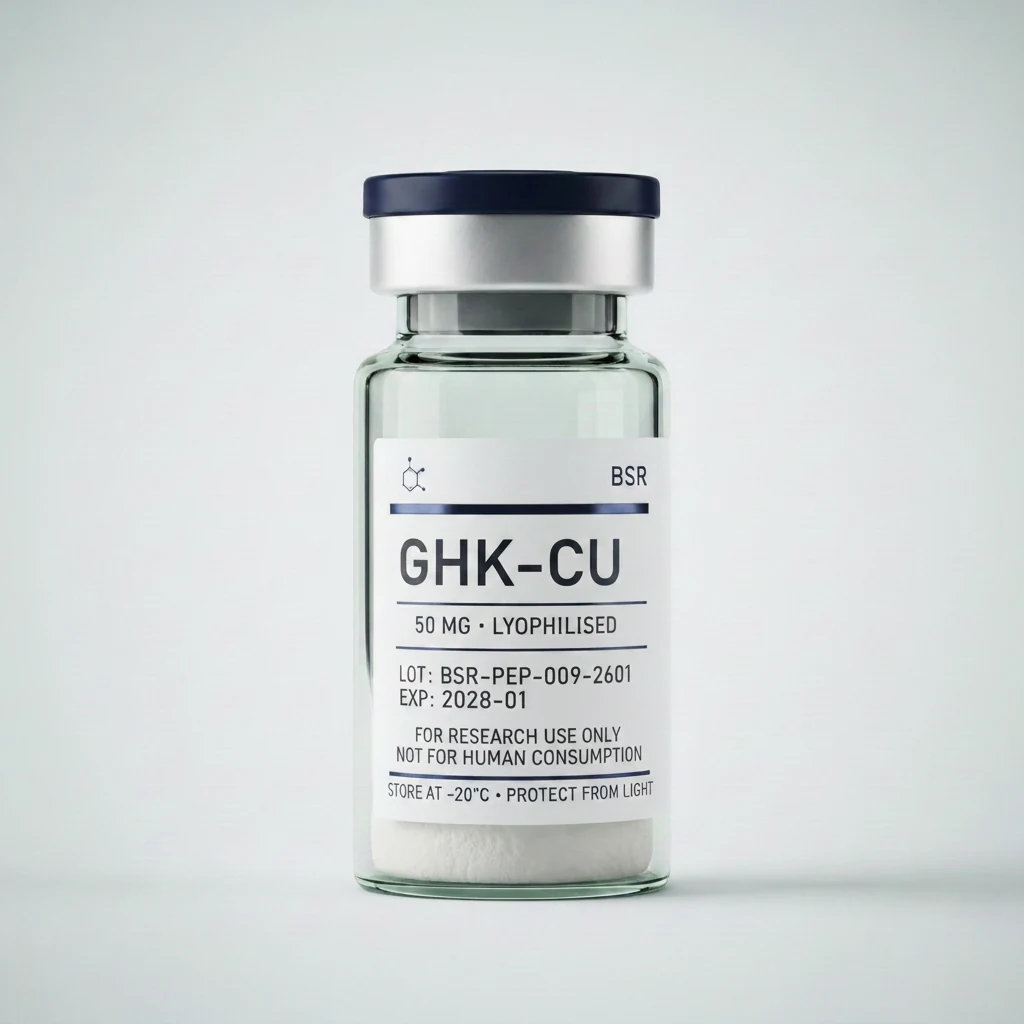
Research-grade material, HPLC verified, certificate of analysis with every order.
The week's Intelligence in one email, every Friday morning.
Regulatory moves, trial readouts, supply-chain news. No product pitches. Unsubscribe in one click.
More in Research Pipeline
EASD Milan 2026: Three Datasets That Reframe the Next Wave of Peptide-Based Obesity Treatments
02 Oct 2026
Kailera Therapeutics and the Ribupatide Franchise: Inside the GLP-1 Challenger That Went Public With $719 Million and a Four-Asset Obesity Pipeline
29 Sep 2026
Epitalon: What the Pineal Tetrapeptide's 40-Year Research Record Actually Shows — And Where Its Regulatory Status Stands After the July 2026 PCAC Vote
28 Sep 2026