Industry & Community · 13 Oct 2026
Multiplexed LC-HRMS for Nine GLP-1 Receptor Agonists: What a New Validated Method Means for Peptide Quality Control in Research Labs
A validated multiplexed LC-HRMS method covering nine structurally diverse GLP-1 receptor agonists — including survodutide, tirzepatide, and three investigational Phase III compounds — has been published in the Journal of Chromatography A. For research-procurement teams, it signals a meaningful step forward in the analytical toolkit available for identity confirmation and purity profiling of peptide reference materials.
9 sources cited
Key takeaways
- A multiplexed liquid chromatography–high-resolution mass spectrometry (LC-HRMS) method covering nine structurally diverse GLP-1 receptor agonists, including survodutide, tirzepatide, and three investigational Phase III compounds, has been published in the Journal of Chromatography A.
- The panel spans single, dual, and triple receptor agonists — including four globally approved drugs and two substances recently approved by China's National Medical Products Administration (NMPA) — making it the broadest single validated method for this compound class to date.
- Orthogonal two-dimensional LC approaches for GLP-1 peptide analysis were also discussed at the HPLC 2026 symposium in October, reinforcing interest in multi-dimensional separation for complex peptide matrices.
- For UK research-procurement teams, the publication raises a practical question: whether existing Certificate of Analysis (CoA) methods at suppliers can adequately resolve structurally similar incretin-class peptides that are increasingly requested for research purposes.
- Regulatory pressure from the FDA's parallel effort to permanently exclude semaglutide, tirzepatide, and liraglutide from the 503B compounding bulks list — combined with a surge in unapproved injectable peptide products — makes independent analytical verification of identity and purity more consequential, not less.
The new method in context
A rapid, sensitive, and selective multiplexed liquid chromatography–high-resolution mass spectrometry (LC-HRMS) method was developed and validated for the identification and quantitation of nine structurally diverse peptide-based GLP-1 receptor agonists. The study, authored by Lok-Hang Tong and colleagues, was published in the Journal of Chromatography A in July 2026 and is indexed on PubMed as PMID 42603384.
The panel covers survodutide and tirzepatide among others, and spans single, dual, and triple receptor agonists — including four globally approved medications, two recently approved by China's NMPA, and three investigational drugs currently in Phase III clinical trials.
The significance of a multiplexed method lies in what single-compound assays cannot achieve. GLP-1 receptor agonists are structurally distinct at the sequence level but share common pharmacophoric features, and some are of sufficiently similar molecular weight to present interference risks in lower-resolution instruments. A single validated method that resolves all nine reduces turnaround time, minimises sample consumption, and — critically for research labs — enables simultaneous identity and impurity confirmation from one injection.
The pharmaceutical application arm of the method, described in the abstract, suggests the authors tested it against actual pharmaceutical preparations rather than pure reference standards alone. That distinction matters for translating the validation into practical use.
Why survodutide's inclusion is notable
Survodutide — a dual glucagon and GLP-1 receptor agonist developed by Boehringer Ingelheim and Zealand Pharma — is among the most advanced investigational compounds in the incretin pipeline. Its inclusion in this nine-compound panel reflects the growing demand for validated analytical tools for Phase III candidates that are not yet commercially available as certified reference materials in most markets.
Research organisations studying receptor pharmacology or seeking to establish comparator assays for efficacy studies need confidence that their reference material matches the intended compound. A new publication in the Journal of Chromatography A details a multiplexed LC-HRMS method for nine GLP-1 receptor agonists, including survodutide, lending the analytical community a validated framework that can be adapted for in-house quality assessment.
Two-dimensional LC as a complementary approach
At the 55th International Symposium on High-Performance Liquid Phase Separations and Related Techniques (HPLC 2026), held in October 2026, 2D-LC orthogonal separation for GLP-1 analysis received dedicated coverage. Piotr Alvarez explained how his lab uses 2D-LC to enable MS compatibility with legacy methods and to confirm peak purity through orthogonal separation in the context of GLP-1 analysis, according to reporting from LCGC International.
The use of orthogonal second-dimension separation addresses a specific limitation in peptide QC: co-eluting impurities that have identical or near-identical mass to the target compound. Where high-resolution mass alone may give a correct nominal mass match while missing a diastereomeric or sequence-scrambled impurity, orthogonal chromatography can expose additional peak structure before the mass spectrometer ever fires.
For labs operating older single-quadrupole or time-of-flight systems, 2D-LC may offer a chromatographic route to improved specificity without instrument replacement. For labs already running Orbitrap or Q-TOF platforms, the combination with HRMS is close to the current state of the art for peptide identity confirmation.
The regulatory backdrop elevating QA importance
The analytical advances arrive at a moment when the regulatory stakes around peptide identity and purity are unusually high in both the US and UK.
On the US compounding side, the FDA proposed on 30 April 2026 to exclude semaglutide, tirzepatide, and liraglutide from the 503B bulks list, citing a lack of clinical need for outsourcing facilities to compound these medications from bulk drug substances. If finalised, the rule would impose an absolute, forward-looking bar for 503B facilities — foreclosing re-nomination even if a future shortage recurs. The comment period closed on or around 30 July 2026.
The enforcement environment has simultaneously intensified. FDA enforcement against research-peptide sellers escalated in August and September 2026. On 24 August, the FDA dated five warning letters to research-use-only vendors that quoted code names — including "GLP-3 RT" — as references to retatrutide.
Enforcement is complicated by an international supply chain that includes overseas manufacturers and distributors. China is a major source of these products, and import records show multiple shipments of retatrutide entered the US in early 2026.
A separate Public Citizen analysis, cited in a Forbes commentary published 9 October 2026, found that of 14 FDA warning letters sent to companies selling retatrutide since 2024, 11 recipients were still advertising retatrutide or other unapproved peptides as of May, and eight were still selling retatrutide.
That compliance gap has direct consequences for procurement. If a substantial proportion of sellers continue to operate after receiving formal agency notice, the burden on buyers to independently verify the identity, purity, and provenance of purchased peptides becomes heavier.
Practical implications for UK research procurement
UK research organisations operate under MHRA oversight and must comply with the Human Medicines Regulations 2012, which govern importation of unapproved medicinal products for human use. Peptides acquired under a research-use-only framework are not subject to the same CoA requirements as licensed medicines, but institutions operating under GLP or GMP conditions will typically have internal quality standards to meet.
The validated LC-HRMS method described in the Journal of Chromatography A publication offers procurement teams a literature reference point for what a fit-for-purpose analytical package for GLP-1 class peptides should look like. Key criteria worth examining when assessing supplier CoA documentation include:
- Instrument platform: Is identity confirmation performed by mass spectrometry (preferred), UV-only HPLC, or amino acid analysis? HRMS with mass accuracy below 5 ppm is the benchmark for unambiguous identity confirmation of peptides in this mass range.
- Multiplexed specificity: Can the method discriminate the target from structurally similar analogues? Single-compound calibration curves cannot guarantee this without cross-validation.
- Pharmaceutical application testing: Was the method applied to finished formulations or only to reference standard solutions? The former is more demanding and more relevant.
- Regulatory compliance of the reference standard: For GLP-1 receptor agonists, ask whether the reference material is of pharmacopoeial grade or a research-grade analogue — the distinction affects how far CoA data can be relied upon.
As the GLP-1 agonist class expands — with CagriSema awaiting an FDA decision in Q4 2026 and retatrutide advancing through Phase III — the GLP-1 agonist clinical pipeline is defined by escalating potency, advancing from semaglutide near 15 per cent weight loss to tirzepatide near 21 per cent and retatrutide above 28 per cent. Each new candidate adds to the pool of investigational compounds that research labs may need to characterise, increasing the demand for validated, multiplexed analytical approaches.
Sources
- Tong et al., J Chromatogr A, PMID 42603384, doi:10.1016/j.chroma.2026.467288
- PeptideLaws.com — Survodutide LC-HRMS method news, Oct 2026
- LCGC International — 2D-LC for GLP-1 analysis, HPLC 2026, Oct 7 2026
- FDA press announcement — 503B bulks list proposal, Apr 30 2026
- Pharmacy Times — FDA moves to exclude compounded GLP-1s permanently
- PeptideGarden — FDA 503B exclusion detailed analysis
- VialAudit — FDA peptide enforcement 2024–2026 chronology
- Forbes / Sally Pipes — The FDA is struggling to police the peptide boom, Oct 9 2026
- Drug Discovery News — GLP-1 agonist clinical pipeline 2026
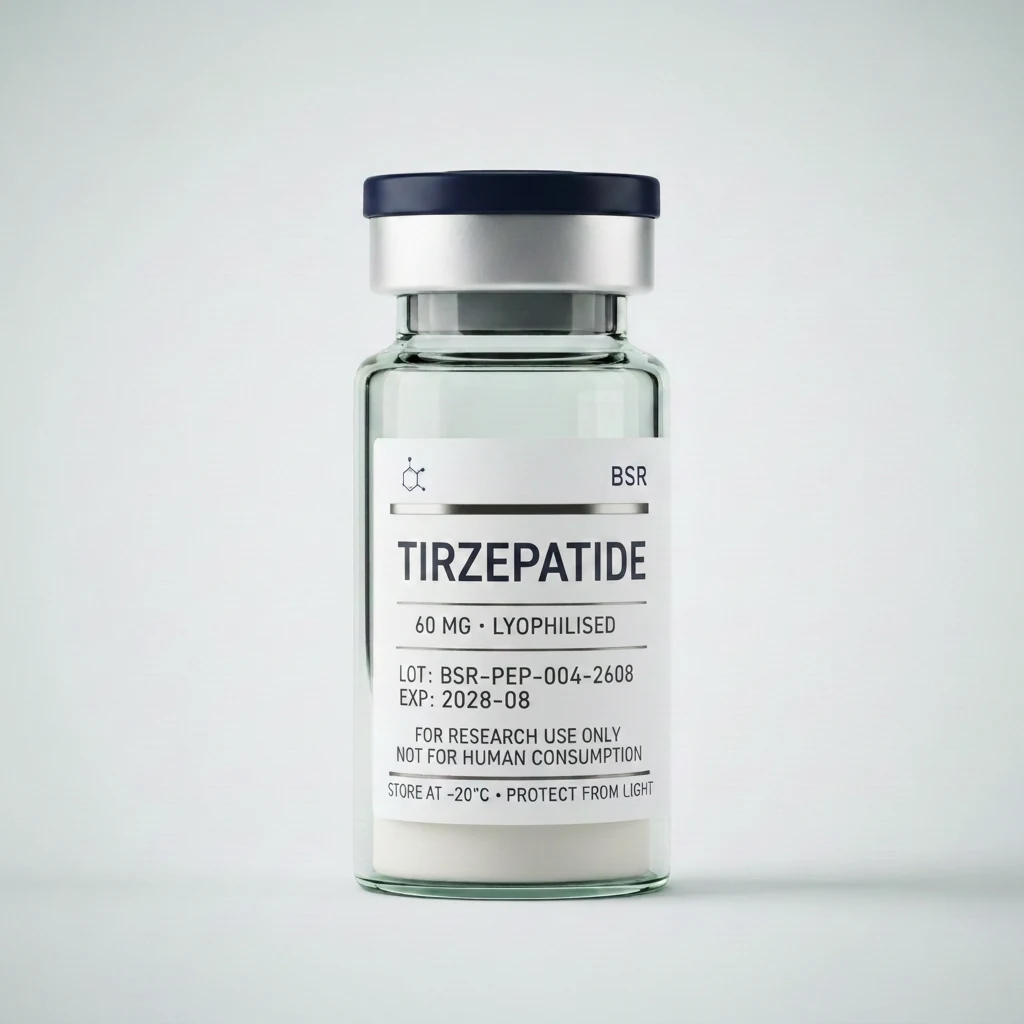
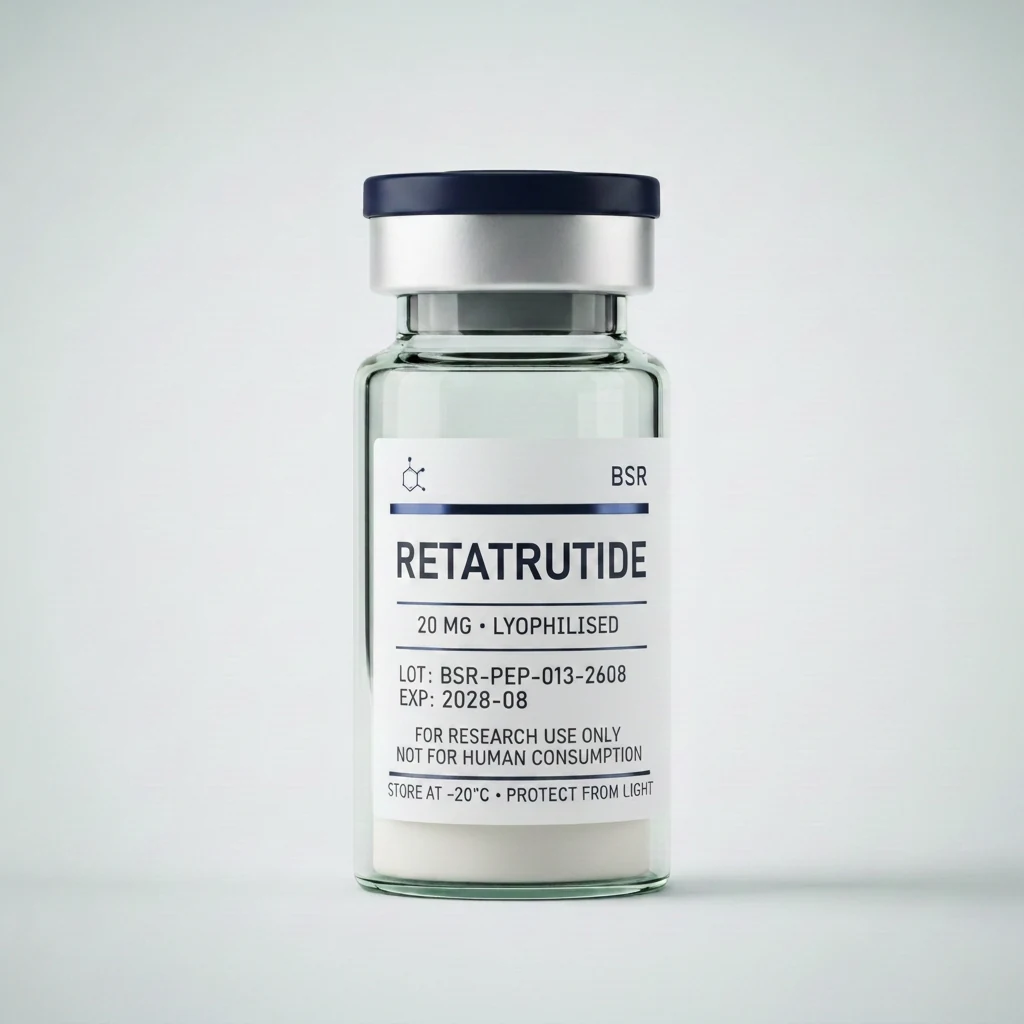
Research-grade material, HPLC verified, certificate of analysis with every order.
The week's Intelligence in one email, every Friday morning.
Regulatory moves, trial readouts, supply-chain news. No product pitches. Unsubscribe in one click.
More in Industry & Community
REX Peptide ETF Launches on Nasdaq: What the First Dedicated Peptide Equity Vehicle Signals About Sector Capital and Research-Supply Dynamics
14 Oct 2026
Samsung Biologics / PolyPeptide: What the Tender Close on 12 October Means for Peptide API Supply Chains
04 Oct 2026
Same Day, Different Strategies: How Lilly's $6.5 Billion Houston Groundbreaking and Novo's Capital Markets Day Reveal Diverging Paths in the Oral GLP-1 Manufacturing Race
26 Sep 2026