Pharma & GLP-1 · 01 Jun 2026
Regeneron's $2.3 Billion Bet on Helicon Peptides: What the Parabilis Deal Signals for the Peptide Research Landscape
Regeneron Pharmaceuticals announced a research collaboration with Parabilis Medicines on 18 May 2026, valued at up to $2.32 billion, centred on Helicons — stabilised, cell-penetrant alpha-helical peptides designed to reach intracellular targets that have long resisted conventional drug design. The deal crystallises a strategic shift in how institutional capital now views structurally engineered peptides, with implications extending well beyond oncology.
13 sources cited
Key takeaways
- On 18 May 2026, Regeneron Pharmaceuticals and Parabilis Medicines announced a research collaboration worth up to $2.32 billion, centred on Parabilis' proprietary Helicon peptide platform.
- Helicons are stabilised, cell-penetrant alpha-helical peptides designed to engage intracellular protein targets — including protein–protein interaction surfaces that are poorly suited to small-molecule drugs.
- The deal structure includes $50 million upfront, a $75 million equity commitment, and up to $2.2 billion in milestone payments across five initial targets, with options to expand.
- Regeneron retains worldwide development, manufacturing, and commercialisation rights; Parabilis participates in discovery and retains milestone and royalty economics.
- The transaction adds to a pattern of high-value institutional peptide commitments in 2026 and reinforces the field's structural credibility at a time when the compounding and research-use market remains under regulatory pressure.
The deal in detail
On 18 May 2026, Regeneron Pharmaceuticals announced a strategic research collaboration with Parabilis Medicines to discover and develop multiple therapeutic candidates based on Parabilis' Helicon peptide platform, with a particular focus on Antibody-Helicon Conjugates (AHCs) — a novel class of therapeutics designed to target challenging and historically "undruggable" targets.
The deal carries up to approximately $2.325 billion in total potential value, including a $50 million upfront payment, a $75 million equity commitment, and up to $2.2 billion in milestone payments across five initial targets. Under the terms of the agreement, additional targets may be pursued upon further option payments from Regeneron, which will be responsible for advancing candidates through development, manufacturing, and worldwide commercialisation.
The five initial targets have not been named publicly. Therapeutic area focus is described as spanning multiple areas, though the intracellular protein–protein interaction (PPI) disruption mechanism and Parabilis' existing pipeline suggest oncology as a primary application.
What are Helicon peptides?
Helicons represent a distinct structural category within the broader peptide space. They are stabilised, cell-penetrant alpha-helical peptides engineered to bind intracellular targets, including flat protein–protein interaction surfaces that are typically refractory to small molecules.
The conventional challenge in targeting intracellular PPIs is geometric: many disease-relevant protein interactions occur on broad, shallow surfaces that offer no clear binding pocket for a small molecule. PROTACs and molecular glues require a ligandable pocket on the target protein; Parabilis claims Helicons can engage purely flat protein surfaces where well-defined ligandable pockets are difficult to identify.
AHCs adapt the antibody-drug conjugate (ADC) paradigm by swapping cytotoxic payloads for Helicons, enabling targeted intracellular modulation or degradation rather than nonspecific cell killing. Regeneron's rationale for structuring the collaboration around AHCs is therefore strategic: its VelocImmune antibody engineering platform provides selective extracellular targeting, whilst the Helicon payload handles intracellular biology once the conjugate is internalised.
Parabilis: company context
Parabilis, a privately held company which rebranded from FogPharma in 2024, closed a $305 million Series F financing on 8 January 2026, with proceeds intended to support continued clinical development of its lead Helicon peptide candidate zolucatetide (formerly FOG-001) — described by the company as a first-in-class direct inhibitor of the β-catenin:TCF interaction — including progression toward a registrational trial in desmoid tumours.
Parabilis has raised over $800 million in total funding, including the $305 million Series F held in January 2026. The Regeneron collaboration therefore sits alongside, rather than instead of, Parabilis' own clinical programme — a structure that allows the company to pursue its internal assets whilst monetising platform access across additional targets.
Industry context: why this deal matters to procurement professionals
The Regeneron–Parabilis transaction is one of several high-value peptide platform deals completed or announced in 2026. Peptide drug discovery company Syneron Bio closed a $150 million Series B round to support its macrocyclic peptide development platform. Founded in 2022, Syneron leverages artificial intelligence through its proprietary Synova peptide platform; macrocyclic peptides have been described as a "goldilocks" drug class due to their ability to bridge the gap between small molecules and biologics, enabling the targeting of traditionally difficult disease pathways.
The broader deal environment for biopharma reinforces the scale of this activity. In a flurry of activity in the last weeks of March 2026, biopharma companies completed seven transactions worth a combined $29 billion, indicating that 2026 would be a prime year for M&A.
For research-procurement professionals, this pattern carries practical implications. Sustained institutional investment in engineered and structurally novel peptides — Helicons, macrocyclic scaffolds, stapled peptides — raises the profile of the peptide modality with funders, which in turn tends to drive demand for characterisation studies using research-grade reference materials. Procurement teams should anticipate that demand for high-purity, well-characterised alpha-helical and cyclic peptide standards is likely to increase as platform-stage programmes advance towards the clinic.
The broader peptide regulatory backdrop
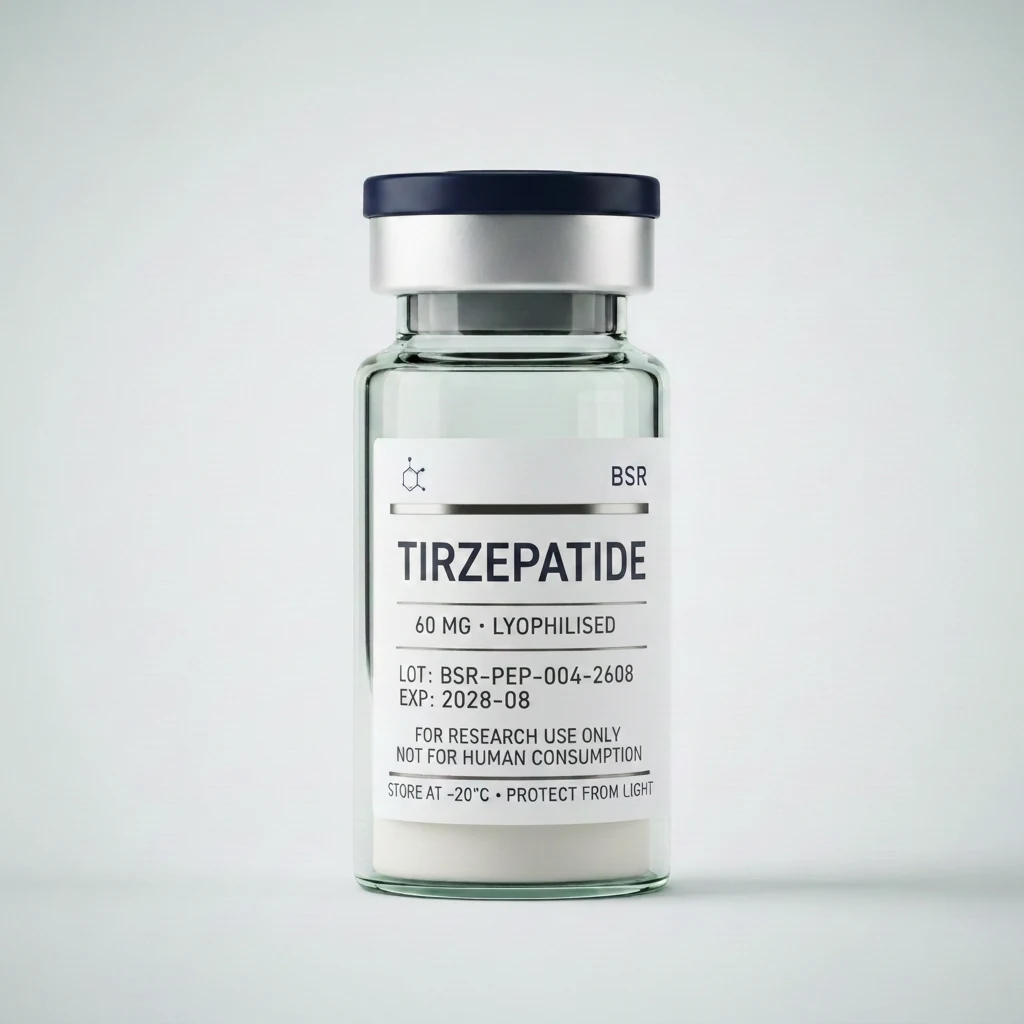
The Helicon investment sits against a wider regulatory environment that remains unsettled for non-approved peptides. The FDA has announced that it is proposing to formally exclude semaglutide, tirzepatide, and liraglutide from the 503B outsourcing facility bulk drug substances list — the regulatory mechanism that governs which active pharmaceutical ingredients large-scale compounding operations may use. A public comment period is open through 29 June 2026 via the federal docket.
The significance of this proposal is that it would close one of the few remaining legal avenues for 503B outsourcing facilities to resume large-scale compounding of these drugs. If finalised, semaglutide, tirzepatide, and liraglutide would be formally excluded from the 503B bulks list on a finding of no clinical need, meaning outsourcing facilities could not compound these drugs from bulk substances even if nominated to the list.
Separately, the FDA's Pharmacy Compounding Advisory Committee (PCAC) is scheduled to meet on 23–24 July 2026 to consider the status of seven peptides currently restricted under Category 2. That meeting is likely a necessary procedural step rather than the finish line. Under FDA's typical process, changes to the 503A Bulk Drug Substances List are routed through the PCAC; without such a review, any modification would likely face a legal challenge. Notably, the PCAC's recommendation is non-binding, and formal rulemaking is what comes next. Even if the PCAC recommends adding these peptides to the Category 1 list, and even if the FDA agrees, notice-and-comment rulemaking is still required — a process that, under standard timelines, can take more than a year.
CagriSema: a further signal on novel peptide combination design
Also relevant to the peptide investment thesis is the progress of CagriSema, Novo Nordisk's fixed-dose combination of the GLP-1 receptor agonist semaglutide and the amylin analogue cagrilintide. CagriSema is being investigated as a once-weekly subcutaneous injectable treatment for adults with overweight or obesity and as a treatment for type 2 diabetes. It is a fixed-dose combination of cagrilintide 2.4 mg and semaglutide 2.4 mg. An FDA decision is expected in late 2026, meaning the drug could launch by the end of the year or early 2027.
CagriSema's design — pairing an established GLP-1 peptide with a novel amylin-mimicking peptide — reflects the same underlying logic as the Helicon platform: combining peptide modalities to access biology that either component alone cannot reach efficiently.
What procurement teams should note
-
Helicon and structurally constrained peptides as research materials: As AHC programmes advance towards IND-enabling studies, demand for reference-grade alpha-helical peptide materials for pharmacological and binding assays will grow. Labs supporting early-stage discovery work in oncology and metabolic disease should ensure suppliers can provide well-characterised, high-purity constrained peptides.
-
Platform deals signal modality confidence: The Regeneron–Parabilis transaction, following the earlier AstraZeneca–Syneron macrocyclic peptide deal, indicates that major drug developers are treating structurally engineered peptides as a durable discovery modality rather than a niche approach. This trajectory broadly supports stable, growing demand for peptide reagents and characterisation services.
-
503B comment deadline approaching: Organisations involved in peptide compounding or research-use supply chains should be aware that the FDA comment period on the proposed 503B exclusion of GLP-1 compounds closes 29 June 2026. The outcome will have no direct bearing on research-use-only peptide supply in the UK, where the MHRA framework remains unchanged, but will affect the shape of the US market.
This briefing is based on publicly available corporate announcements, regulatory filings, and industry reporting. It does not constitute legal or regulatory advice.
Research-grade material, HPLC verified, certificate of analysis with every order.
The week's Intelligence in one email, every Friday morning.
Regulatory moves, trial readouts, supply-chain news. No product pitches. Unsubscribe in one click.
More in Pharma & GLP-1
Novo Nordisk Bets €1.165 Billion on Atomic-Layer Deposition to Convert Semaglutide Into a Once-Quarterly Injectable
08 Oct 2026
Lilly at EASD 2026: Retatrutide's TRIUMPH-2 Phase 3 Readout, Foundayo's Lancet Cardiovascular Data, and What eloraTZP Signals for the Next Generation of Incretin Combinations
01 Oct 2026
Novo Nordisk Licenses Hengrui's Once-Weekly Oral GLP-1/GIP Dual Agonist HRS-1596 in a Deal Worth Up to $2.6 Billion
30 Sep 2026