Research Pipeline · 12 Aug 2026
Thymosin Alpha-1: The 28-Amino-Acid Immunomodulator With Decades of Clinical Data — Mechanism, Evidence, and Regulatory Position in 2026
Thymosin alpha-1 (Tα1) carries one of the deepest clinical records of any peptide in active research — more than 11,000 human subjects, approval in roughly 35 countries, and a long-running debate over its status in the United States and United Kingdom. This briefing examines its mechanism, what the evidence base actually supports as of 2026, and where the compound sits within the ongoing US reclassification process.
12 sources cited
Key takeaways
- Thymosin alpha-1 (Tα1) is a 28-amino-acid peptide that acts as an immunomodulator — recalibrating T-cell maturation and Th1/Th2 balance rather than broadly stimulating immune activity.
- Its synthetic form, thymalfasin (brand name Zadaxin), is approved as a medicine in roughly 35 countries, primarily for chronic hepatitis B and as an adjunct in cancer therapy, with most primary clinical literature originating from Italy and China.
- The landmark TESTS Phase 3 trial (1,106 patients, published in BMJ, January 2025) found no significant mortality benefit in sepsis, revising earlier, smaller-trial estimates downward.
- In the United States, Tα1 lacks FDA approval and is not currently authorised for compounding. HHS Secretary RFK Jr. announced in February 2026 that Tα1 is among approximately 14 peptides under review for reclassification — though no formal updated list has been published.
- In the United Kingdom, the MHRA holds no marketing authorisation for Tα1; it is not scheduled under the Misuse of Drugs Act, placing it in a research-use-only position for UK laboratories.
What is Thymosin Alpha-1?
Thymosin alpha-1 is a synthetic 28-amino-acid peptide identical to the N-terminal fragment of the larger thymic protein prothymosin alpha (CAS 62304-98-7). It was first isolated from calf thymus in the 1970s by Allan Goldstein's laboratory at Albert Einstein College of Medicine, as part of a broader programme to identify active immune molecules in crude thymus extracts. Tα1 was the first thymosin peptide to be completely sequenced and synthesised.
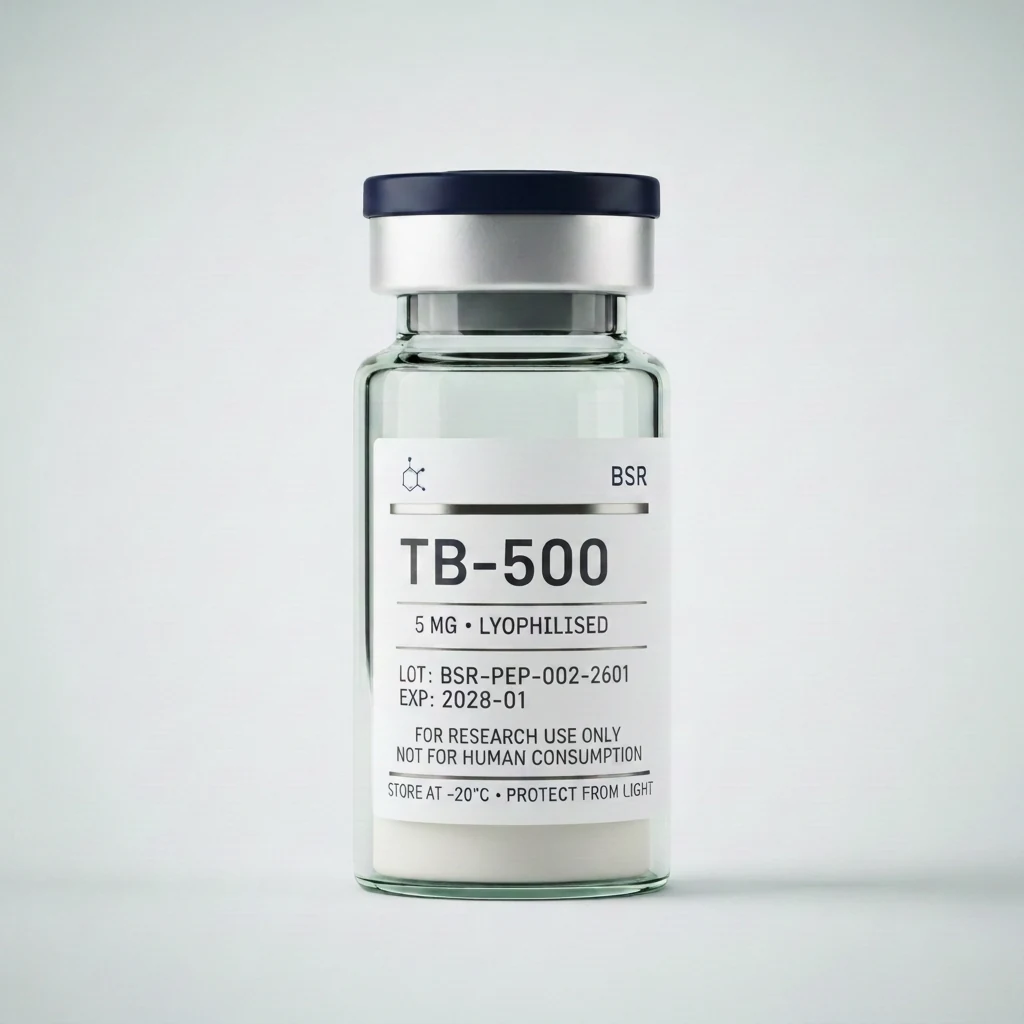
The compound is sometimes confused with Thymosin Beta-4 (TB-500 is a synthetic fragment of the latter). The two share a thymic origin but differ substantially in mechanism: Thymosin Beta-4 is principally involved in actin sequestration and tissue repair, while Tα1 operates exclusively within the immune axis.
Mechanism of Action
Tα1 is an immunomodulator, not a stimulant — it does not push the immune system in one direction but recalibrates T-cell maturation and Th1/Th2 balance via TLR9 signalling on dendritic cells. The established downstream pathway runs through dendritic-cell TLR9 → MyD88 → IRF7-dependent activation of indoleamine 2,3-dioxygenase, with restoration of T-regulatory and effector T-cell balance.
In practical terms, rather than simply boosting immune activity, thymosin alpha-1 supports regulatory T-cell function and helps restore immune balance. This distinction is important for research procurement: compounds that modulate rather than stimulate carry a different risk profile, particularly in immunocompromised or autoimmune-adjacent models. The safety review of 11,000 subjects across 30-plus trials found no reports of autoimmune flares or immune overstimulation.
The Evidence Base: Where It Is Strong, and Where It Diverges
Hepatitis B
Multiple randomised controlled trials established thymosin alpha-1 at 1.6 mg subcutaneous twice weekly as an effective treatment for chronic hepatitis B. This indication underpins the majority of the 35-country approval base. The hepatitis B dataset remains the most consistently replicated signal in the Tα1 clinical literature, and it is the primary basis on which Zadaxin obtained licensed status in Italy and across much of Southeast Asia.
Sepsis — A Revised Picture
The sepsis data illustrates a cautionary principle that applies across peptide research: small-trial meta-analyses can overstate effect sizes. Earlier meta-analyses (Wu 2014; Li 2015) pooled small Chinese RCTs and reported a roughly 30–40% relative risk reduction in 28-day mortality. However, the 1,106-patient TESTS Phase 3 trial (Liu 2025, published in BMJ) showed essentially no difference — a hazard ratio of 0.99, and the TESTS authors concluded there was "no clear evidence to suggest that thymosin α1 decreases 28 day all cause mortality in adults with sepsis".
A 2025 meta-analysis focusing on severe acute pancreatitis adopted a narrower framing, examining Tα1's role in immune regulation across five RCTs comprising 706 patients with severe acute pancreatitis. The pancreatitis analysis is more recent and more targeted than the broad sepsis data, and results from that population should not be conflated with the broader mortality question.
The practical implication for researchers: the compound's anti-infective profile is genuinely complex, and procurement teams specifying Tα1 for immunological models should distinguish between T-cell maturation endpoints (where mechanistic signal is strong) and hard clinical-outcome endpoints in critical illness (where the TESTS data is substantially negative).
Cancer Immunotherapy
As of early 2026, at least three active Phase 2 trials are evaluating Tα1 as a "primer" before or alongside anti-PD-1/PD-L1 therapy in hepatocellular carcinoma, non-small-cell lung cancer, and gastric cancer. The hypothesis — that Tα1 can improve response rates in "cold" tumours by enhancing baseline immune function — is gaining traction as oncologists seek ways to extend checkpoint inhibitor benefits beyond the 20–40% of patients who currently respond.
A 2024 comprehensive review examining explicit outcomes in over 11,000 human subjects found consistent evidence of Tα1's safety and efficacy in treating various conditions, including COVID-19, autoimmune disorders, and cancer. The authors noted that Tα1 had demonstrated significance across these conditions and emerged overall as a well-tolerated immune modulator.
Immunosenescence
A 2025 Phase 2 trial in Italy is evaluating Tα1 at 1.6 mg twice weekly for 12 months in healthy adults aged 65–80, examining effects on T-cell subsets, vaccine responses, NK cell function, infection rates, and vaccine seroconversion rates. This represents the first dedicated study of Tα1 for age-related immune decline as a primary indication rather than a disease-specific endpoint — a meaningful expansion of the research agenda beyond the compound's established hepatitis B and oncology contexts.
Regulatory Status in 2026
United States
Thymosin alpha-1 is not FDA-approved for any indication in the United States. Compounding pharmacies operating under 503A or 503B frameworks cannot legally compound Tα1 for patient use without FDA authorisation — and no such authorisation currently exists.
The compound's US trajectory has been shaped by the broader peptide reclassification process. In December 2024, FDA PCAC meeting materials included a position proposing that thymosin alpha-1 (free base) and thymosin alpha-1 acetate not be included on the 503A Bulks List. On 27 February 2026, HHS Secretary Robert F. Kennedy Jr. announced that approximately 14 of the previously restricted peptides — including thymosin alpha-1 — are expected to be moved from Category 2 back to Category 1, restoring their legal compounding status. However, the FDA has not yet published the formal updated list, and the regulatory shift is in process, not complete as of this briefing.
For US research operations, the research-use-only (RUO) framework remains intact. Tα1 continues to be legally synthesised and distributed strictly for non-clinical laboratory investigation.
United Kingdom
No MHRA marketing authorisation for Thymosin Alpha-1 exists as of 2026. However, Tα1 is not explicitly scheduled as a controlled substance under the Misuse of Drugs Act, placing it in a distinct position from Schedule 1 compounds. Possession for legitimate research purposes with proper documentation is permitted; possession for human consumption outside clinical trial contexts requires careful legal consideration.
UK procurement teams should note that the MHRA's enforcement posture on unlicensed medicines has tightened alongside FDA activity, and the absence of a Schedule classification should not be interpreted as a permissive position for therapeutic supply.
International Approval Base
Tα1's approved-medicine status — where it exists — is the Zadaxin (or local equivalent thymalfasin) brand, approved in roughly 35 countries including Italy, China, and much of Southeast Asia. This split status is unusual and explains why almost all primary clinical-research literature on Tα1 originates from Italy and China — those are the two jurisdictions where the compound has been simultaneously available as a marketed medicine and a research probe for two decades. At the EU level, individual member states may have their own authorisation pathways, but there is no EU-wide marketing authorisation.
Procurement Considerations for UK Research Laboratories
For laboratories procuring Tα1 under a research-use framework, several practical points merit attention:
- Purity documentation. Given the peptide's biological activity at the T-cell level, lot-to-lot consistency and purity specifications are especially important. Certificates of Analysis should confirm identity by mass spectrometry and purity by HPLC to at least 98%.
- Acetate versus free-base form. Both thymosin alpha-1 free base and thymosin alpha-1 acetate have been specifically referenced in US regulatory proceedings. Procurement documentation should specify which form is ordered, as the two have distinct chemical profiles.
- Cold-chain requirements. Tα1 in lyophilised form is generally stable at −20°C; reconstituted material degrades rapidly above 4°C. Storage logs should reflect this.
- Monitoring the US reclassification. A formal FDA Federal Register notice confirming Tα1's reclassification to Category 1 — if and when it is issued — would represent a meaningful signal for global supplier capacity and pricing. Research procurement teams with active Tα1 programmes should maintain a watching brief on FDA.gov.
This briefing is intended for research-procurement professionals operating within regulated laboratory environments. Nothing herein constitutes medical or legal advice. Regulatory classifications are subject to change; readers should consult primary regulatory sources before making sourcing decisions.
Research-grade material, HPLC verified, certificate of analysis with every order.
The week's Intelligence in one email, every Friday morning.
Regulatory moves, trial readouts, supply-chain news. No product pitches. Unsubscribe in one click.
More in Research Pipeline
Thymosin Alpha-1: What 35 Countries of Clinical Use and a Lopsided PCAC Vote Mean for Research Access in 2026
07 Oct 2026
Viking Therapeutics Initiates Oral Maintenance Dosing Study for VK2735: What the GLP-1/GIP Dual Agonist's Two-Part Programme Tells Researchers About the Weight-Regain Problem
06 Oct 2026
GHK-Cu: What a Fresh Diabetic Wound Study and a Recruiting Phase 2 Trial Mean for the Copper Peptide's Research Standing
03 Oct 2026