Reputational Risks · 21 Oct 2026
Two Deaths, Eleven Lawsuits, and a Congressional Letter: The Mounting Enforcement Response to Illicit Retatrutide
The illicit market for retatrutide — an experimental triple-receptor agonist still in clinical trials — has reached a new threshold of harm. Two adverse-event deaths have been reported to the FDA, Eli Lilly has now filed eleven lawsuits against black-market sellers, and a bipartisan group of lawmakers wrote to the FDA on 20 October urging closure of the importation loophole. Research procurement teams sourcing investigational peptides need to understand the legal and safety signals this…
16 sources cited
Key takeaways
- The FDA's Adverse Event Reporting System (FAERS) contains at least two reports of deaths in 2026 linked to products claiming to be retatrutide, according to documents reviewed by CBS News.
- Eli Lilly filed six lawsuits in August 2026 and a further five on 8 October 2026, targeting online sellers, compounding pharmacies, medical spas and weight-loss clinics — eleven defendants in total across two litigation waves.
- On 20 October 2026, a bipartisan group of US lawmakers formally urged the FDA to close the importation pathway through which knockoff retatrutide enters the United States, according to STAT News.
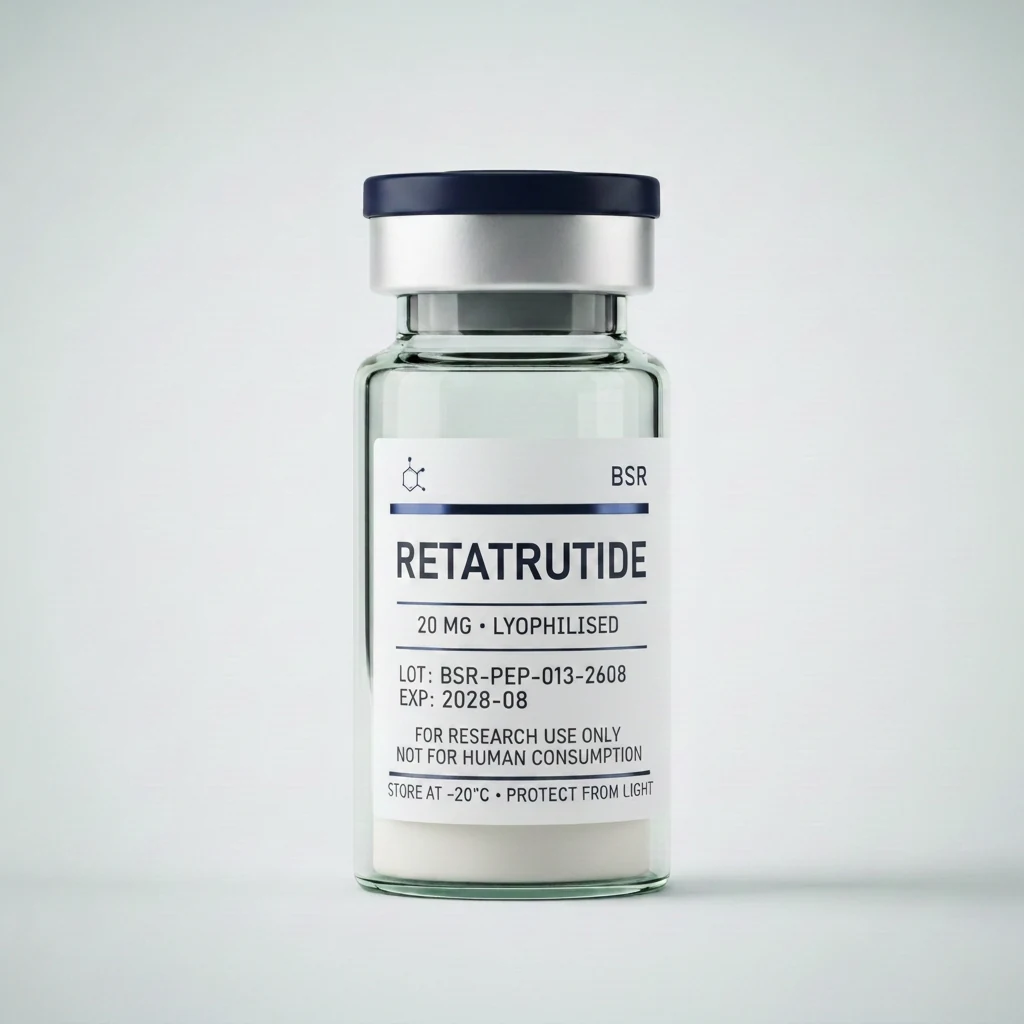
- The "research-use only" label — the primary mechanism used by illicit sellers to sidestep drug-approval requirements — is a central allegation in the Lilly complaints.
- MHRA previously seized falsified retatrutide in the UK, illustrating that the supply problem is not confined to the United States.
- Retatrutide remains unapproved anywhere in the world; Eli Lilly has said it plans to submit an FDA application in the first quarter of 2027.
Background: what retatrutide is and why it is attracting illicit supply
Retatrutide is a once-weekly injectable peptide that simultaneously activates receptors for three hormones: GLP-1, glucose-dependent insulinotropic polypeptide (GIP), and glucagon. Phase 3 trial results disclosed by Eli Lilly show that participants receiving the highest studied dose in adults with obesity or overweight and type 2 diabetes lost an average of 20.8 per cent of their body weight over 80 weeks, compared with 4 per cent for those receiving a placebo. That efficacy signal — among the strongest seen for any weight-loss agent — has fuelled intense public interest well in advance of regulatory approval.
Eli Lilly has said it plans to submit an application to the FDA in the first quarter of 2027, and that submission would still require regulatory review before the drug could reach the market. In the interim, vendors have been selling imitation versions of the drug online; federal law prohibits the commercial sale of unapproved drugs, but that has not stopped sellers from offering such products at a scale with no modern precedent.
Two deaths in the adverse event system
The FDA received reports that two people died after taking illicit products claiming to be retatrutide, according to FDA documents reviewed by CBS News in an October 2026 report.
A healthcare professional informed the FDA that a 41-year-old woman with obesity went into cardiac arrest in July, with the report listing retatrutide as a suspect product obtained "from an unreliable source." In September, the FDA received a report that a 49-year-old patient died of cardiac arrest after severe dehydration and malnutrition; the report states that a licensed nurse sold the patient vials from an online peptide vendor and recommended dosages.
The reports were submitted through the FDA's Adverse Event Reporting System and obtained via a Freedom of Information Act request. The FDA declined to say whether it has verified either case, and Eli Lilly confirmed that neither was connected to a clinical trial. Lilly stated that the reports "make clear" the individuals were taking black-market retatrutide and said it has found suspect products containing the wrong quantity of active ingredient alongside contaminants.
Causation is not established. The FDA has received at least two reports of deaths linked to illicit retatrutide this year, though it is not certain whether counterfeit retatrutide is responsible for these deaths; these are only the latest reports suggesting that such products can be dangerous. The details of the deaths are unverified, and because the medications were obtained through illicit channels, it is not clear whether patients were actually taking retatrutide or another product falsely labelled as retatrutide.
Lilly's litigation strategy: two waves, eleven defendants
In August 2026, Eli Lilly sued six companies it said were selling versions of its experimental weight-loss drug, characterising the lawsuits as the start of a broader crackdown. Federal law prohibits the commercial sale of unapproved drugs, but Eli Lilly said telehealth firms, clinics and online peptide vendors had been offering the drug anyway as interest surged online.
The August defendants included Astra Peptides, Legendary Peptides, Texas Peptides and Lone Star Peptide, which advertise the product "for research use" without a prescription, as well as Aesthetic Envy, a California medical spa, and Striker Pharmacy, which had produced a version of the experimental drug.
On 8 October 2026, Lilly filed a further five complaints across several federal courts, targeting American Peptides LLC, LiveWell Peptides, Cenexa Labs LLC, Medrein Health & Aesthetics, and Medshape Weight Loss Clinic LLC. The October defendants include three online retailers, a weight-loss clinic and a "med spa."
The legal theories deployed are instructive for any entity in the research supply chain. Lilly alleges that each of the online retailers uses "research use only" disclaimers to disguise sales of products intended for human use, with its claims resting on state consumer protection and unfair competition laws that prohibit selling unapproved new drugs. Against the clinic defendants, Lilly brings false advertising claims under Section 43(a) of the Lanham Act, alleging that statements about clinical trial support, comparisons to FDA-approved medicines and regulatory status were false or misleading.
Separately, Lilly reported more than 200 entities engaged in the illegal market to the FDA, the Department of Justice, state attorneys general, law enforcement and professional licensing boards. In more than 100 countries, the company has uncovered over 14,000 websites, advertisements, social media posts and product listings offering retatrutide.
Congressional pressure: the 20 October bipartisan letter
The most recent development is the one with the clearest implications for the regulatory trajectory. A bipartisan group of lawmakers is urging the FDA to plug a loophole used to import knockoff retatrutide, the investigational obesity drug made by Eli Lilly. The letter was published on 20 October 2026, according to STAT News.
The bipartisan coalition formally urged the FDA to address the regulatory loophole currently being exploited to import unauthorised compounded versions of retatrutide. The request centres on closing the pathway that allows knockoff formulations of the unapproved drug to enter the United States market outside of standard FDA oversight, signalling growing congressional attention to peptide importation enforcement and the integrity of the drug approval process.
That congressional concern arrives in the context of broader enforcement activity. Regulators have started to push back, and in August the FDA sent warning letters to online marketers of unapproved peptides, including retatrutide. Since August 2026, the FDA has stepped up enforcement against research-use-only peptide sellers and high-volume compounders.
The UK dimension
The enforcement challenge is not uniquely American. Falsified retatrutide, branded as "Alluvi," was seized by UK authorities in a 2025 raid. The UK's MHRA seized 2,000 pen injectors purporting to contain retatrutide and Eli Lilly's other weight-loss drug tirzepatide, along with tens of thousands of empty pens ready to be filled, from a single site. That seizure preceded the FAERS death reports and the August litigation wave, indicating that illicit retatrutide supply chains were operating at scale well before the recent surge in enforcement attention.
The drug is not approved anywhere, yet some companies are already distributing and selling it and other unregulated peptides, often produced in China, to people all around the world.
What research procurement teams should note
Several structural points emerge from the pattern of events:
"Research-use only" labelling is under direct legal attack. Lilly's complaints explicitly allege that research-use-only disclaimers are being used to disguise sales intended for human administration. The defendants include a range of businesses — medical spas, wellness clinics, compounding pharmacies and online sellers — that often attempt to sidestep US regulations by labelling products as "research-use only." Procurement teams sourcing any investigational peptide under that labelling convention should review supplier documentation carefully and ensure end-use records are unambiguous.
Quality cannot be verified at point of purchase. Eli Lilly alleges in its lawsuits that companies claiming to sell retatrutide are endangering consumers with substances that have not been vetted by regulators and are more likely to contain contaminants. Because retatrutide has no approved reference standard available commercially, third-party analytical verification of claimed identity and purity carries particular weight for any research application.
The supply chain is predominantly overseas. Lilly has confirmed that the retatrutide being marketed by illicit sellers is supplied by "overseas manufacturers." Combined with recent FDA inspection findings at Chinese API facilities producing GLP-1 raw materials, this reinforces the importance of reviewing full supply-chain documentation — including country of origin and facility registration status — for any peptide in this class.
Congressional and judicial attention is intensifying simultaneously. The Seventh Circuit's pending ruling on retatrutide exclusivity, the October congressional letter, and eleven active civil suits mean the regulatory and legal environment around this compound will continue to evolve rapidly. Research institutions holding any stock of products labelled as retatrutide should confirm provenance documentation as a precautionary measure.
BSR Intelligence is a research briefing service for UK laboratory procurement professionals. Nothing in this article constitutes legal or medical advice.
Research-grade material, HPLC verified, certificate of analysis with every order.
The week's Intelligence in one email, every Friday morning.
Regulatory moves, trial readouts, supply-chain news. No product pitches. Unsubscribe in one click.
More in Reputational Risks
Sterility Failure at a Forewarned Compounder: What the Apothecary Pharma Tirzepatide Recall Reveals About Persistent Quality Gaps
20 Oct 2026
Black Mould, Falsified Records, and Import Alert 66-40: What FDA Inspection Reports Reveal About Chinese GLP-1 API Suppliers
16 Oct 2026
Supplement-Grade API in Injectable Vials: The Glutathione Contamination Cluster That Illuminates a Systemic Compounding Risk
15 Oct 2026