Research Pipeline · 30 Jun 2026
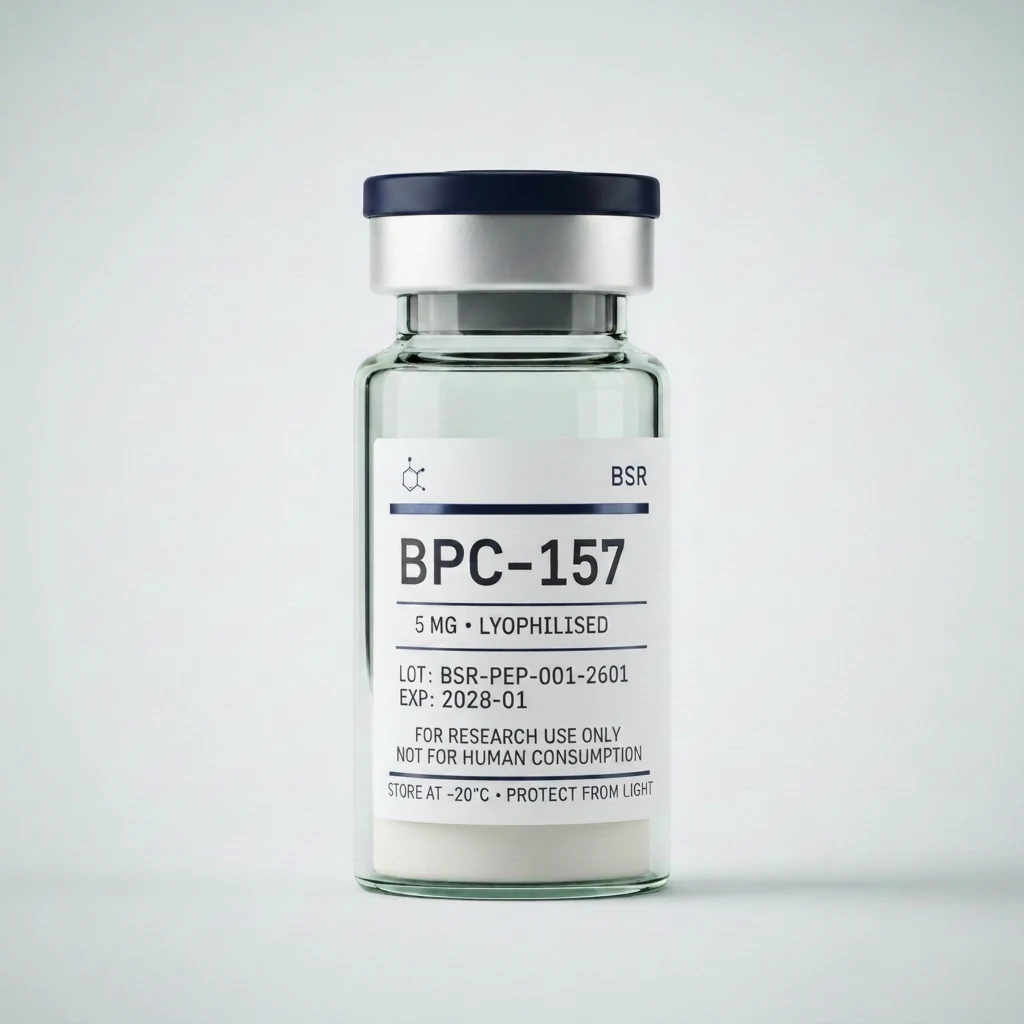
BPC-157: The Gastric Peptide With 100+ Preclinical Studies and Near-Zero Human Trial Data — What the July PCAC Review and MHRA Scrutiny Mean for Research Procurement
BPC-157 is arguably the most discussed peptide in the current FDA regulatory cycle, yet its human evidence base remains strikingly thin. With a PCAC advisory vote scheduled for 23–24 July 2026 and the MHRA having opened a separate investigation into UK clinics making claims about the compound, research-procurement professionals need a clear-eyed picture of where the science, the regulation, and the supply chain actually stand.
12 sources cited
Key takeaways
- BPC-157 is a synthetic 15-amino acid pentadecapeptide with more than 100 published preclinical studies, but no completed, published Phase 2 or Phase 3 randomised controlled trials in humans as of mid-2026.
- The FDA removed it from the Category 2 restricted compounding list effective 23 April 2026; its formal future is contingent on the Pharmacy Compounding Advisory Committee (PCAC) meeting on 23–24 July 2026, after which a full notice-and-comment rulemaking period is still required before any Category 1 placement can take effect.
- In the UK, the MHRA classifies BPC-157 as an unlicensed medicine and, in April 2026, opened an investigation into clinics making therapeutic health claims about the compound.
- For UK research-procurement professionals, BPC-157 remains lawfully available for laboratory research use only, with no licensed clinical pathway and no NHS prescribing route.
- The principal procurement risk is purity: the absence of regulatory oversight has historically produced grey-market vials of highly variable quality.
What BPC-157 is and how it is proposed to work
BPC-157 (Body Protection Compound 157) is a synthetic pentadecapeptide — a chain of exactly 15 amino acids (sequence: Gly-Glu-Pro-Pro-Pro-Gly-Lys-Pro-Ala-Asp-Asp-Ala-Gly-Leu-Val) with a molecular weight of approximately 1,419 Da. It is a synthetic analogue of a segment of the Body Protection Compound protein first isolated from human gastric juice by researchers at the University of Zagreb, Croatia.
In preclinical models, BPC-157 has demonstrated notable reparative and anti-inflammatory properties across diverse preclinical models, with experimental evidence showing that it supports angiogenesis, collagen synthesis, fibroblast activity, and modulation of nitric oxide pathways, contributing to enhanced healing of muscle, tendon, ligament, bone, and gastrointestinal tissue.
The five areas most active in current preclinical publications, according to OL Research's UK research guide for 2026, are: musculoskeletal injury models (rotator-cuff, Achilles, and patellar tendon transections); gastrointestinal models (gastric ulcer, ileitis, and fistula closure); neurological models (peripheral nerve transection and traumatic brain injury); cardiovascular models (vascular endothelial recovery); and wound healing. One notable biochemical property is unusual stability in gastric fluid: BPC-157 remains intact in gastric fluid for over 24 hours, which is unusual for a peptide and has implications for oral bioavailability.
The human evidence problem
Despite the depth of animal data, the human evidence base is strikingly thin. BPC-157 has extensive animal evidence — more than 100 studies — but very limited published human clinical trial data as of 2026.
The most recent human data is a 2025 pilot study by Lee and Burgess, published in Alternative Therapies in Health and Medicine (PMID: 40131143). This small study administered intravenous BPC-157 at doses up to 20 mg in two healthy adults and reported no adverse effects. While encouraging for basic safety, a two-person pilot study without a control group provides very limited evidence.
There is a further concern about the provenance of the preclinical literature itself. The vast majority of published studies — estimated at over 100 peer-reviewed papers — originate from a single research group at the University of Zagreb, Croatia. While this body of work is substantial and internally consistent, the lack of independent replication from other laboratories is a significant limitation that the scientific community has noted repeatedly.
A formal systematic review published in 2025, identified in Irvine Health's 2026 evidence update, searched six databases through March 2025 and examined the available BPC-157 literature for musculoskeletal applications. The authors concluded that despite extensive preclinical evidence, the human evidence base remains inadequate to support clinical recommendations.
On registered trials, the situation is stark. As of March 2026, no registered clinical trials for BPC-157 are actively recruiting on ClinicalTrials.gov. A Phase I trial registered in 2015 by PharmaCotherapia d.o.o. was reportedly cancelled in 2016, and no results were published. The absence of pharmacokinetic data is a key gap: we do not actually know how humans metabolise this peptide.
The US regulatory position: Category 2 removal, PCAC, and what comes next
BPC-157's US regulatory trajectory has shifted materially in 2026. Effective 23 April 2026, the FDA removed twelve peptides from its Category 2 restricted compounding list after the original nominations were withdrawn, which eases the restriction on compounding them. BPC-157 was among those twelve.
However, removal from Category 2 is not the same as authorisation to compound. These substances currently exist in a regulatory grey zone. They are no longer designated as posing a "significant safety risk," but they have not been affirmatively authorised for compounding under Section 503A or FDA guidance. Compounders who interpret removal from Category 2 as implicit permission to compound do so at considerable enforcement risk.
The next formal procedural step is the PCAC meeting on 23–24 July 2026. Under FDA's typical process, changes to the 503A Bulk Drug Substances List are routed through the PCAC; without such a review, any modification would likely face a legal challenge. Notably, PCAC's recommendation is non-binding, and formal rulemaking is what comes next. Even if PCAC recommends adding these peptides to Category 1, notice-and-comment rulemaking is still required — a process that, under standard timelines, can take more than a year.
The PCAC advisory vote on 23–24 July 2026 is a necessary step toward reclassification, but it is not the final determination. After a positive PCAC recommendation, the FDA must complete a formal Notice of Proposed Rulemaking (NPRM) with a mandatory 60-day public comment period before issuing a Final Rule. This means official reclassification allowing compounding pharmacies to use BPC-157 is highly unlikely before late 2026 at the earliest.
It is also worth noting that the 503B outsourcing-facility pathway remains entirely separate. The FDA has been interestingly silent concerning Section 503B outsourcing facilities' ability to compound using peptides — FDA has not indicated that these twelve peptides will be reviewed for or otherwise moved to the Agency's separate 503B Category 1 list.
A supply-chain obstacle sits upstream of any positive PCAC outcome. There is a supply chain issue that sits upstream of any FDA regulatory authorisation of their use in compounding. Pursuant to Section 503A, the bulk API used in the compounding of peptide products must be manufactured at an FDA-registered drug establishment, and accompanied by a Certificate of Analysis. Pharmaceutical-grade API at the required specification is not yet widely available in the US market, meaning that even a favourable PCAC vote would not immediately translate into broad compounding access.
UK and international regulatory status
The UK position is governed by the Human Medicines Regulations 2012 and MHRA licensing requirements. In the United Kingdom, the MHRA classifies BPC-157 as an unlicensed medicine. While it is not a controlled drug under the Misuse of Drugs Act, marketing or supplying it for human use without marketing authorisation is prohibited.
BPC-157 is not a controlled substance under the Misuse of Drugs Act 1971 and does not fall within the scope of the Psychoactive Substances Act 2016. It is not listed on any MHRA prescription-only or pharmacy medicine schedule. This means legitimate UK laboratories may purchase and hold it for research use; however, UK-based laboratories ordering it in 2026 face a steeper compliance bar than they did three years ago, alongside growing scrutiny of supplier provenance, batch purity, and identity-verification standards.
A development of particular note for UK procurement professionals: in April 2026, the UK medicines regulator opened an investigation into peptide clinics making health claims about compounds they cannot legally sell as medicines. BPC-157 was named first. The MHRA's stated read is that there is little credible scientific evidence behind the claims, the products are unlicensed, and the marketing has run a long way ahead of the data.
Internationally, the EMA has not reviewed BPC-157, and member states apply varying national pharmaceutical regulations.
Procurement considerations for UK research laboratories
For research-procurement professionals assessing BPC-157 sourcing, several practical points follow from the regulatory picture above.
Research-use only status is non-negotiable. BPC-157 may be procured for legitimate laboratory and scientific research in the UK, but it cannot lawfully be marketed for human consumption or prescribed. Institutions should ensure their procurement documentation and end-use declarations reflect this unambiguously.
Purity and characterisation are the primary quality risks. The grey-market background to BPC-157 supply — driven by years of regulatory uncertainty — has historically produced products of highly variable quality. Any research-grade purchase should be accompanied by a Certificate of Analysis showing HPLC purity (target ≥98%), mass spectrometry identity confirmation, and absence of residual solvents and endotoxins. Independent third-party testing from accredited UK laboratories is advisable for critical studies.
The US PCAC outcome will affect global supply dynamics. A positive PCAC recommendation in July 2026 is likely to increase demand for pharmaceutical-grade BPC-157 API from US compounding pharmacies, potentially creating supply pressure on the research-grade market. Procurement teams monitoring long-term sourcing should track the PCAC outcome and any subsequent FDA rulemaking.
The human evidence gap has direct implications for research design. There are no published randomised controlled trials of BPC-157 in humans for any indication. Investigators designing studies should account for the absence of established pharmacokinetic data in humans — including half-life, oral versus injectable bioavailability, and tissue distribution — when framing study objectives and selecting dosing parameters.
The July PCAC meeting represents the most significant formal regulatory moment in BPC-157's history. Its outcome will not resolve the human evidence gap, but it will determine whether the compound's US compounding pathway progresses from grey zone to regulated access — a shift that would reshape both the procurement landscape and the incentive structure for future clinical research.
Research-grade material, HPLC verified, certificate of analysis with every order.
The week's Intelligence in one email, every Friday morning.
Regulatory moves, trial readouts, supply-chain news. No product pitches. Unsubscribe in one click.
More in Research Pipeline
Thymosin Alpha-1: What 35 Countries of Clinical Use and a Lopsided PCAC Vote Mean for Research Access in 2026
07 Oct 2026
Viking Therapeutics Initiates Oral Maintenance Dosing Study for VK2735: What the GLP-1/GIP Dual Agonist's Two-Part Programme Tells Researchers About the Weight-Regain Problem
06 Oct 2026
GHK-Cu: What a Fresh Diabetic Wound Study and a Recruiting Phase 2 Trial Mean for the Copper Peptide's Research Standing
03 Oct 2026