Regulatory & Policy · 06 Jun 2026
FDA Proposes Permanent 503B Exclusion of GLP-1 Peptides: What the 30 June Deadline Means for Research and Procurement
The FDA's 30 April 2026 proposal to formally bar semaglutide, tirzepatide, and liraglutide from the 503B Bulks List closes the last major regulatory pathway for large-scale GLP-1 compounding. With the public comment window closing on 29–30 June 2026, UK and US research labs need to understand what this finalisation would mean for procurement, quality assurance, and parallel July 2026 developments on other peptides.
10 sources cited
Key takeaways
- On 30 April 2026, the FDA proposed to exclude semaglutide, tirzepatide, and liraglutide from the 503B Bulk Drug Substances List, citing no demonstrated clinical need for outsourcing facilities to compound these agents.
- If finalised, the rule would permanently foreclose large-scale bulk compounding of these three GLP-1 peptides, regardless of future market conditions — including any future shortage designation.
- A public comment period is open until 29–30 June 2026 via the Federal Register docket (the FDA notice cites both dates across different agency documents; submitters should target 29 June to be safe).
- The proposal runs in parallel with the July 2026 PCAC hearing on other compounded peptides, creating a split regulatory picture: GLP-1s tightening further while certain non-GLP-1 peptides may gain compounding access.
- Adverse-event data weighed heavily in the agency's reasoning: more than 455 reports linked to compounded semaglutide and over 320 linked to compounded tirzepatide have been filed with the FDA.
Background: how the compounding window opened — and is now closing
The 503B compounding framework permits FDA-registered outsourcing facilities to produce large batches of pharmaceutical compounds without individual patient prescriptions, provided the substance appears on the agency's 503B Bulks List or the drug appears on the official shortage list at the time of compounding.
Pharmacy Times reports that semaglutide and tirzepatide were both added to the shortage list in 2022 as surging demand outstripped brand supply, creating a compounding market that offered these agents at roughly $150–$300 per month compared with branded costs exceeding $1,000. That access began to close when the FDA resolved the tirzepatide shortage in December 2024 and the semaglutide shortage in February 2025, imposing phased wind-down deadlines for compounders. Legal challenges by the Outsourcing Facilities Association (OFA) failed to secure preliminary injunctions in either case, leaving both drugs off the shortage list with no immediate route back.
The April 2026 proposal addresses what had remained a theoretical pathway: formal inclusion on the 503B Bulks List on the grounds of demonstrated clinical need. According to the FDA's own announcement, after reviewing nominations for all three substances, the agency "did not identify sufficient evidence" to support their inclusion. FDA Commissioner Marty Makary stated that "when FDA-approved drugs are available, outsourcing facilities cannot lawfully compound using bulk drug substances unless there is a clear clinical need," according to Drug Topics.
What the proposal would and would not change
503B outsourcing facilities
Legal analysis published by Orrick describes this as "a potentially decisive regulatory blow" to outsourcing facilities that have compounded GLP-1 medications. If finalised, semaglutide, tirzepatide, and liraglutide would be formally excluded from the list on a finding of no clinical need, meaning outsourcing facilities could not compound these drugs from bulk substances even if the drugs were later nominated again. This would effectively block large-scale, bulk compounding by outsourcing facilities unless the drugs return to the FDA's shortage list — a scenario the agency's framing makes unlikely to trigger new 503B access.
503A compounding pharmacies
The situation for 503A pharmacies — state-licensed facilities that compound pursuant to individual patient-specific prescriptions — is legally distinct. As Orrick notes, the 503B proposal does not directly alter the 503A framework. However, 503A pharmacies are already prohibited from compounding drugs that are "essentially a copy" of commercially available approved products in regular or inordinate amounts. Because branded semaglutide and tirzepatide products are now commercially available, the 503A route is, according to Epstein Becker Green health law analysis, already legally precarious for most standard formulations.
One nuance: the Federal Register notice confirms that liraglutide currently remains on the FDA's shortage list, meaning the shortage-list pathway for 503B compounding remains technically available for liraglutide while that shortage designation holds — though a finalised exclusion from the 503B Bulks List would close the clinical-need route once any shortage-based basis is unavailable.
Research-use-only procurement
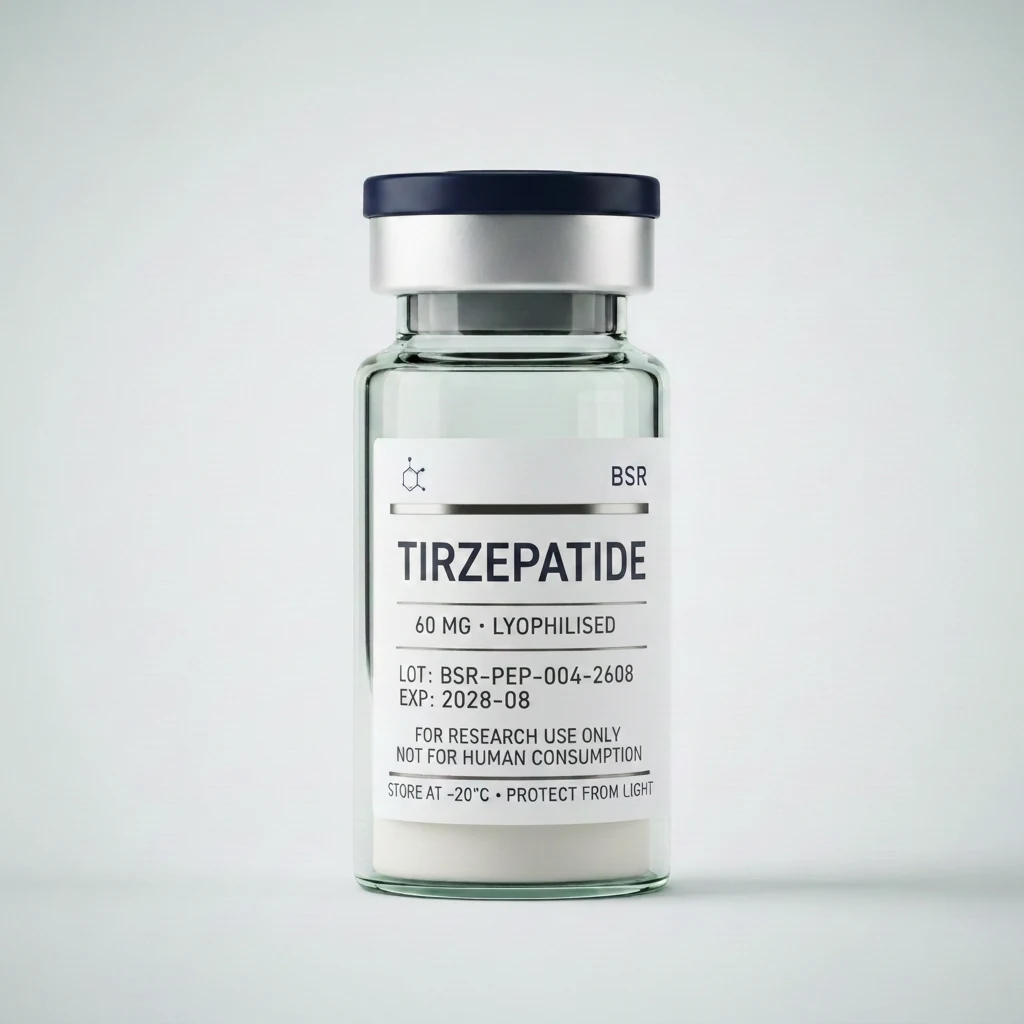
The 503B rules apply to compounding for human administration. Procurement of GLP-1 peptides as research-use-only (RUO) compounds for in vitro laboratory work operates under a legally distinct framework and is not directly affected by the 503B Bulks List proposal. Labs should nonetheless ensure that RUO-labelled material is sourced from legitimate, cGMP-compliant suppliers, given the FDA's heightened surveillance of the broader GLP-1 supply chain.
Why safety data drove the outcome
The FDA's reasoning was not solely structural. Pharmacy Times reports that as of early 2025, the agency had received more than 455 adverse-event reports linked to compounded semaglutide and more than 320 linked to compounded tirzepatide, many involving dosing errors from patients self-administering from multidose vials — some of which required hospitalisation. The Partnership for Safe Medicines has stated that mass compounding of GLP-1 medications "has been linked to hundreds of adverse events — including sepsis, liver injury, and hospitalizations — as well as recalls involving thousands of contaminated or improperly dosed vials."
Litigation has also surfaced product-quality data: Drug Topics reports that Novo Nordisk filed a lawsuit alleging some compounded semaglutide products contained impurities as high as 86%, with risks including anaphylaxis. These data points — adverse events, contamination findings, and the "essentially a copy" provision — collectively constitute the agency's "no clinical need" determination.
How this interacts with the July 2026 PCAC hearing
The 503B GLP-1 proposal represents one half of a bifurcated regulatory picture. Running in parallel, the FDA's Pharmacy Compounding Advisory Committee (PCAC) is scheduled to meet on 23–24 July 2026 to consider whether a different category of non-GLP-1 peptides — including compounds removed from Category 2 of the 503A bulk substances list in April 2026 — should be added to the 503A Bulks List and granted enforcement discretion for compounding. As the National Law Review notes, the PCAC meeting will consider substances "not found in FDA-approved drugs," a category that encompasses many of the research-grade peptides under active discussion.
The divergent trajectories are significant: GLP-1 peptides — which have well-characterised, commercially available approved versions — face permanent 503B exclusion; certain research-stage peptides without approved commercial analogues may gain compounding access via the PCAC recommendation process. This distinction is central to understanding the FDA's underlying regulatory logic.
What procurement teams should note before 30 June
- Comment window: The Federal Register docket confirms that comments not received by the closing date will not be considered. Organisations with a stake in outsourcing facility access to GLP-1 bulk substances should lodge comments before 29 June. As of the Federal Register docket, 457 public comments had already been received.
- 503B supply chain review: Any organisation reliant on 503B-sourced GLP-1 material for non-RUO purposes should audit current supply agreements given the expected finalisation by late summer 2026.
- RUO sourcing: The 503B restrictions do not apply to RUO research material, but heightened enforcement attention on GLP-1 supply chains means that supplier qualification — Certificate of Analysis verification, purity confirmation by HPLC, and documented RUO intent — is more important than before.
- 503A risk assessment: Epstein Becker Green advises that the proposal, if finalised, would represent a victory for branded manufacturers and that compounders continuing to operate in this space face exposure to FDA enforcement, state regulatory action, and manufacturer litigation.
Outlook
A final ruling is expected by late summer 2026, according to analysis from LotiLabs. Given the strength of the agency's stated rationale — resolved shortages, adverse-event accumulation, and the availability of approved branded alternatives — a reversal following the comment period would require substantial, novel clinical-need evidence from submitters. The National Community Pharmacists Association and the Alliance for Pharmacy Compounding are expected to file formal comments, according to Pharmacy Times, but the litigation record suggests neither body is likely to shift the agency's position absent new evidence of clinical need not met by branded products.
For UK research laboratories, the immediate practical relevance is primarily in understanding which US supply channels for GLP-1 reference standards and RUO peptides remain legally operational, and ensuring supplier documentation accurately reflects the regulatory status of material being sourced.
Research-grade material, HPLC verified, certificate of analysis with every order.
The week's Intelligence in one email, every Friday morning.
Regulatory moves, trial readouts, supply-chain news. No product pitches. Unsubscribe in one click.
More in Regulatory & Policy
One Amino Acid, Three High Stakes: What the Seventh Circuit's Pending Retatrutide Ruling Means for Exclusivity, Medicare Pricing, and Compounding Access
12 Oct 2026
FDA Career Scientists Formally Oppose Administration's Interim Peptide Dispensing Plan — and What the Internal Split Means for Research Procurement
11 Oct 2026
HHS Stopgap Plan for Restricted Peptides: What the Reported Enforcement-Discretion Proposal Means for Research Procurement
09 Oct 2026