Regulatory & Policy · 25 Aug 2026
FDA Publishes 17 Revised Draft Product-Specific Guidances for Generic Peptides: What the New Testing Standards Mean
On 28 July 2026, the FDA released revised draft product-specific guidances for 17 injectable peptide products, including semaglutide, tirzepatide, liraglutide, and teriparatide, setting updated standards for bioequivalence, impurity thresholds, and biological activity assessment. The comment window closes 28 September 2026, making this an active regulatory moment for developers and procurement teams alike.
8 sources cited
Key takeaways
- On 28 July 2026, the FDA published 17 revised draft product-specific guidances (PSGs) for injectable peptide drug products, covering compounds used in obesity, type 2 diabetes, osteoporosis, and macular degeneration.
- The PSGs address five analytical and regulatory areas: ANDA submission routes for recombinant, synthetic, or semi-synthetic peptides; innate immune response testing; impurity thresholds; higher-order structure assessment; and biological activity assessment.
- The FDA simultaneously withdrew its May 2021 guidance on synthetic peptide ANDAs, stating it no longer reflects current scientific thinking; a replacement is expected later in 2026.
- Public comments on the draft guidances must be submitted by 28 September 2026, giving stakeholders approximately two months to flag technical concerns.
- The action is framed as part of the agency's Drug Competition Action Plan and is aligned with Executive Order 14273 on lowering drug prices — positioning generic peptide entry as a policy priority.
Background: what a product-specific guidance does
A product-specific guidance (PSG) is a technical document issued by the FDA's Office of Generic Drugs to assist developers in preparing an Abbreviated New Drug Application (ANDA) for a generic version of a reference listed drug. According to the FDA, PSGs are published to "facilitate generic drug development, streamline abbreviated new drug application assessment, and support greater access to generic drugs."
As described by RAPS, PSGs focus specifically on how sponsors should design bioequivalence studies and what analytical and quality data the agency expects to see in an ANDA submission. The documents are recommendations rather than binding rules; however, as Pharmaceutical Technology notes, "deviations from guidances typically prompt increased regulatory scrutiny."
For peptides specifically, demonstrating bioequivalence is considerably more complex than for small-molecule drugs. Peptides are structurally sensitive — sequence, conformation, and post-synthesis modification all affect biological activity — and the agency's testing expectations have evolved substantially as analytical science has advanced.
The 17 compounds covered
According to the FDA's announcement, the revised draft PSGs address the following reference products:
- Calcitonin salmon (Calcimar; Miacalcin)
- Dasiglucagon hydrochloride (Zegalogue)
- Glucagon (Baqsimi; Glucagon; Gvoke)
- Liraglutide (Victoza; Saxenda)
- Pegcetacoplan (Syfovre; Empaveli)
- Semaglutide (Ozempic; Wegovy)
- Teriparatide (Forteo; Teriparatide)
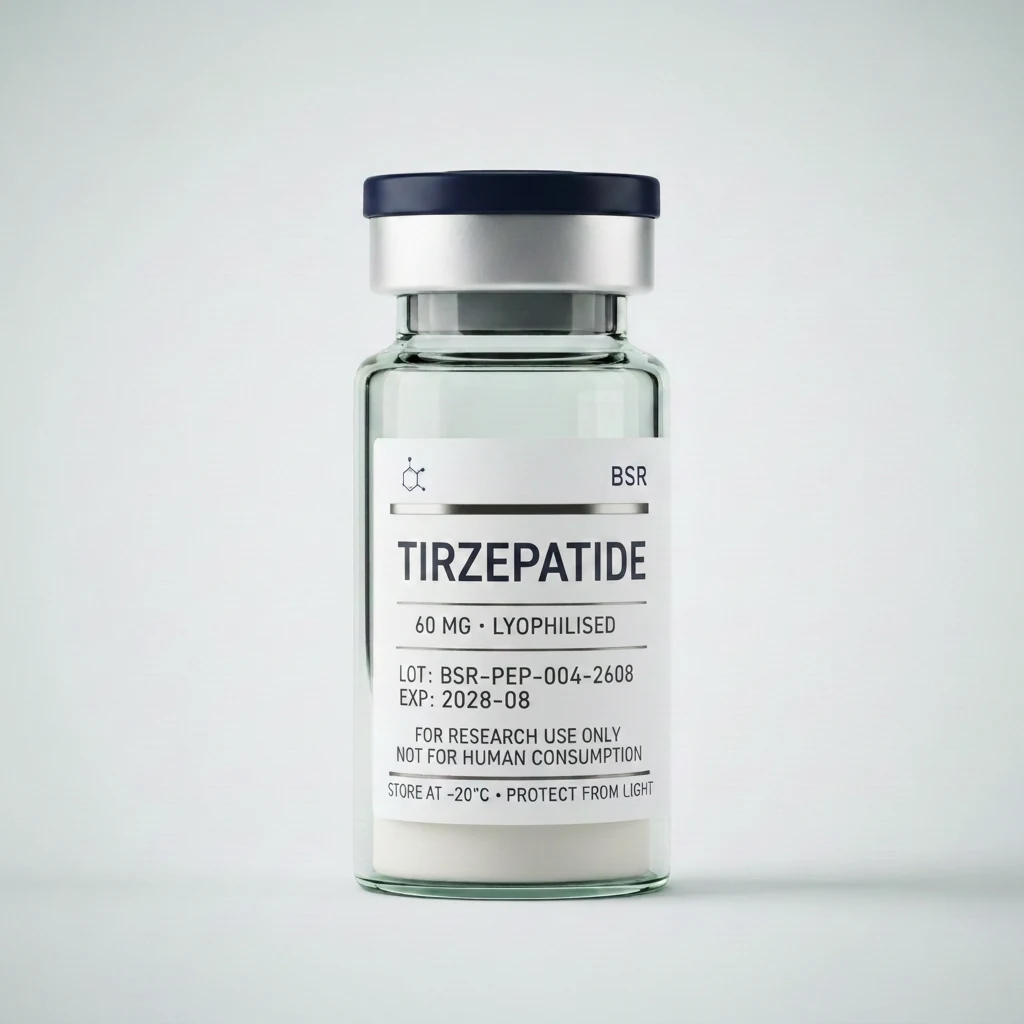
- Tirzepatide (Mounjaro; Zepbound)
- Vosoritide (Voxzogo)
As Becker's Hospital Review reports, the drugs span conditions including obesity, type 2 diabetes, osteoporosis, and macular degeneration. The inclusion of semaglutide and tirzepatide — currently the most commercially significant injectable peptides on the market — has drawn the most attention from analysts and developers.
The breadth of the list is notable: it encompasses both legacy peptide drugs (calcitonin salmon has been in clinical use for decades) and the newest GLP-1 receptor agonists, signalling that the agency is taking a unified scientific approach to the generic peptide pathway rather than treating each compound in isolation.
Five areas of updated recommendations
The FDA states that the revised PSGs provide updated recommendations across five key areas:
- Submission of recombinantly, synthetically, or semi-synthetically produced peptides as ANDAs. This addresses the route of manufacture and whether a synthetic copy can be submitted via the ANDA pathway rather than through a biologics licence application.
- Innate immune response testing. Peptide drugs can trigger non-adaptive immune reactions that differ from those of small molecules. The guidance specifies how sponsors should assess this risk.
- Impurity thresholds. Synthetic peptide manufacturing introduces related impurities — truncated sequences, oxidation products, diastereomers — that must be characterised and controlled. Updated thresholds reflect improved analytical capabilities.
- Higher-order structure assessment. For longer peptides or those with defined secondary structure, demonstrating that the generic matches the three-dimensional conformation of the reference product is now an explicit expectation.
- Biological activity assessment. Where in vitro bioequivalence is scientifically justified, the PSGs provide direction on appropriate assay approaches; in vivo studies may be waived under 21 CFR 320.22(b)(1) where bioequivalence is self-evident, according to Lachman Consultant Services.
The 2021 guidance withdrawal: a signal of shifting science
Alongside the 17 revised PSGs, the FDA simultaneously withdrew its May 2021 guidance entitled ANDAs for Certain Highly Purified Synthetic Peptide Drug Products That Refer to Listed Drugs of rDNA Origin. The agency stated that the 2021 document "no longer reflects FDA's current scientific thinking," and that a revised version will be issued later in 2026 per the Centre for Drug Evaluation and Research guidance agenda.
Medical Daily observes that the withdrawal "suggests the agency's understanding of when two peptide products can be treated as the same has shifted since 2021, and that the framework for making that judgment is being rebuilt rather than adjusted." For UK research procurement teams sourcing reference standards or working with contract manufacturers on analytical method development, this matters: the previous framework for distinguishing recombinant from synthetic peptide ANDA eligibility is now formally superseded.
RAPS confirms the FDA plans to reissue the 2021-era guidance later this year, meaning the gap between the withdrawal and the replacement may be relatively brief — but developers should not rely on the withdrawn document during that interval.
Policy context: generic access and price reduction
The FDA's framing of the PSG release is explicitly political. The agency's announcement connects the action to President Trump's Executive Order 14273, "Lowering Drug Prices by Once Again Putting Americans First," and to the agency's Drug Competition Action Plan. RAPS notes that the update "aligns the agency's mission of improving access to generic medicines."
The commercial logic is straightforward. Medical Daily points out that "patents and exclusivity periods on the leading injections are approaching their end, and generic developers have been positioning for that." The revised PSGs give those developers a clearer, more current roadmap for what the FDA will expect — reducing development uncertainty at a critical juncture.
This is distinct from, though parallel to, the ongoing compounding debate. As Stanford Medicine noted in July 2026, the compounding pathway and the generic pathway serve different populations under different legal frameworks; the PSGs exclusively govern the latter — formal generic drug development via the ANDA route — and have no direct bearing on compounding pharmacy operations.
Comment deadline and practical implications
The Federal Register notice accompanying the revised PSGs sets a comment deadline of 28 September 2026. Comments may be submitted electronically through the federal rulemaking portal or in writing to the FDA's Dockets Management Staff.
Pharmaceutical Technology advises that "sponsors may justify alternative bioequivalence approaches," and that the comment period "represents a practical opportunity to flag where proposed testing requirements may be difficult to execute or where clarification is needed before the recommendations take effect."
For UK-based research organisations and procurement teams, the near-term relevance includes:
- Reference standard procurement: Analytical method development for generic peptide programmes typically requires certified reference standards traceable to the originator product. The updated impurity threshold and higher-order structure requirements may necessitate revised specifications.
- CRO and CDMO selection: Organisations selecting contract research or manufacturing partners for peptide ANDA support should confirm that proposed analytical packages address all five PSG areas, including innate immune response testing — a requirement that not all established generics-focused laboratories have historically incorporated into peptide work.
- Timing: Given that the FDA intends to replace the withdrawn 2021 guidance before year-end, a further set of recommendations governing recombinant vs. synthetic ANDA eligibility is likely before January 2027. Development strategies that depend on that classification should be treated as provisional until the replacement document is published.
Sources
- FDA announcement, 28 July 2026
- Federal Register Notice, 29 July 2026
- RAPS, FDA updates product-specific guidelines for injectable peptides
- Pharmaceutical Technology, Seventeen Peptide Guidance Revised: What Developers Need to Know
- Becker's Hospital Review, FDA releases 17 peptide drug guidances
- Medical Daily, FDA Sets the Testing Standards Generic Weight Loss Injections Must Meet Before Approval
- Lachman Consultant Services, Newly Revised Product Specific Guidances Issued in an Unusual Posting
- Stanford Medicine, Compounded GLP-1s: Why doctors worry and the FDA is cracking down, July 2026
Research-grade material, HPLC verified, certificate of analysis with every order.
The week's Intelligence in one email, every Friday morning.
Regulatory moves, trial readouts, supply-chain news. No product pitches. Unsubscribe in one click.
More in Regulatory & Policy
One Amino Acid, Three High Stakes: What the Seventh Circuit's Pending Retatrutide Ruling Means for Exclusivity, Medicare Pricing, and Compounding Access
12 Oct 2026
FDA Career Scientists Formally Oppose Administration's Interim Peptide Dispensing Plan — and What the Internal Split Means for Research Procurement
11 Oct 2026
HHS Stopgap Plan for Restricted Peptides: What the Reported Enforcement-Discretion Proposal Means for Research Procurement
09 Oct 2026