Industry & Community · 27 Oct 2026
No Road Back for Large-Scale GLP-1 Compounding: What the Closing 503B Pathway and Chinese API Scandal Mean for Research Procurement
The FDA's proposal to formally exclude semaglutide, tirzepatide, and liraglutide from the 503B bulk compounding list — combined with FOIA-obtained inspection reports documenting contamination and falsified records at two Chinese API suppliers — signals that the legal and supply-chain foundations of large-scale GLP-1 compounding have effectively collapsed. UK research procurement teams that source these peptides should understand what remains lawful, what does not, and where the supply risks…
12 sources cited
Key takeaways
- The FDA proposed in April 2026 to formally exclude semaglutide, tirzepatide, and liraglutide from the 503B bulk drug substances list, citing no demonstrated clinical need for large-scale outsourcing facility compounding now that brand-name shortages have resolved. The public comment period closed on 29 June 2026; a final determination is pending.
- Separate FDA inspection reports, obtained under FOIA and first reported by Bloomberg on 15 October 2026, documented black mould, insect activity, hidden laboratory records, and falsified batch documentation at two Chinese facilities that supplied raw semaglutide and tirzepatide for compounding. Both were placed on FDA import alert in September and October 2026.
- Legal challenges by outsourcing facilities have so far failed to secure injunctions against enforcement, and internal FDA scientific staff have publicly opposed the parallel White House-reviewed interim access policy for research peptides, signalling a narrowing regulatory environment across multiple fronts.
- For UK research procurement professionals, the effect is a shrinking pool of credibly sourced GLP-1 peptide APIs and heightened due-diligence requirements for any Chinese-origin supply.
The regulatory mechanism: what the 503B bulks list does
Under Section 503B of the US Federal Food, Drug, and Cosmetic Act, outsourcing facilities — large-scale, FDA-registered compounding operations — may compound drug products from bulk active pharmaceutical ingredients (APIs), but only if those APIs appear on the FDA's 503B bulk drug substances list or if a declared federal drug shortage exists for the reference product. The 503B bulks list identifies bulk drug substances that outsourcing facilities may use in compounding under the conditions of section 503B of the FD&C Act.
Semaglutide products entered the drug shortage list in 2022 and were removed in February 2025. Tirzepatide was added to the shortage list in 2022 and removed in December 2024. The removal of both products from the shortage register meant that 503B outsourcing facilities lost their primary legal basis for compounding them at scale.
The April 2026 proposed rule
On 30 April 2026, the FDA published a Federal Register notice proposing to formally exclude semaglutide, tirzepatide, and liraglutide from the 503B bulks list. The agency announced it is proposing to exclude semaglutide, tirzepatide, and liraglutide from the 503B bulks list, finding no clinical need for outsourcing facilities to compound these drugs from bulk substances.
In its substance-by-substance analysis, the FDA stated it had not identified a basis for concluding that the approved formulations were medically unsuitable for patients in ways that a compounded alternative would address. FDA found no demonstrated clinical need for outsourcing facilities to use bulk forms of these three GLP-1 agonists when commercially manufactured versions are adequately available. The public comment period ran through 29 June 2026.
Importantly, this proposal applies specifically to 503B outsourcing facilities, not 503A compounding pharmacies. Section 503A pharmacies retain the ability to compound these agents for individual patients pursuant to patient-specific prescriptions, though they operate under heightened FDA scrutiny and are not permitted to compound essentially-copy products in inordinate quantities. If finalized, the rule would prohibit 503B outsourcing facilities from compounding these agents from bulk substances outside of active, official FDA-declared shortages.
The practical consequence is the closure of the only large-scale legal pathway. Compounded GLP-1s reached roughly 30% of US supply at peak in 2024; the regulatory architecture underpinning that share has been dismantled in stages since late 2024.
Legal challenges have not prevailed
Outsourcing facility trade groups have contested FDA enforcement in court. Legal challenges by the Outsourcing Facilities Association failed to secure preliminary injunctions, solidifying that "essentially a copy" compounding of semaglutide or tirzepatide is impermissible for 503A/503B. This judicial record materially weakens any remaining argument that large-scale compounding of these agents occupies a legally defensible position pending final rulemaking.
The Chinese API contamination findings
Alongside the formal regulatory closure of the 503B pathway, FOIA-obtained inspection reports revealed severe quality failings within the Chinese API supply chain that underpins compounded GLP-1 production. Bloomberg reported on 15 October 2026 inspection findings at two Chinese pharmaceutical suppliers: Chengdu Shengnuo Biopharm and Nanjing Chengong Pharmaceutical, both of which supply pharmaceutical ingredients with connections to the GLP-1 compounding market.
At Chengdu Shengnuo, which was inspected by FDA in August 2026, inspectors encountered black mould on equipment, contamination on floors and insects in ceiling areas. Laboratory records were found hidden in lockers, and workers were observed pouring product samples down sinks as officials approached. At the second facility, Nanjing Chengong, inspectors found fabricated documentation in batch records.
Chengdu Shengnuo has FDA product listings for semaglutide and tirzepatide ingredients intended for the US compounding market, and has been linked to American API distributor ChemWerth. Nanjing Chengong's parent company, Hanxin, is 11.5% owned by US pharmaceutical company Amphastar.
FDA placed both companies on import alert — the mechanism that allows the agency to block products at the US border — in September and October 2026 respectively. The import alert does not remove existing inventory from circulation, nor does it prevent Chinese API from reaching other markets, including the UK, through intermediate distributors.
Earlier FDA records showed that both companies had already been cited for quality-control deficiencies before the 2026 inspections, indicating that the failings were not isolated incidents.
A broader supply-chain context is important: China supplies a large share of the active ingredients used in compounded GLP-1 drugs, according to a 2025 report from the Brookings Institution. The import alerts imposed on Chengdu Shengnuo and Nanjing Chengong do not close off Chinese supply generally, but they signal that FDA's scrutiny of this manufacturing ecosystem is intensifying.
Adverse event accumulation
The case for tightening large-scale compounding is also supported by an expanding adverse-event record. FDA's updated warning page on unapproved GLP-1 drugs, updated on 1 October 2026, lists 990 adverse event reports linked to compounded semaglutide through May 2026, including hospitalisations from dosing errors. Safety concerns include more than 455 semaglutide and more than 320 tirzepatide adverse-event reports, dosing errors with multidose vials, and counterfeit supply.
What remains permissible — and what does not
For research procurement professionals, the operative distinctions are:
503B outsourcing facilities. Large-scale bulk compounding of semaglutide, tirzepatide, and liraglutide is not permissible outside an active FDA-declared shortage. No such shortage currently exists for semaglutide or tirzepatide. If the April 2026 proposed rule is finalised, formal exclusion would be codified; in practice, enforcement against 503B bulk compounding of these agents has been ongoing since late 2024.
503A compounding pharmacies. Patient-specific compounding pursuant to individual prescriptions remains technically available but is under heightened scrutiny. The FDA has issued warning letters to 503A pharmacies for insanitary conditions and product quality failures, and the agency has made clear it retains jurisdiction over such facilities under the FD&C Act. Since August 2026, FDA has stepped up enforcement against research-use-only peptide sellers and high-volume compounders.
Research-use-only supply. The research-use-only channel — in which peptides are sold nominally for laboratory research rather than human administration — is distinct from the compounding framework but has come under increased FDA scrutiny. Any near-term access granted through the parallel interim peptide policy under White House review would not cover research-use-only channels.
Implications for UK research procurement
UK laboratories sourcing semaglutide, tirzepatide, liraglutide, or other GLP-1 peptides for in vitro or in vivo research purposes face a different regulatory framework than US compounders — the MHRA does not operate the 503A/503B distinction — but the supply-chain risk is shared. Chinese API manufacturers operate globally, and import alerts issued by the FDA do not automatically translate into MHRA enforcement action or UK border restrictions.
Procurement teams should consider:
- Supplier audit trails. Certificates of Analysis from Chinese API suppliers should be cross-referenced against FDA import alert databases and any available third-party testing data. The Chengdu Shengnuo and Nanjing Chengong findings illustrate that batch records themselves may be fabricated.
- Country-of-origin documentation. Peptide APIs can pass through intermediary distributors in the EU or US before reaching UK buyers, obscuring the original manufacturing site. Explicit country-of-origin and manufacturer declarations should be contractually required.
- Regulatory status of the end use. Research-grade semaglutide and tirzepatide purchased for laboratory use are not subject to the 503B compounding rules, but the same manufacturing ecosystem that supplies compounders also supplies research-chemical distributors. Quality failures in that ecosystem affect research purity and sterility equally.
- Alternative sourcing. The Samsung Biologics / PolyPeptide Group transaction, expected to close towards end of 2026, may eventually expand the pool of audited, GMP-compliant peptide API supply. In the near term, sourcing from CDMOs with documented cGMP compliance and independent third-party analytical testing remains the most defensible procurement approach.
The regulatory direction of travel in both the US and, by extension, the UK is towards tighter controls on GLP-1 peptide supply outside established pharmaceutical channels. Procurement professionals monitoring this space should treat the April 2026 proposed exclusion rule and the Chinese API inspection findings as reinforcing signals — not isolated events — pointing toward a structurally more constrained supply environment through 2027.
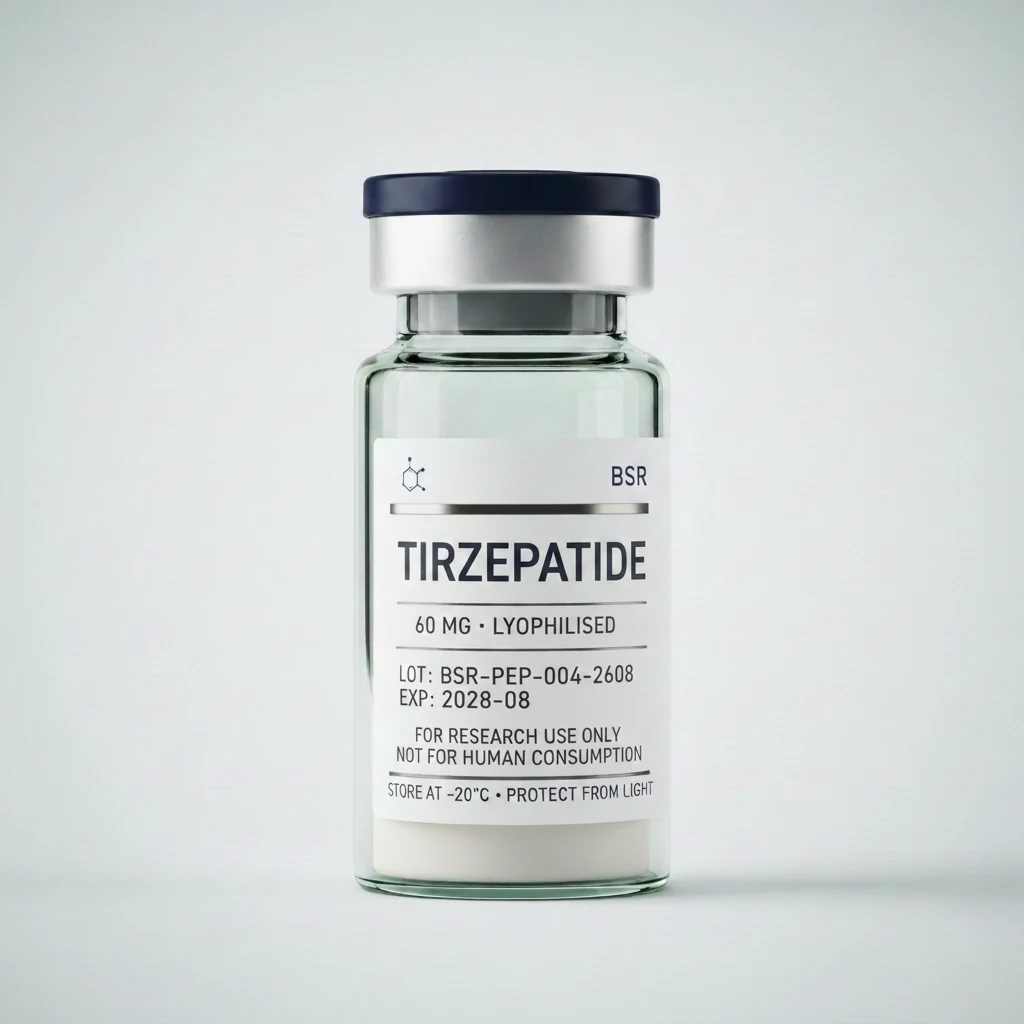
Research-grade material, HPLC verified, certificate of analysis with every order.
The week's Intelligence in one email, every Friday morning.
Regulatory moves, trial readouts, supply-chain news. No product pitches. Unsubscribe in one click.
More in Industry & Community
Samsung Biologics Clears the PolyPeptide Threshold: What the Tender Offer Result Means for Peptide API Supply Chains
18 Oct 2026
REX Peptide ETF Launches on Nasdaq: What the First Dedicated Peptide Equity Vehicle Signals About Sector Capital and Research-Supply Dynamics
14 Oct 2026
Multiplexed LC-HRMS for Nine GLP-1 Receptor Agonists: What a New Validated Method Means for Peptide Quality Control in Research Labs
13 Oct 2026