Reputational Risks · 04 Jul 2026
Retatrutide's Illicit Market: What the Surge in Unlicensed "Research Peptide" Sales Means for UK Labs
An investigative report from CBS News published on 8 June 2026, combined with MHRA enforcement raids in the UK and a 265% rise in US poison centre exposures, has brought renewed scrutiny to the grey and black markets for retatrutide. For legitimate research procurement teams, the episode illustrates exactly why the "research-use only" label is under intensifying regulatory pressure on both sides of the Atlantic.
10 sources cited
Key takeaways
- Retatrutide holds no marketing authorisation from the FDA, MHRA, or EMA; the only lawful access route globally remains enrolment in Eli Lilly's ongoing TRIUMPH Phase 3 programme.
- A CBS News investigation published on 8 June 2026 found dozens of US clinics staffed by licensed practitioners openly advertising retatrutide, and documented a 265% rise in poison centre exposures between late 2025 and early 2026.
- The MHRA conducted two enforcement raids on UK facilities producing unlicensed retatrutide and tirzepatide pens within a seven-month period, most recently in February 2026.
- Vendors routinely exploit the "research-use only / not for human consumption" label to distribute the compound; the FDA has explicitly warned that this framing does not confer legality.
- For research procurement professionals, the episode underscores that sourcing any unapproved peptide — particularly one with no USP monograph and no regulatory pathway yet completed — carries material legal and reputational exposure.
What retatrutide is and where it stands
Retatrutide (LY3437943) is a triple hormone receptor agonist in late-stage clinical development by Eli Lilly. Unlike semaglutide or tirzepatide, which target one or two metabolic receptors respectively, retatrutide simultaneously activates GLP-1, GIP, and glucagon receptors. The additional glucagon component is hypothesised to amplify energy expenditure beyond what dual agonists achieve.
On 21 May 2026, Eli Lilly announced TRIUMPH-1 results showing 28.3% average weight loss at 80 weeks across 2,339 patients, with 45.3% of patients on the 12 mg dose achieving at least 30% body-weight reduction. A regulatory submission is now anticipated later in 2026, but approval is not expected before late 2027 at the earliest. In the UK, MHRA authorisation and subsequent NICE appraisal place realistic NHS access no earlier than 2029.
The compound has no FDA-approved version, no USP monograph, and no compounding pathway under either 503A or 503B. The FDA has explicitly stated that retatrutide cannot be used in compounding under federal law.
The scale of the illicit market
A CBS News investigation published on 8 June 2026 found that retatrutide is "for sale all over the internet, a phenomenon with no modern precedent." The investigation identified dozens of clinics across the United States, operated by licensed physicians and nurse practitioners, openly advertising the unapproved compound to patients — a practice CBS described as "defying a longstanding norm in medicine."
The public health consequences are already visible. Exposures tracked by America's Poison Centers averaged approximately 95 per month in the first four months of 2026, a 265% increase from the final four months of 2025. Among the adverse event reports filed with the FDA, one patient described "severe side effects, including vomiting, fainting and the development of hard lumps on my abdomen" after purchasing the compound from an online vendor.
Eli Lilly has responded directly. The company reported "thousands of illicit retatrutide posts and ads" and called on social media platforms to remove them. A company spokesperson was unequivocal: "Anyone purporting to sell retatrutide to consumers is breaking the law."
Online communities — including fitness and bodybuilding forums — have adopted informal slang such as "ratatouille" or "r3ta" for the compound, with users sharing self-titrated dosing protocols. TikTok has begun banning videos that promote retatrutide, though enforcement has been uneven. A Brookings Institution report earlier in 2026 found that the majority of counterfeit GLP-1 products originate from wholesale manufacturers in China, largely outside US or UK oversight. Unregulated samples have been found to carry contaminants including formaldehyde.
MHRA enforcement in the UK
The United Kingdom is not insulated from this problem. The MHRA has conducted two raids on UK facilities producing unlicensed retatrutide and tirzepatide pens within seven months. The first operation recovered more than 2,000 unlicensed pens awaiting dispatch to customers, along with tens of thousands of empty pens, raw chemical ingredients, and packaging equipment. Andy Morling, head of the MHRA's Criminal Enforcement Unit, described it as "a landmark result" and "a major blow to the illegal trade."
A Channel 4 News investigation independently purchased a product falsely marketed as retatrutide in the UK. Dr Luke Turnock, a criminology lecturer at the University of Lincoln, told Channel 4 that illicit weight-loss products are often produced and imported from China, India, and Russia, with bulk procurement costs as low as £1.50 per unit. The MHRA confirmed to Channel 4 that "anything claiming to be retatrutide is illegal and unsafe."
The MHRA's February 2026 Safety Roundup also updated product information for all GLP-1 and dual GLP-1/GIP receptor agonists to highlight the potential risk of severe acute pancreatitis, including rare necrotising and fatal cases, adding further weight to the agency's concern about unsupervised use of compounds in this class.
The "research-use only" label as a loophole — and its limits
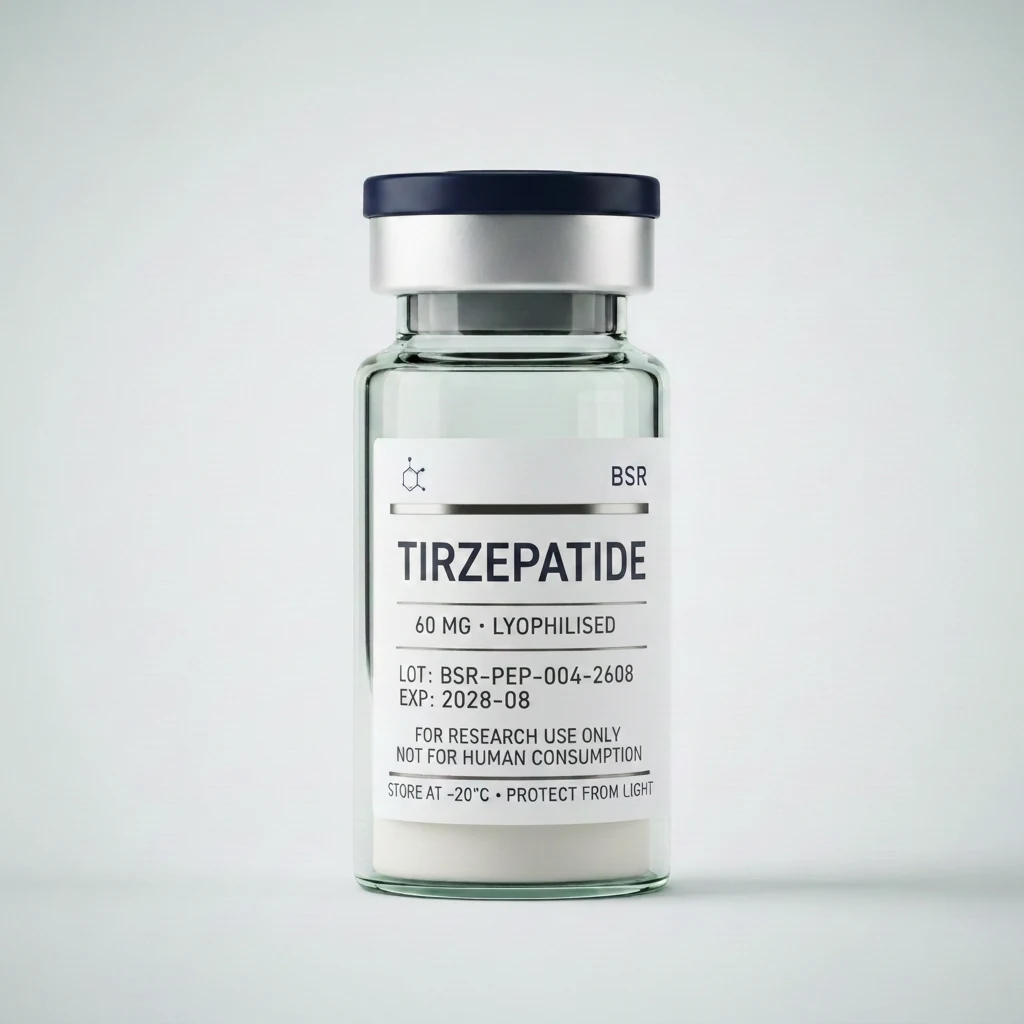
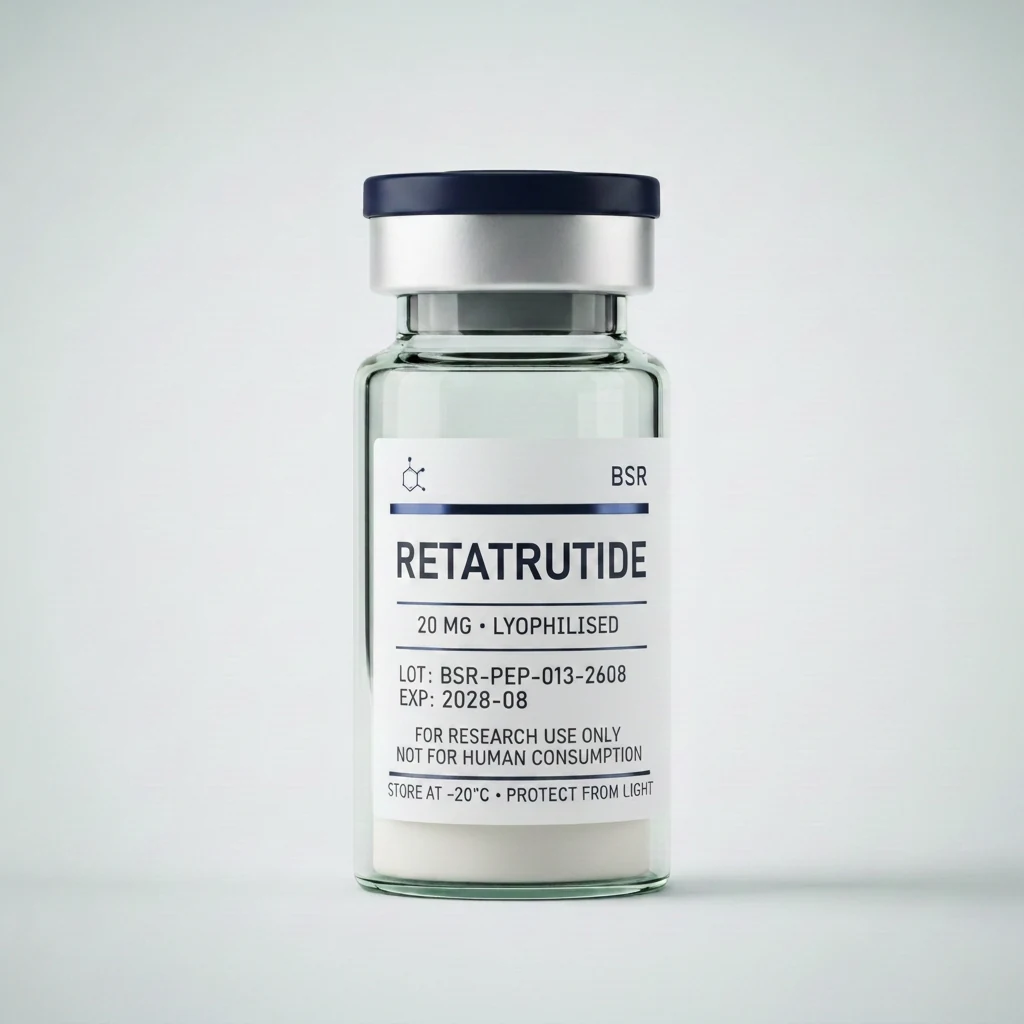
Much of the illicit supply reaches end-users via vendors who sell retatrutide as a lyophilised powder labelled "not for human consumption" or "for research purposes only." The FDA has been explicit: it has warned companies that have illegally sold unapproved drugs containing semaglutide, tirzepatide, or retatrutide that are falsely labelled "for research purposes" or "not for human consumption". The agency's position is that the labelling does not alter the legal status of the product when the evident purpose is human use.
This distinction matters directly to legitimate research suppliers. Products may be counterfeit or mislabelled, substituted with a different substance, or contaminated with bacteria, fungi, or other harmful microorganisms. There is no mechanism to verify authenticity, purity, sterility, storage history, or dosing accuracy for material purchased from unregulated sources. For UK research organisations, sourcing a compound with this profile creates exposure under both MHRA enforcement guidelines and the Medicines Act 1968, particularly where there is any indication the material may reach human subjects.
Implications for procurement
Research teams considering retatrutide as a comparator or tool compound in metabolic research should note several practical constraints:
No legitimate supply chain exists outside trials. There is no approved API, no compendial monograph, and no licensed manufacturer of retatrutide for non-clinical use. Any material currently available on the open market originates from unlicensed chemical manufacturers, predominantly overseas, with no GMP oversight.
TRIUMPH Phase 3 data should be the primary reference point. The TRIUMPH-1 dataset — 2,339 participants, 80 weeks, primary and key secondary endpoints met — represents the only robustly characterised body of pharmacodynamic and safety data for this compound. Procurement decisions that require a characterised standard should reference this literature rather than commercially sourced material.
Regulatory signals are tightening, not loosening. The FDA's May 2026 proposal to exclude semaglutide, tirzepatide, and liraglutide from the 503B Bulks List signals a broader intent to close bulk GLP-1 compounding pathways. The regulatory signal extends to retatrutide: the FDA is closing the door on bulk-sourced GLP-1 compounding generally, making it harder for any compounder to argue retatrutide is permissible.
Adverse event data are accumulating rapidly. With US poison centre exposures already running at 95 cases per month and self-reported adverse effects including injection-site nodules, severe gastrointestinal events, and haemodynamic instability, the harm profile of uncharacterised retatrutide is becoming clearer — and is entirely consistent with that of a compound dosed without clinical supervision or verified purity.
Summary
The retatrutide illicit market represents an acute illustration of what happens when highly publicised Phase 3 efficacy data precedes regulatory approval by two or more years. Demand — amplified by social media — has outrun supply, creating a vacuum filled by unregulated vendors. In the UK, MHRA enforcement has been active, but the underlying supply chain pressure remains. For procurement professionals, the practical conclusion is straightforward: retatrutide cannot be sourced compliantly for research use through any currently available commercial channel, and attempting to do so carries legal, safety, and reputational risks that are neither theoretical nor remote.
Research-grade material, HPLC verified, certificate of analysis with every order.
The week's Intelligence in one email, every Friday morning.
Regulatory moves, trial readouts, supply-chain news. No product pitches. Unsubscribe in one click.
More in Reputational Risks
FDA's September 2026 Peptide Vendor Sweep: Five Warning Letters, the "Research-Use Only" Labelling Test, and What It Means for Legitimate Suppliers
22 Sep 2026
Three Texas Recalls in Six Weeks: How Dietary-Grade Glutathione API Triggered a Compounding Safety Crisis — and What State Boards Are Now Saying About Research-Grade Peptides
17 Sep 2026
FDA's September 2026 Peptide Vendor Sweep: Five Warning Letters, One Clear Doctrine on "Research Use Only" Claims
11 Sep 2026