Research Pipeline · 25 Sep 2026
Beyond Semaglutide and Tirzepatide: What a September 2026 Systematic Review Reveals About the Next Wave of GLP-1 Peptide Candidates
A systematic review published in the Annals of Internal Medicine on 18 September 2026 consolidates placebo-subtracted weight-loss data across 38 randomised controlled trials and 25,816 participants, offering the clearest cross-compound comparison to date. The findings contextualise where approved agents stand and how emerging multi-agonist peptides — retatrutide, amycretin, and a crop of oral candidates — are reshaping the development landscape.
12 sources cited
Key takeaways
- A 38-trial, 25,816-participant systematic review published in Annals of Internal Medicine on 18 September 2026 sets placebo-subtracted benchmarks of approximately 15% for semaglutide, 19% for tirzepatide, and 12% for orforglipron among approved agents.
- Emerging multi-agonist peptides — amycretin (~24% placebo-subtracted) and retatrutide (~22%) — outperformed all approved therapies numerically, though neither holds regulatory approval.
- Retatrutide's Phase 3 TRIUMPH programme is underway at Eli Lilly, with a regulatory filing expected in late 2026 and approval not anticipated before 2027 or 2028.
- Kailera Therapeutics' oral ribupatide (a GLP-1/GIP dual-agonist peptide) demonstrated up to 12.1% mean weight reduction at 26 weeks in Phase 2 with vomiting reported in no more than 11.4% of participants.
- For research procurement teams, the systematic review provides a usable evidence map for prioritising which peptide mechanisms are most clinically supported as of mid-2026.
Context: a newly published evidence map
A systematic review and meta-analysis published on 18 September 2026 in Annals of Internal Medicine consolidates randomised trial evidence for GLP-1 receptor agonists and co-agonists in adults with overweight or obesity but without diabetes. The review included 38 randomised controlled trials with 25,816 subjects, adding 14 new trials to a prior 2025 review, making it the most comprehensive cross-compound comparison available to date.
The publication arrives at a moment of significant pipeline activity. Seven GLP-1-class molecules held FDA approval as of early September 2026: exenatide, lixisenatide, liraglutide, dulaglutide, semaglutide, tirzepatide, and orforglipron (Foundayo, approved April 2026). The systematic review provides a calibration point against which pipeline candidates — many of them peptide-based — can now be compared.
Approved agents: what the evidence says
Among currently marketed therapies, placebo-subtracted weight loss in the review reached up to approximately 6% for liraglutide, 15% for semaglutide, 12% for orforglipron, and 19% for tirzepatide. These figures are broadly consistent with trial-level data but represent the totality of available RCT evidence rather than any single pivotal trial result.
Tirzepatide's position as the best-performing approved agent is reinforced. In obesity trials, tirzepatide has generally produced greater average weight loss — around 21% — versus approximately 15% for semaglutide. As a dual GIP and GLP-1 agonist, tirzepatide sits a clear step above semaglutide on weight loss and has added indications of its own, including obstructive sleep apnoea.
Orforglipron (Foundayo), the first oral small-molecule, non-peptide GLP-1 receptor agonist for weight management, was approved by the FDA in April 2026. Unlike peptide-based oral formulations, it can be taken at any time of day without food or water restrictions, reducing the administration burden that has constrained oral peptide semaglutide uptake. Its ~12% placebo-subtracted weight-loss figure trails injectable agents, but its access advantages are considered commercially significant.
The multi-agonist peptide frontier
The systematic review's most notable finding for pipeline watchers is the performance of investigational multi-agonist peptides. Emerging multi-agonists showed numerically greater placebo-subtracted weight reductions: approximately 24% with amycretin and 22% with retatrutide. The authors note these findings are drawn from earlier-phase data and cannot be taken as confirmatory.
Retatrutide
Retatrutide is a triple agonist of the GIP, GLP-1, and glucagon receptors being developed by Eli Lilly. Its Phase 2 results established the highest weight-loss signal reported at that stage. A meta-analysis of available randomised trial data found retatrutide significantly reduced body weight, with a mean difference of -14.33%, alongside reductions in BMI, waist circumference, and fasting plasma glucose.
The Phase 3 TRIUMPH programme, evaluating retatrutide's efficacy and safety in participants who are obese or overweight, is currently underway. A regulatory filing is expected in late 2026, with approval not likely before 2027 or 2028. As of now, retatrutide is not approved by either the FDA or MHRA, and compounded versions sold under any name would not carry regulatory sanction.
Amycretin
Amycretin is a combination GLP-1/amylin receptor co-agonist under investigation by Novo Nordisk. The ~24% placebo-subtracted weight loss observed in the review's data extraction comes from Phase 2 readouts. Head-to-head data from longer-horizon trials will be required before the compound's comparative profile can be fully established. The compound is not included in the FDA's currently approved list and remains investigational.
Oral peptide candidates: ribupatide and beyond
The competitive pressure from small-molecule oral agents such as orforglipron is spurring development of oral peptide formulations that may offer higher efficacy.
Kailera Therapeutics, which completed a $625 million IPO on the Nasdaq in April 2026, is advancing ribupatide — a GLP-1/GIP receptor dual agonist peptide — in both injectable and oral forms. Phase 2 data for oral ribupatide, reported in February 2026, showed a mean weight reduction from baseline of up to 12.1% at 26 weeks, with vomiting reported in no more than 11.4% of participants at the highest dose studied. Global Phase 3 trials of oral ribupatide are planned to begin in the first half of 2027.
Kailera's portfolio spans single-, dual-, and triple-agonist mechanisms and both oral and injectable formulations, making it one of the most diversified pure-play GLP-1 pipelines in public markets.
For research organisations comparing peptide mechanism diversity, the Kailera pipeline is instructive: a single peptide backbone (ribupatide) is being adapted into weekly injectable and daily oral formulations, while a separate small-molecule GLP-1 asset (KAI-7535) and an injectable tri-agonist (KAI-4729) round out the programme. KAI-4729 is a GLP-1/GIP/glucagon receptor tri-agonist leveraging an incremental mechanism designed to deliver weight loss alongside improved liver fat reduction.
Macrocyclic peptides: a structural frontier
Beyond incretin biology, capital is flowing into structurally distinct peptide modalities. Syneron Bio, a Beijing-based macrocyclic peptide company, closed a $150 million Series B in late March 2026, backed by Decheng Capital, CDH VGC, a subsidiary of the Abu Dhabi Investment Authority, Temasek's True Light Capital, Qiming Venture Partners, and existing investor AstraZeneca. Proceeds are directed at advancing the company's Synova platform — an AI-driven, high-throughput approach to macrocyclic peptide design — across oncology, autoimmune, metabolic, and rare-disease programmes.
Synova combines AI, data science, and high-throughput screening to improve the efficiency and success rate of identifying macrocyclic peptides that combine the specificity of biologics with the drug-like properties of small molecules. Macrocyclic peptides are of interest partly because their constrained ring structures can confer proteolytic stability and oral bioavailability — properties that conventional linear peptides typically lack.
Implications for research procurement
The September 2026 systematic review provides a useful evidence hierarchy for procurement teams evaluating which GLP-1 peptide compounds have the strongest clinical underpinning:
- Tirzepatide and semaglutide remain the approved benchmarks with the most extensive RCT evidence bases.
- Retatrutide has Phase 3 data accumulating under the TRIUMPH programme, with a regulatory submission anticipated before year-end 2026 — making it the most advanced unapproved peptide in the GLP-1 space.
- Amycretin has generated notable Phase 2 signals but has a longer regulatory runway.
- Oral peptide ribupatide has demonstrated Phase 2 efficacy comparable to approved oral agents, with Phase 3 initiation planned for H1 2027.
Research organisations sourcing reference standards, analytical comparators, or peptide API for in-vitro studies should note that regulatory status and compounding eligibility vary significantly across these compounds. Tirzepatide was among the peptides proposed by the FDA for exclusion from the 503B outsourcing bulks list in April 2026, given the absence of clinical need for bulk compounding. Retatrutide, as an unapproved investigational compound, does not hold compounding eligibility under current FDA frameworks and is not licensed by the MHRA.
Separately, the comment period for the FDA's 17 revised draft product-specific guidances — which include semaglutide and tirzepatide — closes on 28 September 2026. Developers or research organisations with views on the proposed testing and bioequivalence requirements have a three-day window remaining to submit comments electronically through the federal rulemaking portal.
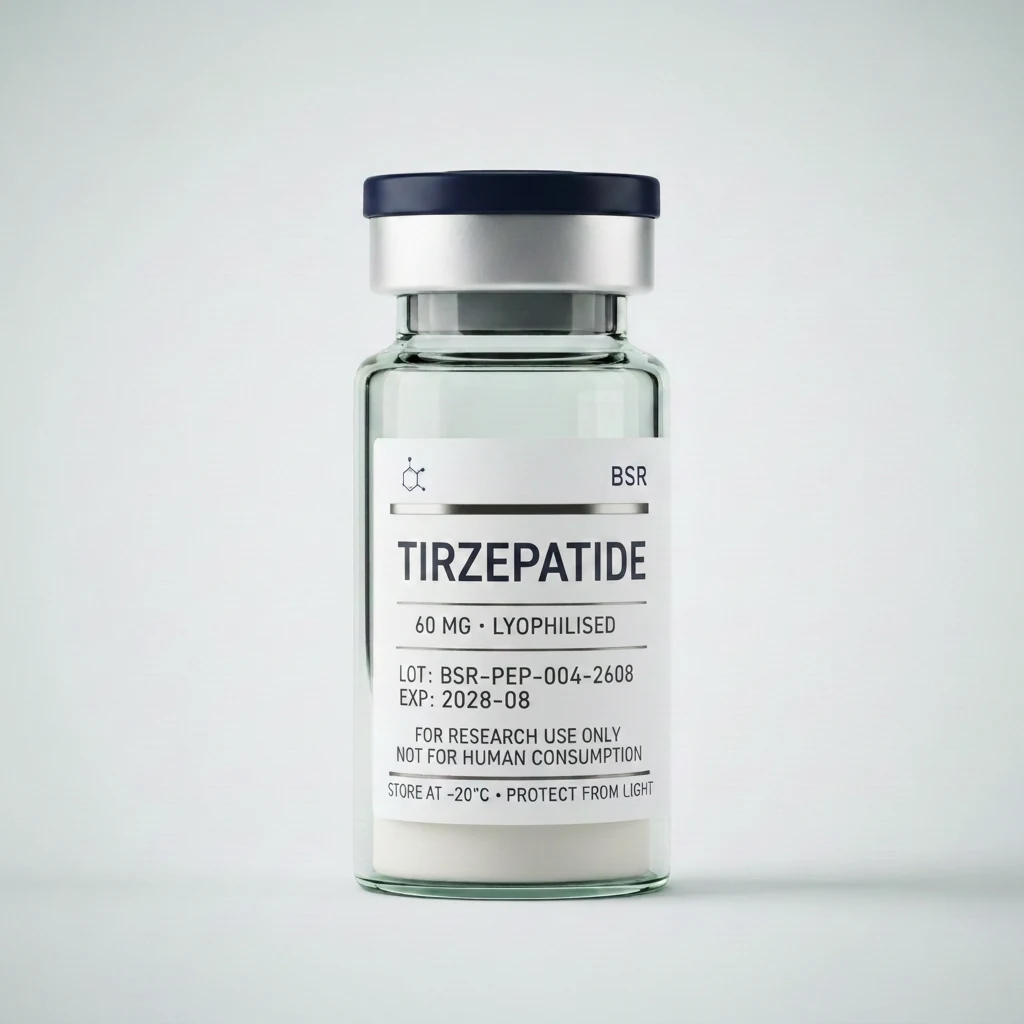
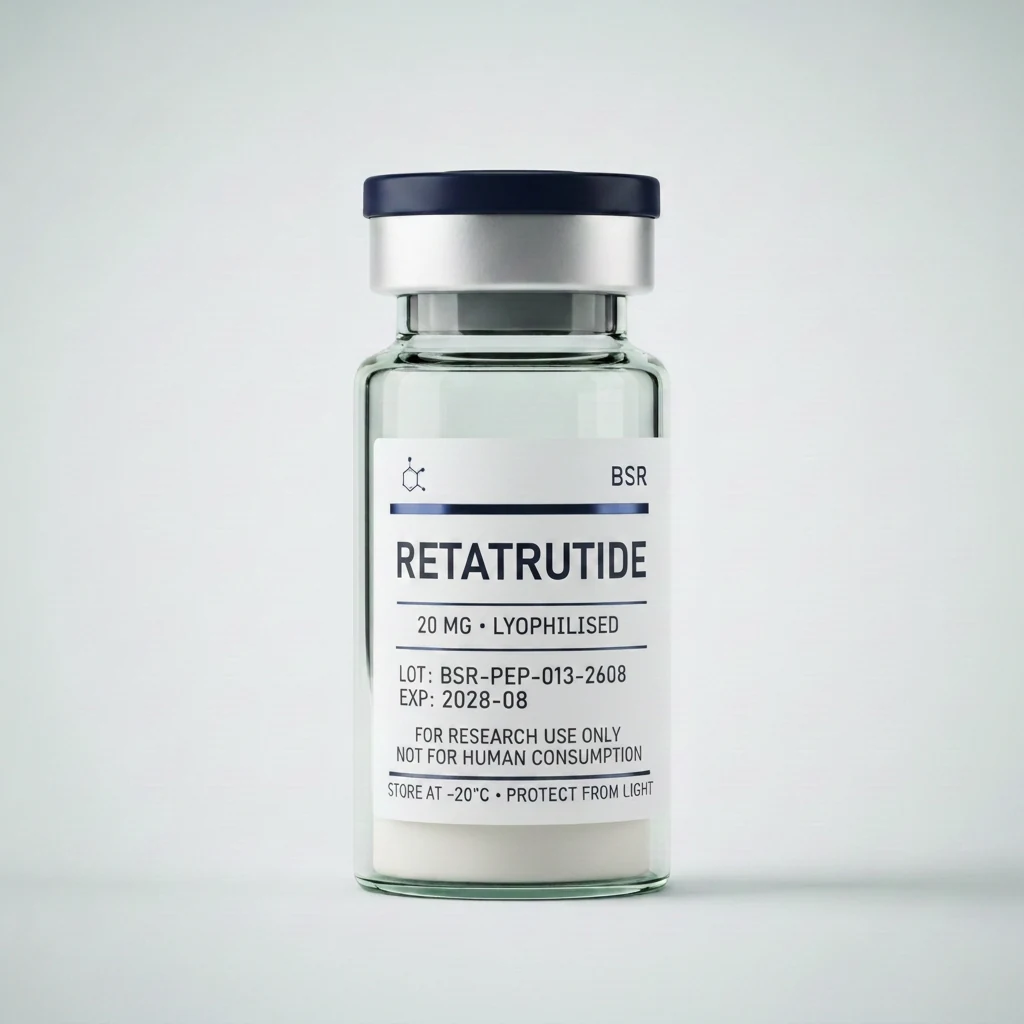
Research-grade material, HPLC verified, certificate of analysis with every order.
The week's Intelligence in one email, every Friday morning.
Regulatory moves, trial readouts, supply-chain news. No product pitches. Unsubscribe in one click.
More in Research Pipeline
Thymosin Alpha-1 (Zadaxin): The Thymic Peptide With Genuine Clinical Approval in 35 Countries, a Contested US Compounding Status, and No MHRA Licence
23 Sep 2026
Peptide-Drug Conjugates Move Closer to the Clinic: TwoStep Therapeutics' FDA IND Clearance and the Emerging PDC Landscape
19 Sep 2026
BPC-157: The Gastric Pentadecapeptide With Three Decades of Animal Data, a 2026 MDPI Formulation Review, and No Completed Phase II Trial
14 Sep 2026