Research Pipeline · 13 Jul 2026
BPC-157: A 2026 Evidence Update on the Synthetic Pentadecapeptide Heading Into Its First Formal FDA Compounding Review
BPC-157 enters the 23–24 July 2026 FDA Pharmacy Compounding Advisory Committee meeting with a growing preclinical record, a fresh 2026 systematic review in PMC, and a newly registered Phase 2 randomised controlled trial — but still no published, independent RCT data in humans. This briefing sets out what UK research-procurement teams need to know about the peptide's mechanism, evidence base, and regulatory status on both sides of the Atlantic.
9 sources cited
Key takeaways
- BPC-157 is a synthetic 15-amino-acid peptide derived from a gastric protein sequence, with an extensive preclinical record spanning musculoskeletal repair, gastrointestinal protection, and neurological models — but no published randomised controlled trial in humans for any indication.
- A March 2026 systematic review published in PubMed Central confirms the preclinical evidence base is broad, while describing human data as "limited to small pilot studies" with no reported major adverse effects.
- A Phase 2 double-blind, placebo-controlled trial (ClinicalTrials.gov NCT07437547) evaluating BPC-157 for acute hamstring muscle strain was registered in early 2026, marking the most rigorous prospective human study yet attempted.
- The FDA's Pharmacy Compounding Advisory Committee is scheduled to review BPC-157 on 23–24 July 2026 as part of a broader examination of peptides previously held under Category 2 compounding restrictions.
- In the UK, BPC-157 is not licensed by the MHRA for any therapeutic indication; it remains classified as a research-use-only substance for laboratory supply purposes.
What BPC-157 is and how it is thought to work
Body Protective Compound 157 (BPC-157) is a synthetic pentadecapeptide — a 15-amino-acid chain — derived from a partial sequence of a protein found in human gastric juice. According to a March 2026 review published in PMC, BPC-157 is classified as a stable gastric pentadecapeptide that has demonstrated notable reparative and anti-inflammatory properties across diverse preclinical models.
The proposed mechanisms are pleiotropic. The 2026 PMC review reports that experimental evidence shows BPC-157 "supports angiogenesis, collagen synthesis, fibroblast activity, and modulation of nitric oxide pathways, contributing to enhanced healing of muscle, tendon, ligament, bone, and gastrointestinal tissue." The same paper notes "reduced inflammatory cytokine activity, improved microvascular integrity, and beneficial effects on pain modulation through peripheral and dopaminergic mechanisms."
A January 2025 literature and patent review published in Pharmaceuticals (PMC11859134) describes the compound as demonstrating "pleiotropic beneficial effects in various preclinical models mimicking medical conditions, such as tissue injury, inflammatory bowel disease, or even CNS disorders." The same review characterises BPC-157 as having a "desirable safety profile, since only a few side effects have been reported following its administration."
Notably, a researcher cited in that review, Professor Jong-Hwei Su Pang of Chang Gung University, has proposed that the peptide may be produced by stomach microbes, given that its amino acid sequence does not appear in the human genome — a mechanistic uncertainty that remains unresolved in the peer-reviewed literature.
The current state of human evidence
The most important constraint on BPC-157 research is the near-total absence of independent, controlled human studies. A 2025 systematic review focused on orthopaedic sports medicine applications screened 544 articles and found that only one human clinical study met the inclusion criteria — illustrating how thin the human evidence base remains even as preclinical publications accumulate.
A formal narrative review published in 2025 (PubMed PMC12446177) and covering musculoskeletal applications reached a similar conclusion: despite extensive preclinical evidence, the human evidence base remains inadequate to support clinical recommendations, and the authors emphasised the need for proper randomised controlled trials before BPC-157 could be considered an evidence-based therapy.
A significant structural concern identified across multiple independent analyses is the concentration of authorship. As documented in an Irvine Health evidence summary published April 2026, all published human BPC-157 studies have been conducted by the same Florida-based research group; independent replication has not yet occurred. A STAT News investigation published February 2026 similarly noted that BPC-157 studies on PubMed consistently show positive results from a narrow authorship base concentrated in post-communist Croatia.
According to the March 2026 PMC review, human research "remains limited to small pilot studies investigating musculoskeletal pain, interstitial cystitis, and intravenous administration, all suggesting potential therapeutic value without reported major adverse effects." However, it cautions that "inconsistent preparation standards, limited clinical validation, and regulatory restrictions underscore the need for rigorous controlled trials."
The first registered Phase 2 RCT
The most significant development in BPC-157 human research in 2026 is the registration of a controlled clinical trial. ClinicalTrials.gov record NCT07437547, registered in early 2026, describes a randomised, double-blind, placebo-controlled Phase 2 study evaluating whether BPC-157 "can speed structural healing and functional recovery after an acute grade II hamstring muscle strain." Participants will receive BPC-157 or placebo for 14 days alongside a standardised rehabilitation programme.
This represents a meaningful step: if conducted with adequate methodology and blinding, it would constitute the first independent, placebo-controlled Phase 2 trial for any BPC-157 indication to be formally registered with a major regulatory authority. The study targets adults aged 18–45 with confirmed acute posterior thigh pain within 72 hours of onset. The hamstring strain indication was selected, in part, because imaging confirmation via MRI is feasible and functional endpoints are well-validated in sports medicine.
Procurement professionals should note that this trial's existence does not alter the current regulatory classification of BPC-157. A registered trial is a precursor to evidence generation, not evidence itself.
Regulatory status
United States. BPC-157 was placed on the FDA's Category 2 list of bulk drug substances — designating it as inappropriate for compounding due to concerns including immunogenicity risk, inadequate clinical data, and impurity profiles — as part of a broader set of restrictions implemented in 2023. The FDA's Pharmacy Compounding Advisory Committee is scheduled to meet on 23–24 July 2026 to review evidence on BPC-157 and six other peptides previously restricted under Category 2, following a February 2026 intervention by HHS Secretary Robert F. Kennedy Jr. and a subsequent Federal Register notice that removed the peptides from the Category 2 list effective April 23, 2026.
As noted by the FDA Law Blog, the July meeting is "likely a necessary procedural step, not the finish line." The PCAC recommendation is non-binding; formal notice-and-comment rulemaking would still be required before any peptide could be formally added to the Section 503A Bulk Drug Substances List, a process that can take more than a year under standard timelines.
The docket number for the July PCAC review is FDA-2025-N-6895, and it remained open for public comments through 22 July 2026. Comments received by 9 July were to be presented to the committee directly.
A Pharmacy Times analysis published in July 2026 drew a distinction that procurement teams should keep in mind: a peptide moving from Category 2 to Category 1 "is a regulatory designation governing whether licensed compounding pharmacies — operating under Sections 503A or 503B — may legally prepare it." It does not confer therapeutic approval, and it does not alter the research-use-only status of substances supplied to UK laboratories.
United Kingdom. BPC-157 holds no MHRA product licence for any therapeutic use. It is not listed on any NHS formulary and is not included in any approved prescription framework. For UK research suppliers and procurement teams, it is legally supplied only as a research-use substance. The MHRA has not, to date, issued a specific advisory statement on BPC-157, but UK enforcement of importation restrictions means that any institutional procurement should be conducted through accredited suppliers holding appropriate research-grade documentation.
The January 2025 Pharmaceuticals review notes that BPC-157 "has not been approved for use in standard medicine by the FDA and other global regulatory authorities due to the absence of sufficient and comprehensive clinical studies confirming its health benefits in humans." The World Anti-Doping Agency temporarily listed it in 2022 before removing it from the prohibited list; it is not currently a WADA-banned substance.
Procurement considerations for UK research labs
Several practical points apply to institutions currently sourcing BPC-157 or assessing future procurement needs.
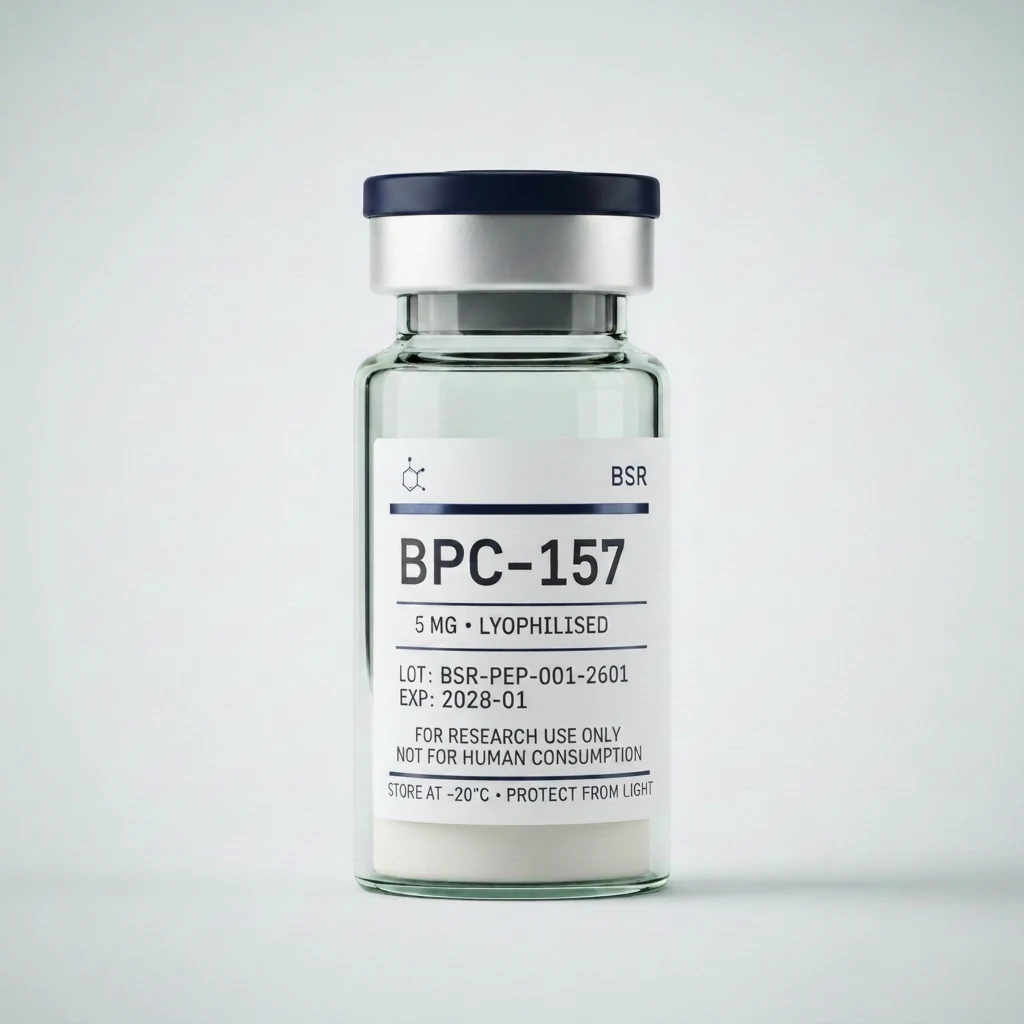
Purity verification. BPC-157 is a relatively short peptide (15 amino acids), but it is susceptible to oxidation and degradation. Certificates of Analysis should include HPLC purity data — ideally 98% or above for research-grade material — alongside mass spectrometry confirmation of correct molecular weight (approximately 1,419 Da for the acetate salt form). Lot-to-lot consistency data should be requested for any long-running experimental programme.
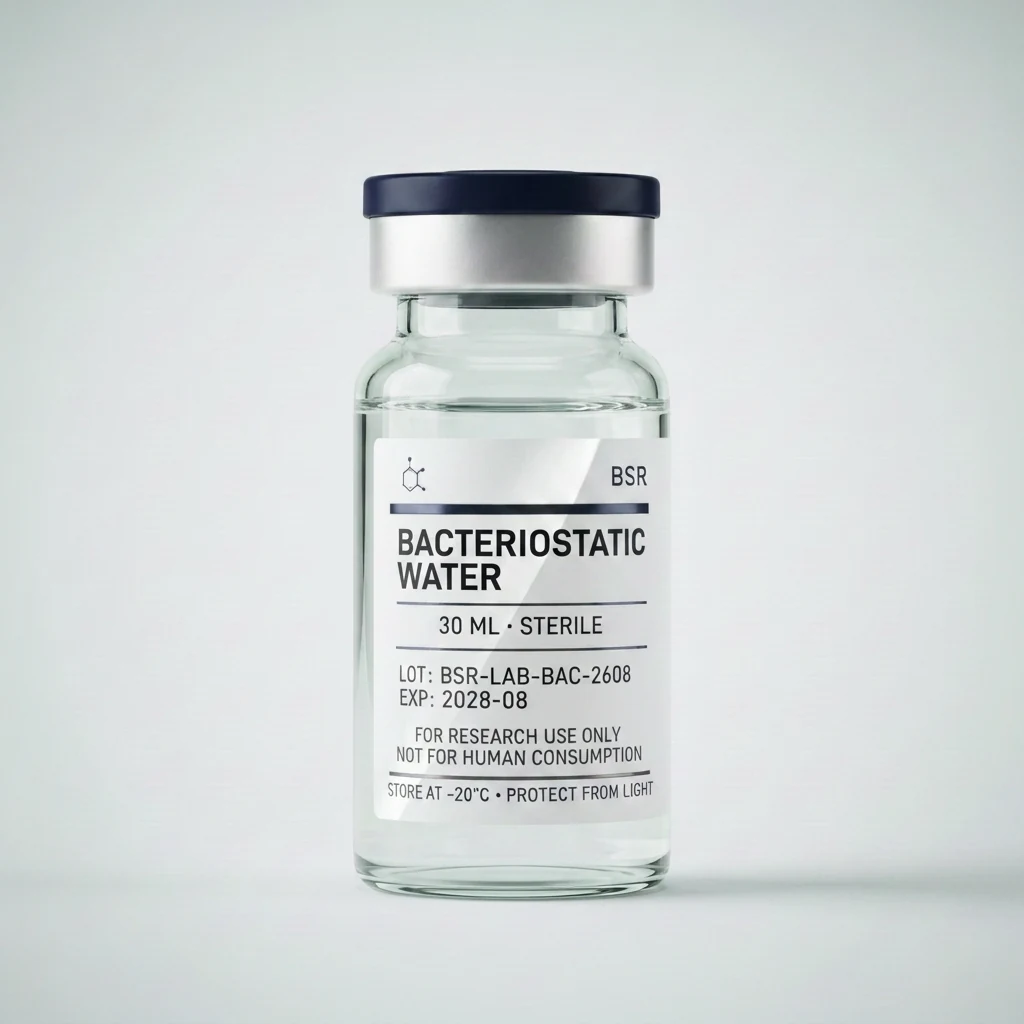
Storage and stability. Lyophilised BPC-157 is stable at −20 °C for extended periods, but reconstituted solutions should be used promptly or stored at 4 °C for no more than 48–72 hours, depending on formulation. Bacteriostatic water is often used in research reconstitution protocols, though sterile water for injection is preferred for any experimental administration.
Supply-chain context. The majority of research-grade BPC-157 entering the UK and EU supply chain is synthesised in China. Procurement teams should request documentation of the synthesis site, third-party testing certificates, and evidence of compliance with applicable quality standards. The broader concern about grey-market peptide supply, documented consistently in FDA adverse event data and regulatory correspondence, applies equally to research procurement contexts.
Regulatory watch. The outcome of the July 23–24 PCAC meeting will be material to the longer-term regulatory trajectory for BPC-157 in the United States, which in turn influences global supply norms and research community expectations. BSR Intelligence will report on the committee's conclusions as they become available.
Sources: PMC March 2026 review (PMC13026520); ClinicalTrials.gov NCT07437547; AJMC PCAC overview; RAPS docket report; FDA Law Blog (April 2026); Pharmacy Times (July 2026); STAT News (February 2026); Pharmaceuticals review PMC11859134 (January 2025); Irvine Health evidence summary (April 2026)
Research-grade material, HPLC verified, certificate of analysis with every order.
The week's Intelligence in one email, every Friday morning.
Regulatory moves, trial readouts, supply-chain news. No product pitches. Unsubscribe in one click.
More in Research Pipeline
Thymosin Alpha-1: What 35 Countries of Clinical Use and a Lopsided PCAC Vote Mean for Research Access in 2026
07 Oct 2026
Viking Therapeutics Initiates Oral Maintenance Dosing Study for VK2735: What the GLP-1/GIP Dual Agonist's Two-Part Programme Tells Researchers About the Weight-Regain Problem
06 Oct 2026
GHK-Cu: What a Fresh Diabetic Wound Study and a Recruiting Phase 2 Trial Mean for the Copper Peptide's Research Standing
03 Oct 2026