Regulatory & Policy · 15 Aug 2026
Louisiana's Act 374: The First US State Law Shielding Peptide Prescribers — What It Means for the Regulatory Landscape
Louisiana's Senate Bill 253, now Act 374, came into force on 1 August 2026, becoming the first enacted US state statute to bar professional licensing boards from preventing qualified prescribers from offering patients peptides sourced from compliant 503A or 503B facilities. The law is a tangible downstream consequence of the MAHA-influenced federal reclassification drive and illustrates the patchwork state-level dynamic that shapes peptide supply chains reaching UK research institutions.
8 sources cited
Key takeaways
- Louisiana Senate Bill 253, enacted as Act 374, came into force on 1 August 2026, making it the first US state statute specifically prohibiting licensing boards from blocking qualified prescribers from offering compounded peptides.
- The law conditions access on sourcing from FDA-registered 503A compounding pharmacies or 503B outsourcing facilities and explicitly requires prescribers to verify compounds are not on the FDA's prohibited list.
- It passed both chambers unanimously — 35–0 in the Senate and 98–0 in the House — signalling broad political consensus at state level in favour of expanding peptide access.
- The legislation sits within a wider federal deregulatory current following the July 2026 PCAC vote, in which an advisory committee recommended adding six peptides to the Section 503A Bulks List.
- State laws are layering onto — and sometimes pushing against — federal enforcement, creating a patchwork regulatory environment with direct implications for UK procurement teams that source peptide reference standards or raw materials through US supply chains.
The statute: what Act 374 actually does
Louisiana Senate Bill 253, introduced by Senator Patrick McMath and co-sponsored by four colleagues, was signed by the Governor and became Act 374 of the 2026 Regular Session, with an effective date of 1 August 2026.
The operative provision, encoded as R.S. 37:23.5 of Louisiana law, prohibits any professional or occupational licensing board from barring a healthcare provider with prescriptive authority from providing patients with peptides shipped from an FDA-registered 503B facility or a 503A compounding pharmacy that purchases its active pharmaceutical ingredients from an FDA-registered manufacturer. In plain terms: a medical board cannot threaten a physician's licence solely because they prescribe a compounded peptide, provided the compounder is federally registered and the compound is not on the FDA's prohibited list.
Crucially, the bill also mandates that the prescribing provider must verify that any peptides they prescribe are not on the FDA's prohibited compounding list. That cross-reference to federal enforcement lists is deliberate: the statute does not create a parallel state approval pathway. It removes a layer of state-level professional sanction while leaving federal gatekeeping fully intact.
The bill also protects Louisiana-licensed pharmacists working in out-of-state pharmacies from board prohibition when compounding and dispensing peptides under the same federal and quality standards, and requires that peptides be sourced from FDA-registered 503B outsourcing facilities or 503A compounding pharmacies that comply with federal regulations and USP-NF standards.
Political and legislative context
The bill's unanimous passage — 37 yeas to 0 nays in the Senate and 98 yeas to 0 nays in the House — is notable in a legislature not typically associated with consensus health legislation. It reflects bipartisan alignment with the Make America Healthy Again (MAHA) policy direction that has characterised federal peptide policy under HHS Secretary Robert F. Kennedy Jr.
At the federal level, the FDA moved to reclassify 12 peptides that had been designated in a category prohibiting compounding pharmacies from making them. In July 2026, an FDA advisory committee recommended loosening permissions on the sale of six peptides, a vote that agency scientists opposed, citing a lack of research, while some committee members with ties to the peptide industry supported it.
Louisiana's Act 374 is best understood as a downstream legislative response to that federal direction: state legislators anticipated that the federal reclassification trajectory would open compounding access and moved to pre-emptively prevent state licensing boards from filling the gap with their own restrictions.
The state-federal tension: why it matters
The relationship between US state pharmacy and medical boards and the FDA's compounding framework is structurally complex. Federal oversight sets the floor, but state pharmacy boards control the ceiling — peptide compounding regulations vary significantly by jurisdiction, with some states adopting proactive restrictions on GLP-1 compounding while others maintain a permissive stance. Critically, state boards can restrict compounding even when federal law permits it, and enforcement actions typically target the pharmacy first and the prescriber second.
Louisiana's Act 374 inverts the usual direction of this tension. Rather than a state board imposing additional restrictions, the Louisiana legislature has pre-empted its own boards from restricting what federal law permits. This is a structurally novel approach. Ohio, for example, published specific peptide compounding guidance in February 2026, adding state documentation requirements beyond federal minimums; Louisiana has moved in the opposite direction.
Other states have adopted varied postures. California required all compounded semaglutide and tirzepatide formulations to include specific labelling about non-FDA-approved status and prohibited marketing language implying equivalence to branded products. Texas adopted rules requiring prescribers to document that FDA-approved alternatives were considered and deemed clinically inappropriate.
The result, as of August 2026, is a genuinely fragmented domestic US landscape in which the same peptide compounded by the same 503B outsourcing facility may be legally accessible in one state and subject to board challenge in another — irrespective of federal status.
What "not on the prohibited list" now means in practice
Act 374's cross-reference to the FDA's prohibited compounding list is the operative constraint that prescribers in Louisiana must manage. The FDA's regulatory landscape continues to evolve as the agency evaluates individual compounds for compounding eligibility. Following the July 2026 PCAC vote, the six peptides recommended for addition to the Section 503A Bulks List remain advisory recommendations, not final determinations — the advisory committee vote was not drug approval.
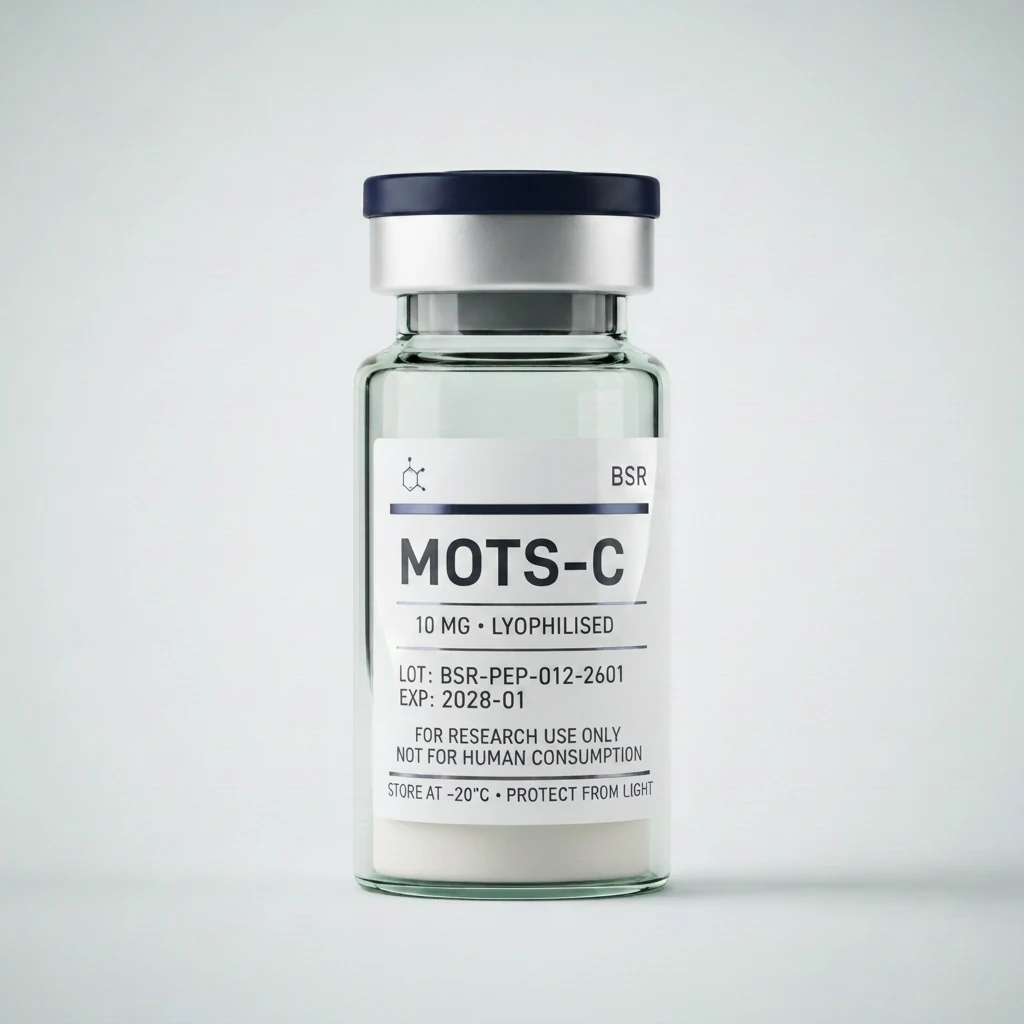
For compounds such as MOTS-c, for example, the FDA removed it from its Section 503A Category 2 list in April 2026, and the advisory committee recommended adding it to the Section 503A Bulks List in July — but the FDA's final determination is still pending. Louisiana's Act 374 protects a prescriber who writes for MOTS-c from a 503B facility only if MOTS-c is not, at the time of prescribing, on the FDA's prohibited list. Prescribers must therefore track federal list changes in near-real time to remain within the Act's protection.
Implications for UK research procurement
For UK-based laboratory procurement professionals, the immediate operational relevance of Act 374 is indirect but worth monitoring for several reasons.
Supply chain signal. Greater prescriber protection in Louisiana increases the addressable market for 503A and 503B compounders operating there. Increased demand through legitimate compounding channels — rather than grey-market vendors — tends to tighten supply of pharmaceutical-grade peptide APIs, which compete for the same HPLC-validated, endotoxin-tested raw material that research-grade suppliers draw on.
Regulatory trend direction. The unanimous passage of Act 374 reinforces the political durability of the pro-access peptide regulatory trajectory in the United States. For procurement teams assessing multi-year supply agreements or deciding whether to qualify US-origin peptide reference standards, the legislative direction reduces, though does not eliminate, the risk of sudden federal-state access reversals for compounds already cleared from Category 2.
Divergence from MHRA posture. The MHRA does not operate a compounding framework analogous to the US 503A/503B system. In the UK, the manufacture of unlicensed medicines is governed by the Human Medicines Regulations 2012 and the Medicines and Healthcare products Regulatory Agency's Specials licensing regime, which carries more stringent prospective requirements than the US compounding model. UK research institutions procuring peptides for in-vitro or non-clinical use under "research use only" labelling are not directly affected by Louisiana's Act — but understanding divergence in the US regulatory climate is relevant context for procurement teams that benchmark global supplier quality expectations.
Caveat for procurement teams
Act 374 governs the professional-licensing liability of Louisiana-licensed prescribers and pharmacists. It does not alter FDA enforcement authority, does not create an approval pathway for any peptide, and does not apply outside Louisiana's borders. Procurement decisions involving peptide compounds should continue to be assessed against the current FDA prohibited and bulks lists, the MHRA's guidance on importation of unlicensed medicinal products for research, and individual compound-level evidence bases — irrespective of state-level legislative developments in the United States.
Research-grade material, HPLC verified, certificate of analysis with every order.
The week's Intelligence in one email, every Friday morning.
Regulatory moves, trial readouts, supply-chain news. No product pitches. Unsubscribe in one click.
More in Regulatory & Policy
One Amino Acid, Three High Stakes: What the Seventh Circuit's Pending Retatrutide Ruling Means for Exclusivity, Medicare Pricing, and Compounding Access
12 Oct 2026
FDA Career Scientists Formally Oppose Administration's Interim Peptide Dispensing Plan — and What the Internal Split Means for Research Procurement
11 Oct 2026
HHS Stopgap Plan for Restricted Peptides: What the Reported Enforcement-Discretion Proposal Means for Research Procurement
09 Oct 2026