Regulatory & Policy · 15 Jun 2026
MHRA Approves Oral Semaglutide for Weight Management: What the UK's First GLP-1 Pill Means for Research Procurement
The MHRA approved oral semaglutide 25 mg (Wegovy pill) for weight management on 11 June 2026, making it the first oral GLP-1 receptor agonist licensed for obesity in the UK. Coming within weeks of the FDA's approval of orforglipron (Foundayo) and new Phase 3 data for retatrutide, the decision reshapes the incretin research landscape and has direct implications for UK labs procuring GLP-1 reference compounds.
12 sources cited
Key takeaways
- The MHRA approved oral semaglutide 25 mg (Wegovy pill, Novo Nordisk) for weight management on 11 June 2026 — the first oral GLP-1 receptor agonist licensed for obesity in the UK.
- Commercial availability via private prescription is expected within weeks of approval; NHS access timelines remain unconfirmed.
- In the US, the FDA approved Eli Lilly's orforglipron (Foundayo) on 1 April 2026 as a small-molecule oral GLP-1 receptor agonist for obesity — a chemically distinct formulation from semaglutide with different administration requirements.
- Retatrutide, Lilly's investigational triple agonist, reported 28.3% mean weight loss at 80 weeks in the Phase 3 TRIUMPH-1 trial (May 2026); an NDA submission is anticipated in the fourth quarter of 2026.
- For UK research procurement, the proliferation of approved and near-approval GLP-1 compounds accelerates demand for high-purity reference standards and authenticated research-grade peptides, while also tightening the regulatory context around compounded analogues.
MHRA approves the Wegovy pill: what changed on 11 June
Novo Nordisk announced on 11 June 2026 that the MHRA had approved Wegovy pill (semaglutide tablets) as an oral weight management treatment for adults with obesity or overweight with at least one weight-related comorbidity. The agency confirmed on 11 June that the drug — described as "the first oral glucagon-like peptide-1 (GLP-1) available in the UK" for obesity — can be prescribed to adults with a BMI of 30 or above, or to those with a BMI between 27 and 30 who have at least one weight-related comorbidity, according to the MHRA's statement reported by the Pharmaceutical Journal.
The approved dose escalation schedule requires patients to start at 1.5 mg daily, with stepwise increases to 4 mg, 9 mg, and 25 mg, with a minimum of one month at each dose level. The MHRA stipulated that the tablet must be taken whole on an empty stomach with a sip of water, following a fast of at least eight hours. This fasting requirement distinguishes the Wegovy pill from Lilly's orforglipron, which carries no food or water restrictions.
The MHRA approval was supported principally by data from the OASIS 4 Phase 3 trial. Adults with obesity receiving semaglutide tablets 25 mg achieved approximately 13.6% weight loss compared with approximately 2.4% for placebo, according to Novo Nordisk's summary of OASIS 4 results. Additional sub-analyses presented at the European Congress on Obesity (ECO) 2026 showed that 28.8% of participants on semaglutide tablets were early responders — achieving at least 10% body weight loss by week 16 — and that group achieved an average of 21.6% weight loss by week 64.
The MHRA is the third regulatory authority to licence the medicine, following the FDA and the United Arab Emirates' Emirates Drug Establishment. Commercial availability via private prescription in the UK is anticipated within weeks of the 11 June decision, though as of 12 June no confirmed launch date had been announced by retailers. As with subcutaneous Wegovy, NHS prescribing access will be subject to a separate NICE evaluation process.
Orforglipron (Foundayo): the chemically distinct US comparator
One month before the MHRA decision, a parallel development in the United States underscored the speed of the oral GLP-1 approval wave. The FDA approved Foundayo (orforglipron) on 1 April 2026, making Eli Lilly's compound the first small-molecule oral GLP-1 receptor agonist approved by the FDA for obesity. The NDA had been submitted on 20 January 2026 and was cleared under the agency's National Priority Voucher Programme, achieving an accelerated review.
The mechanistic and formulation distinction matters for research teams. Orforglipron is a once-daily small molecule (non-peptide) oral GLP-1 receptor agonist that can be taken any time of the day without restrictions on food and water intake. Semaglutide, by contrast, is a peptide-based GLP-1 receptor agonist: its oral bioavailability depends on the absorption enhancer SNAC (sodium N-[8-(2-hydroxybenzoyl)aminocaprylate]) and hence requires administration in a fasting state.
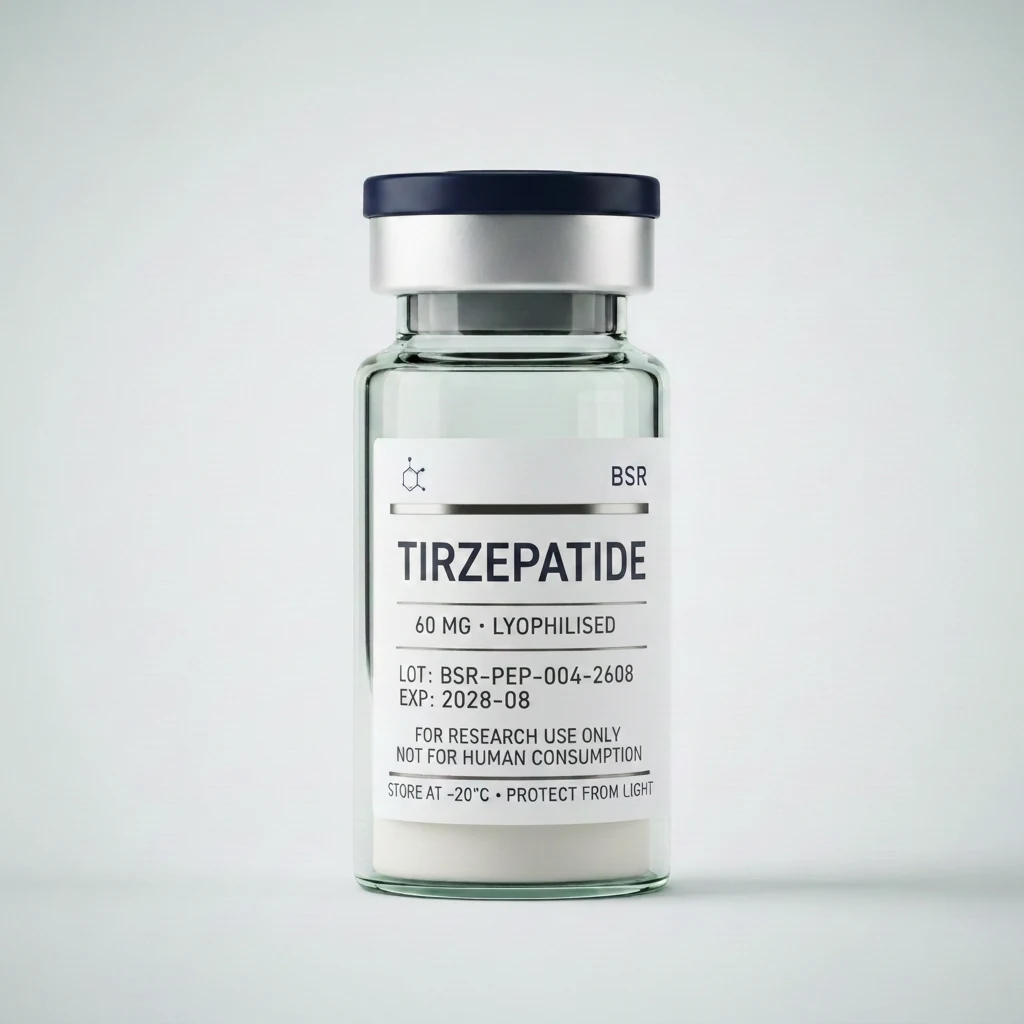
For procurement teams managing reference standards, this distinction has practical consequences. Orforglipron follows standard small-molecule exclusivity pathways, whereas semaglutide in all its forms remains a regulated peptide subject to the FDA's ongoing position on compounding exclusions. The FDA has proposed to formally exclude semaglutide, tirzepatide, and liraglutide from the 503B outsourcing facility bulk drug substances list — with the public comment period closing 29 June 2026 — signalling that large-scale compounding of these agents has no regulatory future in the US.
Lilly has submitted orforglipron for approval in more than 40 countries and plans to launch in each market following local regulatory clearance. No MHRA submission date for orforglipron has been confirmed publicly as of this briefing.
Retatrutide TRIUMPH-1: Phase 3 data and the NDA horizon
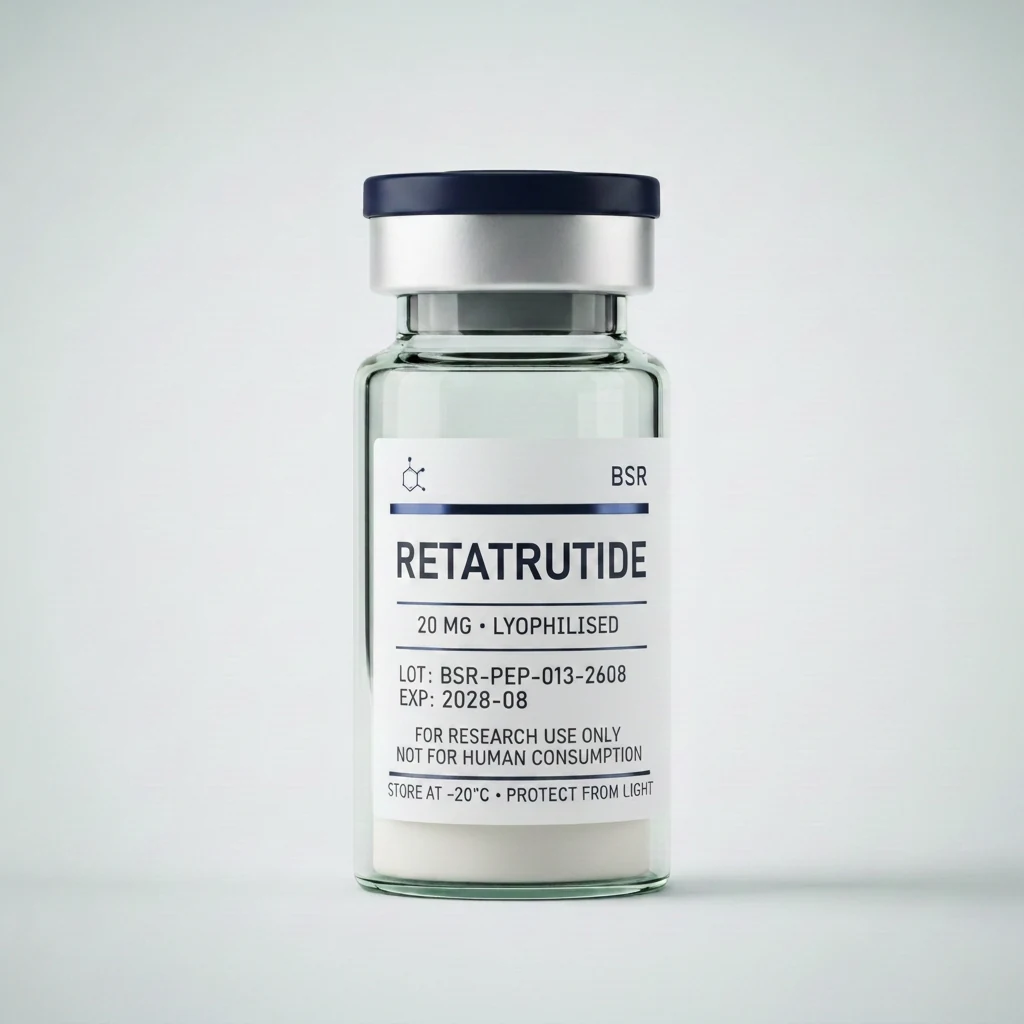
The third strand of the current incretin landscape is retatrutide, Lilly's investigational once-weekly triple hormone receptor agonist targeting GLP-1, GIP, and glucagon receptors. In the Phase 3 TRIUMPH-1 trial (NCT05929066), which enrolled 2,339 participants randomised to receive retatrutide 4 mg, 9 mg, 12 mg, or placebo, all studied doses met the primary and key secondary endpoints. At 80 weeks, participants on the 12 mg dose lost an average of 70.3 lb (28.3%) of body weight, with 45.3% achieving at least 30% loss and 65.3% reaching a BMI below 30 kg/m².
What distinguishes retatrutide mechanistically is its glucagon receptor agonism. This third receptor pathway may account for a continued weight-loss trajectory without plateau through 80 weeks, as well as robust cardiometabolic effects including reductions in triglycerides, non-HDL cholesterol, systolic blood pressure, and high-sensitivity C-reactive protein, according to analysts cited by Pharmacy Times.
Earlier data from TRIUMPH-4, published in December 2025, had already demonstrated 28.7% mean weight loss in participants with obesity and knee osteoarthritis at 68 weeks. The consistency of efficacy across TRIUMPH-4 and TRIUMPH-1 — distinct patient populations separated by several months — supports the reproducibility of the Phase 3 signal.
A regulatory submission for retatrutide is anticipated in 2026 as the full data package continues to mature, according to Pharmacy Times. Additional Phase 3 results, including data from TRIUMPH-2 in adults with obesity and type 2 diabetes and TRIUMPH-3 in those with established cardiovascular disease, are expected later this year.
Procurement implications for UK research laboratories
The MHRA's approval of oral semaglutide, combined with the US approval of orforglipron and the advancing retatrutide programme, creates several practical considerations for UK research procurement teams.
Reference standards and purity requirements. As oral semaglutide enters clinical use in the UK, the demand for authenticated semaglutide reference standards for assay development, pharmacokinetic modelling, and comparative studies will increase. Procurement officers should ensure that suppliers of peptide-based research materials can demonstrate HPLC purity ≥98% with mass spectrometry confirmation. The structural complexity of GLP-1 peptides — semaglutide is a 31-amino acid analogue of human GLP-1(7-37) with C18 fatty diacid attachment — means that lot-to-lot variability and aggregation risk require careful documentation.
Compounding exclusions and sourcing discipline. The FDA's proposed permanent exclusion of semaglutide from the 503B Bulks List reinforces a direction of travel that UK procurement teams should factor into sourcing decisions: the FDA carefully reviewed nominations and did not identify sufficient evidence to include semaglutide, tirzepatide, and liraglutide on the 503B bulks list. UK-based suppliers operating under research-use-only frameworks should be assessed for MHRA compliance posture, accurate labelling, and published certificates of analysis. MHRA enforcement activity on mis-marketed peptide products has been increasing, according to earlier industry reports.
Orforglipron as a small-molecule comparator. Because orforglipron is a small molecule rather than a peptide, it follows different synthetic and exclusivity pathways. UK labs comparing GLP-1 receptor agonist pharmacology across structural classes — peptide versus small molecule — will need sourcing strategies that reflect this regulatory asymmetry. Orforglipron was originally discovered by Chugai Pharmaceutical and licensed by Lilly in 2018; as a newly approved NME it carries standard data exclusivity periods.
TRIUMPH programme horizon planning. Retatrutide's anticipated NDA submission in the fourth quarter of 2026 means that UK labs engaged in incretin receptor biology or cardiometabolic research should begin tracking the compound's MHRA submission timeline. Its triple-agonist mechanism — GLP-1, GIP, and glucagon receptor activation — makes it a structurally and pharmacologically distinct compound from both semaglutide and tirzepatide, with separate reference standard requirements.
Summary
The MHRA's 11 June 2026 approval of oral semaglutide marks a milestone for UK obesity pharmacotherapy and shifts the reference standard environment for research-procurement professionals. Alongside the FDA's April approval of orforglipron and the advancing TRIUMPH programme for retatrutide, the incretin space now encompasses peptide-based oral GLP-1 agents, small-molecule GLP-1 receptor agonists, and a triple-agonist candidate within 12 months of potential NDA submission. For UK labs, the practical priorities are maintaining sourcing discipline around authenticated reference standards, tracking the MHRA's position on compounding analogues, and preparing procurement frameworks for a compound class that is expanding structurally as well as commercially.
Research-grade material, HPLC verified, certificate of analysis with every order.
The week's Intelligence in one email, every Friday morning.
Regulatory moves, trial readouts, supply-chain news. No product pitches. Unsubscribe in one click.
More in Regulatory & Policy
One Amino Acid, Three High Stakes: What the Seventh Circuit's Pending Retatrutide Ruling Means for Exclusivity, Medicare Pricing, and Compounding Access
12 Oct 2026
FDA Career Scientists Formally Oppose Administration's Interim Peptide Dispensing Plan — and What the Internal Split Means for Research Procurement
11 Oct 2026
HHS Stopgap Plan for Restricted Peptides: What the Reported Enforcement-Discretion Proposal Means for Research Procurement
09 Oct 2026