Research Pipeline · 30 Aug 2026
MOTS-c: The Mitochondrial-Encoded Peptide With a Favourable PCAC Vote, Emerging Human Trial Data, and a Long Road to Compounding Approval
MOTS-c received a favourable 7-5 PCAC recommendation on 23 July 2026 for inclusion on the FDA's 503A Bulks List, yet formal rulemaking remains ahead. This briefing examines MOTS-c's mitochondrial mechanism, the state of its preclinical and early clinical evidence, and what the PCAC outcome means for research procurement in the UK and US.
18 sources cited
Key takeaways
- On 23 July 2026, the FDA's Pharmacy Compounding Advisory Committee (PCAC) voted 7-5 (with 2 abstentions) to recommend MOTS-c for inclusion on the Section 503A Bulk Drug Substances List — the first favourable federal advisory recommendation the compound has received.
- The vote is non-binding. Formal notice-and-comment rulemaking must follow before compounding pharmacies can legally prepare MOTS-c for individual patients.
- MOTS-c is a 16-amino-acid peptide encoded within mitochondrial DNA, making it one of a small class of mitochondria-derived peptides (MDPs) with measurable physiological signalling roles.
- Preclinical evidence in metabolic disease, exercise adaptation, and bone homeostasis is substantial, but human data remains sparse. An active trial (NCT07505745) is evaluating insulin sensitivity outcomes in adults with prediabetes.
- In the UK, MOTS-c carries no approved status and is supplied solely as a research-use-only material. The PCAC outcome has no direct bearing on MHRA policy.
What is MOTS-c?
MOTS-c (mitochondrial open reading frame of the 12S rRNA-c) is a 16-amino-acid peptide encoded by the mitochondrial genome — specifically by the MT-RNR1 gene. It was first identified by Dr. Changhan David Lee's laboratory at the University of Southern California in 2015 and is part of a class of signalling molecules called mitochondrial-derived peptides (MDPs).
What distinguishes MOTS-c from most therapeutic peptides under research is its cellular origin. Most therapeutic peptides are derived from genes in the nucleus; MOTS-c is encoded inside mitochondrial DNA, making it one of the first identified mitochondrial-derived peptides. MOTS-c is also the first mitochondrial-encoded peptide to have been subjected to clinical trials, establishing the mitochondrial genome as a potential source of drug targets.
Mechanism of action
What makes MOTS-c particularly interesting to researchers is its role as an exercise mimetic — a compound that can replicate some of the metabolic benefits of physical exercise at the cellular level. MOTS-c is naturally upregulated during exercise, translocates to the cell nucleus under metabolic stress, and activates genes involved in energy regulation and stress adaptation.
At the molecular level, the pathway is well characterised. Under conditions of low glucose, oxidative stress, or inflammation, mitochondria increase production of MOTS-c, which then enters the nucleus to modulate transcription of genes associated with antioxidant defences, including NRF2 targets, and activates AMPK — the central energy sensor — promoting glucose uptake and fatty acid oxidation when ATP is low.
MOTS-c is part of a broader family of mitochondria-derived peptides that may help mitochondria communicate with the cell nucleus during metabolic stress. In practical terms, it is being studied because mitochondria influence how the body uses energy, responds to exercise, manages glucose, adapts to stress, and maintains muscle and metabolic function over time.
State of the evidence
Preclinical
The preclinical record is extensive relative to most compounds still awaiting human trial data. In animal models, administration of MOTS-c improved insulin sensitivity and enhanced endurance performance. Studies have shown that MOTS-c supports osteoblast activity while limiting excessive osteoclast-driven bone loss, and in animal models of age-related bone loss, MOTS-c treatment preserved bone density.
A June 2025 study published in Frontiers in Physiology by researchers at the University of Auckland examined cardiac applications. Type 2 diabetes is associated with heart failure as a primary cause of premature death, and mitochondrial dysfunction has been linked to decreased contractile performance in the diabetic heart, partly due to disturbances in mitochondrial energy supply. The paper identified MOTS-c as a compound showing promise for restoring energy homeostasis and muscle function in metabolic disease settings.
A 2026 review in Human Physiology covered MOTS-c's regulation of metabolism and potential applications in clinical and sports medicine, reflecting sustained interest in the compound's multisystem effects. Researchers note that much remains to be understood about MOTS-c, including its basic molecular mechanisms, stability in biological systems, oral bioavailability, and relevance across a range of diseases and conditions.
Human data
For researchers tracking MOTS-c clinical trial status in 2026, the picture is complex: extraordinary preclinical promise in mice paired with limited — and now stalled — human trial data.
ClinicalTrials.gov MOTS-c searches point to a completed CohBar Phase 1a/1b study of CB4211 — a modified MOTS-c analogue — in healthy non-obese volunteers and subjects with NAFLD (NCT03998514). That listing is completed, not recruiting, and does not represent an active 2025–2026 MOTS-c human trial.
An active registered trial offers a more current data point. NCT07505745 is testing whether 12 weeks of MOTS-c improves OGTT-derived insulin sensitivity versus placebo in adults with prediabetes and overweight or obesity. ClinicalTrials.gov also lists a study of MOTS-c in adults with metabolic syndrome (NCT04303143), though its enrolment status should be verified directly on the registry. The gap between preclinical promise and clinical translation remains significant, primarily due to delivery system challenges and the lack of pharmaceutical company investment in mitochondrial-derived peptide therapeutics.
The July 2026 PCAC vote
The FDA's Pharmacy Compounding Advisory Committee met on 23–24 July 2026 to evaluate whether seven peptide compounds should move from 503A Category 2 (not eligible for bulk compounding pending review) onto the 503A Bulks List, which would make them eligible for compounding pharmacies to prepare as unapproved drug products under Section 503A of the Federal Food, Drug, and Cosmetic Act.
On 23 July 2026, the PCAC recommended the addition of MOTS-c, in free base and acetate formulations, to the FDA 503A Bulk Drugs List. MOTS-c was recommended with seven votes for "yes," five votes for "no," and two votes in abstention. The vote was the narrowest margin of the four compounds reviewed on day one.
The committee's recommendation directly contradicted the guidance from FDA's own scientific staff. FDA scientific reviewers had recommended against compounding all seven peptides, while HHS leadership publicly signalled support for expanding access. The agency's career scientists applied the four-factor framework under 21 CFR 216.23(c) — physical and chemical characterisation, historical use in compounding, evidence of effectiveness, and safety — and concluded that none of the seven compounds satisfies the applicable criteria for inclusion.
The broader context of the committee's reconstitution matters here. According to STAT News reporting cited by Newtropin, the FDA named eight new panelists to the PCAC, a majority of whom are involved with businesses that promote or prescribe peptides. Ethics concerns have been raised about potential conflicts of interest, and the composition suggests the committee may lean more favourably toward allowing peptide compounding.
What the PCAC vote does — and does not — mean
Research-procurement professionals should take care not to overinterpret the recommendation. Formal FDA rulemaking is still required before compounding pharmacies can legally prepare these substances.
According to FDA's own 503A interim policy, the agency will publish a Notice of Proposed Rulemaking (NPRM) upon completing its evaluation. The NPRM will identify substances it proposes to place on the 503A Bulks List and substances it evaluated but proposes not to include. The public then receives an opportunity to submit comments, after which FDA publishes a final rule.
Even if PCAC recommends adding these peptides to the 503A Bulks List, and even if FDA agrees, notice-and-comment rulemaking is still required — a process that, under standard timelines, can take more than a year. Even if a substance is ultimately added to the 503A Bulks List, that does not mean the compounded drug is FDA-approved or FDA-endorsed.
FDA oversight is only one layer of compliance. State boards of pharmacy maintain independent authority, and some jurisdictions have adopted — or may decide to adopt — peptide compounding policies that are more restrictive than federal requirements.
A second PCAC session is also confirmed. FDA has announced the PCAC will convene again before the end of February 2027 to review five additional peptides for the 503A Bulks Drug Substances List, including GHK-Cu, Melanotan II, Cathelicidin (LL-37), Dihexa acetate, and Mechano Growth Factor, Pegylated (PEG-MGF).
Regulatory status in the United Kingdom
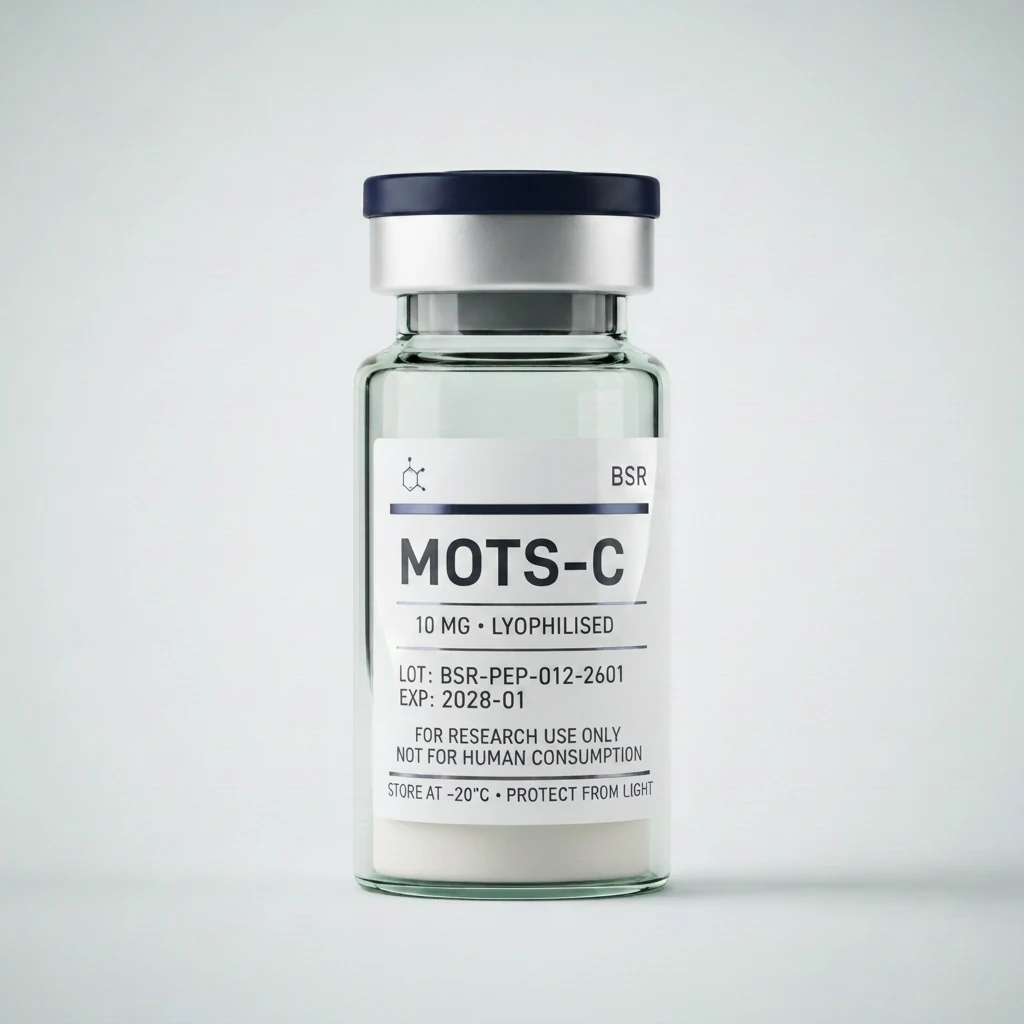
MOTS-c has no approved status under MHRA regulations. It is neither licensed as a medicinal product nor listed in any MHRA marketing authorisation, and it is not addressed in any MHRA guidance as of the date of publication. UK research suppliers typically provide MOTS-c as a research-use-only (RUO) material, with appropriate labelling prohibiting human administration. The US PCAC recommendation has no direct legal effect on UK regulatory status.
Researchers procuring MOTS-c for laboratory use in the UK should verify that suppliers provide a Certificate of Analysis (CoA) from a qualified analytical laboratory confirming identity, purity (ideally ≥98% by HPLC), and absence of residual solvents and endotoxins. Given MOTS-c's mitochondria-derived origin and relatively short amino acid sequence, mass spectrometry confirmation of molecular weight (1,530 Da for the canonical form) offers an additional layer of lot verification.
Outlook for research procurement
MOTS-c is not FDA-approved for any human therapeutic use. There is no active Investigational New Drug (IND) application for MOTS-c or any MOTS-c analogue as of 2026. For UK laboratories, the compound remains in the preclinical-to-early-clinical transition zone, with the most robust human data expected only once NCT07505745 and any related metabolic syndrome trials report results.
The favourable PCAC vote is a meaningful signal that the US regulatory environment may, over a multi-year horizon, create a formal compounding pathway for MOTS-c. However, procurement decisions should be grounded in the actual regulatory status — research use only — rather than the trajectory implied by an advisory committee recommendation that has not yet been actioned through rulemaking.
Research-grade material, HPLC verified, certificate of analysis with every order.
The week's Intelligence in one email, every Friday morning.
Regulatory moves, trial readouts, supply-chain news. No product pitches. Unsubscribe in one click.
More in Research Pipeline
Thymosin Alpha-1: What 35 Countries of Clinical Use and a Lopsided PCAC Vote Mean for Research Access in 2026
07 Oct 2026
Viking Therapeutics Initiates Oral Maintenance Dosing Study for VK2735: What the GLP-1/GIP Dual Agonist's Two-Part Programme Tells Researchers About the Weight-Regain Problem
06 Oct 2026
GHK-Cu: What a Fresh Diabetic Wound Study and a Recruiting Phase 2 Trial Mean for the Copper Peptide's Research Standing
03 Oct 2026