Research Pipeline · 28 Jun 2026
Epitalon: The Pineal Tetrapeptide at the Centre of the July 2026 PCAC Review — What the Evidence and Regulatory Shift Mean for Research Procurement
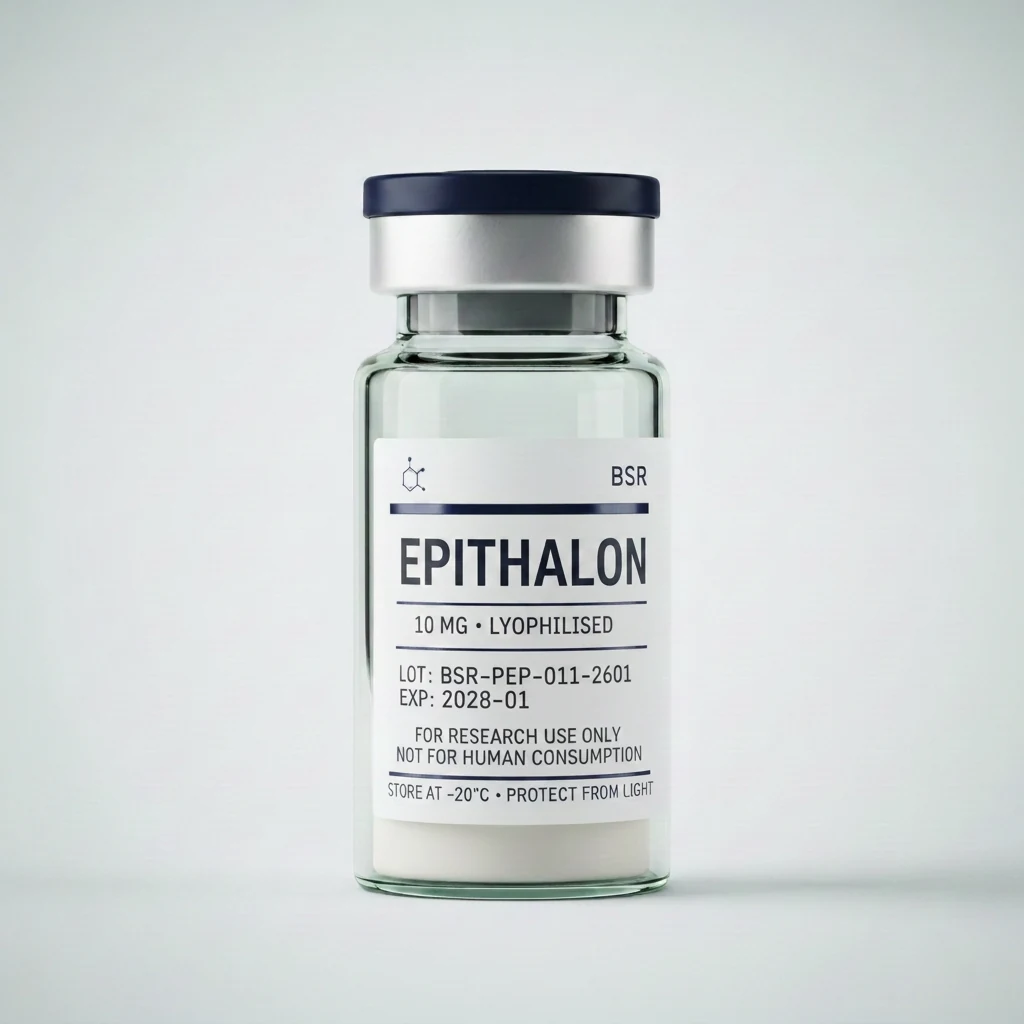
Epitalon (Ala-Glu-Asp-Gly), a synthetic tetrapeptide derived from pineal gland research, is among the seven compounds scheduled for formal FDA Pharmacy Compounding Advisory Committee review on 24 July 2026. With removal from Category 2 confirmed in April and written comments to the docket due by 9 July, UK research procurement teams need a clear-eyed account of its evidence base, remaining regulatory unknowns, and the supply-chain pressures now bearing on peptide API sourcing.
14 sources cited
Key takeaways
- Epitalon (AEDG tetrapeptide) was removed from FDA 503A Category 2 effective 23 April 2026 and is scheduled for Pharmacy Compounding Advisory Committee (PCAC) review on 24 July 2026.
- Stakeholders wishing to submit written comments to docket FDA-2025-N-6895 have until 9 July 2026; those seeking to make oral presentations at the meeting must notify FDA by 30 June 2026.
- The compound's evidence base rests primarily on preclinical and Russian-origin clinical data spanning roughly 25 years; no placebo-controlled human trial has been published in a PubMed-indexed journal as of mid-2026.
- Removal from Category 2 does not constitute Category 1 authorisation, nor does a favourable PCAC recommendation translate immediately into compounding permission — formal rulemaking remains required.
- For UK laboratories, Epitalon has no MHRA-approved indication and is supplied exclusively as a research-use-only (RUO) material; the compound's status in the US reclassification process does not alter that position.
- A separate supply-chain risk — the addition of WuXi AppTec to the US Department of Defense's Section 1260H list on 8 June 2026 — introduces longer-term procurement uncertainty for Chinese-origin peptide API, including compounds such as Epitalon.
What is Epitalon?
Epitalon (also rendered as epithalon, epithalamin, or by its amino-acid sequence AEDG) is a synthetic tetrapeptide comprising four residues: alanine, glutamic acid, aspartic acid, and glycine. It was synthesised based on the amino acid composition of Epithalamin, a bovine pineal gland extract, prior to its discovery in pineal gland polypeptide complex solution. The molecule was engineered by Vladimir Khavinson and colleagues at the St. Petersburg Institute of Bioregulation and Gerontology in the 1980s, with the goal of identifying the minimum bioactive fragment of epithalamin — a longer polypeptide extract from the pineal gland that had shown anti-ageing properties in earlier Soviet research.
Structurally, Epitalon is about as simple as bioactive peptides get: four amino acids, no disulfide bonds, no post-translational modifications. That simplicity has made it easy to synthesise and, outside Russia, unusually difficult to patent-protect.
Mechanism of action
The principal proposed mechanism centres on telomere biology. Epitalon (Ala-Glu-Asp-Gly), a tetrapeptide derived from pineal gland extracts, is the most extensively studied peptide targeting telomere biology; its primary mechanism involves activating telomerase, the enzyme that adds telomeric repeats to chromosome ends. In human somatic cell cultures, Epitalon treatment induces expression of the telomerase catalytic subunit (hTERT), increases enzymatic activity, and produces measurable telomere elongation sufficient to extend cellular lifespan beyond the Hayflick limit.
Secondary mechanisms proposed in the literature are broader. Beyond telomerase activation, Epitalon modulates multiple ageing-related pathways; the peptide enhances pineal gland function and melatonin secretion, which decline markedly with age and contribute to circadian disruption, sleep disturbances, and increased oxidative stress. Animal studies suggest that Epitalon increases activity of antioxidant enzymes, including superoxide dismutase and glutathione peroxidase, and extends median and maximum lifespan by 12–24% in rodent longevity studies.
A note of scientific caution is appropriate. During a quarter-century of in vitro, in vivo, and in silico studies, as well as clinical trials, many experiments have shown statistically significant geroprotective and neuroendocrine effects; however, the mechanism of action remains unclear.
State of clinical evidence
The evidence base is substantial in volume but narrow in design quality. The predominant output originates from Khavinson's St. Petersburg group, and independent replication by Western laboratories has been limited. During the last 25 years, the compound has been extensively studied using in vitro, in vivo, and in silico methods.
The most consequential human data concern a specific indication. Clinical trials have shown that Epitalon improves visual function in patients with retinitis pigmentosa, with parabulbar injections of 5 µg per eye for 10 days, enhancing visual acuity, expanding peripheral fields, and reducing scotomas. A 2025 Italian-Russian collaboration published in Stem Cell Reviews and Reports examined an in vitro model of diabetic retinopathy, finding antioxidant effects on wound-healing pathways — extending the compound's proposed application beyond longevity into ophthalmology, according to Healthspan's evidence review.
A 2026 narrative review published in Frontiers in Aging — conducting systematic searches of PubMed, Scopus, and regulatory databases — assessed Epitalon within a broader analysis of therapeutic peptides in gerontology and characterised the compound's telomerase mechanism as biologically credible whilst noting the limitations of the human data. The review was conducted through systematic searches from inception through January 2026, and evaluated peer-reviewed articles, clinical trials, regulatory documents, and preclinical studies.
The critical evidentiary gap is straightforward: no Phase 2 or Phase 3 controlled efficacy trial has been completed or published in a peer-reviewed journal indexed in PubMed as of April 2026. In humans in vivo, evidence is limited to case reports and small open-label studies. The mechanism is plausible and partially demonstrated; the clinical magnitude of effect in humans is not yet well characterised.
A potential oncological concern also warrants acknowledgement. Telomerase reactivation is a hallmark of most cancers. This is precisely why mainstream telomerase longevity research uses transient, controlled delivery rather than chronic exposure. The PCAC will likely weigh this theoretical risk directly in its evaluation of safety data.
US regulatory status: from Category 2 to PCAC review
Epitalon's regulatory trajectory in the United States follows the same arc as the broader 2026 peptide reclassification process. The FDA placed Epitalon in Category 2 of the 503A list, citing significant safety concerns, which effectively restricted compounding pharmacy access for US patients.
The FDA removed Epitalon from the Category 2 list that restricted compounding in April 2026, and a July 2026 advisory meeting will review formal authorisation. Specifically, it is one of the 12 peptides the FDA removed from its Section 503A Category 2 list in April 2026, and one of seven peptides under formal advisory review on 23–24 July 2026.
On 24 July 2026, the PCAC will review Epitalon alongside Emideltide (DSIP) and Semax. The committee will evaluate the available evidence on Epitalon's safety, clinical utility, and suitability for 503A compounding.
The procedural timeline that follows a favourable PCAC recommendation is important to internalise. PCAC's recommendation is non-binding, and formal rulemaking is what comes next. Even if PCAC recommends adding peptides to the Category 1 list, and even if FDA agrees, notice-and-comment rulemaking is still required — a process that, under standard timelines, can take more than a year.
The interim practical consequence for compounders is also clear. These substances currently exist in a regulatory grey zone: they are no longer designated as posing a "significant safety risk," but they have not been affirmatively authorised for compounding under Section 503A or FDA guidance. Compounders who interpret removal from Category 2 as implicit permission to compound do so at considerable enforcement risk.
Separately, the 503B outsourcing facility framework is governed by different rules. This analysis is specific to traditional compounding under Section 503A; outsourcing facilities operating under Section 503B of the FDCA face a separate regulatory framework, and the Category 2 removals do not independently authorise compounding under that provision.
UK and EU regulatory status
Epitalon holds no approved indication with the MHRA and is not listed in the British National Formulary. It is neither scheduled as a controlled substance nor registered as a licensed medicinal product in the UK. Its legal supply route in Great Britain is therefore exclusively as a research-use-only (RUO) compound — subject to the standard requirement that it is sold and used solely for non-clinical scientific research, not for human administration.
The US Category 2 removal and forthcoming PCAC process have no direct bearing on MHRA status, nor on the EU's position. UK research procurement teams should not conflate activity in the FDA 503A compounding framework with any change in the compound's status under UK medicines law.
Supply-chain procurement risks: the WuXi factor
A significant supply-chain development adds a further layer of complexity for any laboratory sourcing Chinese-origin peptide API. On 8 June 2026, the Department of Defense published its updated list of "Chinese military companies" under Section 1260H of the National Defense Authorization Act for Fiscal Year 2021. Among the entities newly added was WuXi AppTec Co., Ltd., the China-based CDMO whose name has been at the centre of the BIOSECURE Act debate since 2024.
The designation triggers one of the two statutory pathways to "biotechnology company of concern" (BCOC) status under the BIOSECURE Act — a law that, when fully implemented, will prohibit federal procurement linked to those firms. The Act's prohibitions do not take effect immediately; under the statutory timeline, OMB must publish its BCOC list by December 2026, issue implementing guidance within 180 days, and the FAR Council then has one year to revise the FAR. If the government uses all allotted time, it could be nearly three years before the Act takes effect.
From a peptide supply-chain perspective, the Jefferies view is instructive: Jefferies analysts noted that the list's inclusion of WuXi AppTec hands Indian manufacturers a win, "especially in the small molecule and peptide space," with the India-based CDMO market estimated at $6.9 billion by 2030.
For UK laboratories procuring peptide research materials, the practical near-term conclusion is that existing supply relationships with WuXi-sourced API will not be disrupted immediately under the BIOSECURE Act's five-year grandfather provision for pre-existing contracts. However, procurement officers evaluating multi-year supplier relationships — particularly for pharmaceutical-grade or research-grade peptide synthesis — should begin supplier diversification assessments now, with Indian and European CDMO capacity the most immediately scalable alternative.
There is a supply-chain issue that sits upstream of any FDA regulatory authorisation of peptide use in compounding: under Section 503A, the bulk API used must be manufactured at an FDA-registered drug establishment, and accompanied by a Certificate of Analysis. This requirement applies specifically to the US compounding context, but it points to the same purity and provenance standards that well-run UK research procurement programmes should apply to RUO materials regardless.
What procurement teams should watch
- 9 July 2026 — deadline for written comments to FDA docket FDA-2025-N-6895, which covers the seven peptides under July PCAC review including Epitalon.
- 30 June 2026 — notification deadline for those wishing to make oral presentations at the PCAC meeting.
- 24 July 2026 — PCAC meeting date at FDA's White Oak Campus, Silver Spring, Maryland; Epitalon reviewed alongside Semax and Emideltide (DSIP).
- December 2026 — expected OMB publication of its formal BCOC list under the BIOSECURE Act, which will determine whether WuXi AppTec moves into a more restricted procurement category under US federal rules.
- A second PCAC meeting is scheduled before the end of February 2027 to review five additional peptides, including GHK-Cu, Melanotan II, Cathelicidin (LL-37), Dihexa acetate, and PEG-MGF.
UK procurement teams do not need to take regulatory action ahead of the July meeting: Epitalon's RUO status in Great Britain is unchanged. The value in monitoring the PCAC outcome lies in assessing whether a clearer US evidentiary standard emerges, which may influence how major suppliers document purity, provenance, and Certificate of Analysis requirements for this compound going forward.
Research-grade material, HPLC verified, certificate of analysis with every order.
The week's Intelligence in one email, every Friday morning.
Regulatory moves, trial readouts, supply-chain news. No product pitches. Unsubscribe in one click.
More in Research Pipeline
Thymosin Alpha-1: What 35 Countries of Clinical Use and a Lopsided PCAC Vote Mean for Research Access in 2026
07 Oct 2026
Viking Therapeutics Initiates Oral Maintenance Dosing Study for VK2735: What the GLP-1/GIP Dual Agonist's Two-Part Programme Tells Researchers About the Weight-Regain Problem
06 Oct 2026
GHK-Cu: What a Fresh Diabetic Wound Study and a Recruiting Phase 2 Trial Mean for the Copper Peptide's Research Standing
03 Oct 2026