Research Pipeline · 02 Aug 2026
Epitalon: The Pineal Tetrapeptide With Four Decades of Longevity Research — and a Fresh PCAC Recommendation
Epitalon (Ala-Glu-Asp-Gly) is a synthetic tetrapeptide derived from bovine pineal gland extract, studied for over 40 years for telomerase activation, melatonin regulation, and geroprotection. On 24 July 2026, the FDA's Pharmacy Compounding Advisory Committee recommended it for inclusion on the 503A Bulks List — a significant regulatory milestone that places the compound closer to US clinical access than at any previous point, while substantive evidentiary gaps remain.
12 sources cited
Key takeaways
- Epitalon (Ala-Glu-Asp-Gly) is a synthetic tetrapeptide derived from epithalamin, a bovine pineal gland extract, developed by Vladimir Khavinson at the St Petersburg Institute of Bioregulation and Gerontology.
- Its principal proposed mechanisms are telomerase activation, pineal gland regulation, and antioxidant activity, though the mechanistic picture remains incomplete.
- On 24 July 2026, the FDA's Pharmacy Compounding Advisory Committee (PCAC) voted to recommend Epitalon for inclusion on the 503A Bulks List — a positive advisory step, but not an approval.
- The FDA must still issue a rulemaking before compounding pharmacies may legally produce it; that process could take a year or more.
- Independent replication of the human evidence is limited; most clinical data originate from a single Russian research group and involve epithalamin (a cruder pineal extract) rather than the synthetic tetrapeptide itself.
What is Epitalon?
Epitalon, also known as Epithalon or Epithalone, is a tetrapeptide with the sequence Ala-Glu-Asp-Gly (AEDG), synthesised based on the amino acid composition of epithalamin, a bovine pineal gland extract, prior to its discovery in a pineal gland polypeptide complex solution. The peptide is accordingly sometimes described as a "bioregulator" — a class of short peptides theorised to modulate gene expression and tissue function at low concentrations.
It was developed in the 1980s by Vladimir Khavinson and colleagues at the St Petersburg Institute of Bioregulation and Gerontology, who spent the following four decades studying its effects on aging, longevity, and biological regulation in both animals and humans. During the last 25 years, the compound has been extensively studied using in vitro, in vivo, and in silico methods.
Epitalon is sometimes spelled "Epithalon" in Western literature; the two spellings refer to the same compound. The variant "Epithalon" reflects its origin in epithalamin, the pineal gland extract it was modelled on.
Proposed Mechanisms of Action
Telomerase activation
Epitalon's primary mechanism of action is proposed to involve activation of telomerase, the enzyme responsible for maintaining telomere length at chromosome ends. Telomeres shorten with each cell division, and this progressive shortening is considered a key hallmark of cellular aging; when telomeres become critically short, cells enter senescence or undergo apoptosis.
Khavinson and colleagues demonstrated that epitalon can activate telomerase in human somatic cells, leading to elongation of telomeres and extension of cellular lifespan beyond the Hayflick limit. However, researchers have raised a biological caveat that procurement teams and investigators should note: telomerase is suppressed in many somatic cells partly because unrestricted replicative capacity is one of the features that cancers exploit. In most advanced cancers, telomerase is reactivated. That does not prove Epitalon causes cancer, but it is precisely why telomerase-targeting interventions require more caution than the wellness market often shows.
Pineal and neuroendocrine regulation
It has been demonstrated that Epitalon exerts, among other effects, a direct influence on melatonin synthesis, alters the mRNA levels of interleukin-2, modulates the mitogenic activity of murine thymocytes, and enhances the activity of various enzymes including AChE, BuChE, and telomerase, though it remains uncertain whether these are the sole mechanisms of action.
Epitalon also influences melatonin production. As a pineal bioregulator, it has been shown to restore the nocturnal melatonin peak in aged primates, which normally declines with age.
Antioxidant and cytoprotective effects
Studies indicate significant geroprotective and neuroendocrine effects of Epitalon, resulting from its antioxidant, neuroprotective, and antimutagenic effects, originating from both specific and nonspecific mechanisms. Separately, a 2025 retinal cell study found that Epitalon improved delayed wound healing under high-glucose conditions, reduced reactive oxygen species, and improved antioxidant gene expression — though this remains preclinical work.
State of the Clinical Evidence
The evidence base for Epitalon has a structural limitation that reviewers should weigh carefully. Many of the more frequently cited mortality and geroprotection papers involve epithalamin, not Epitalon alone. Papers from Khavinson and colleagues reported lower mortality and improved health outcomes in older populations treated with thymalin and epithalamin over multi-year periods, including older adults in institutional settings and elderly patients with coronary disease. One 2006 report described a 12-year randomised clinical study in elderly patients with coronary disease and accelerated cardiovascular aging, finding fewer deaths in the epithalamin-treated group.
The distinction between the natural polypeptide extract (epithalamin) and the synthetic tetrapeptide (Epitalon/AEDG) matters for regulatory and scientific purposes, since the two are not identical compounds. Some studies focus on the synthetic tetrapeptide itself, while others examine epithalamin or mixed peptide preparations from the pineal gland.
Regarding the core telomere claim: the telomerase effect is mostly from cell and animal studies. There is no large, blinded human trial showing that injected synthetic epitalon lengthens human telomeres.
A 2025 review published in PMC catalogued the compound's pharmacology, but concluded that despite the considerable volume of research on the biological and pharmacodynamic characteristics of Epitalon, the quantity of physico-chemical and structural investigations of this peptide remains quite limited.
Separately, a March 2026 narrative review in Frontiers in Aging — a comprehensive review conducted through searches of PubMed, Scopus, and regulatory databases from inception through January 2026, examining therapeutic peptides in gerontology — included Epitalon alongside BPC-157, TB-500, Semax, and CJC-1295 among the compounds assessed for applications in healthy aging.
The overall picture, assessed judiciously, is that Epitalon is not a miracle, and not nonsense; it is better seen as a candidate geroregulatory compound with a disproportionate amount of intrigue relative to the quality of definitive clinical evidence.
Regulatory History and the PCAC Vote
Epitalon's journey through US regulation has been iterative. For a period, US compounding pharmacies could prepare Epitalon formulations under the 503A framework for patients working with anti-aging practitioners. The FDA subsequently placed Epitalon in Category 2 of the 503A list, citing significant safety concerns — a designation that effectively prohibited compounding.
The FDA removed Epitalon from its Section 503A Category 2 list in April 2026. This reclassification did not, however, authorise compounding. As one regulatory law analysis noted regarding the broader group of reclassified peptides: these substances currently exist in a regulatory grey zone — they are no longer designated as posing a significant safety risk, but they have not been affirmatively authorised for compounding under Section 503A or FDA guidance. Compounders who interpret removal from Category 2 as implicit permission to compound do so at considerable enforcement risk.
On 23 and 24 July 2026, the FDA Pharmacy Compounding Advisory Committee reviewed Epitalon and recommended adding it to the Section 503A Bulks List. Epitalon was one of the six peptides that received a favourable vote; only emideltide was rejected.
What comes next follows the same procedural track as the other recommended peptides. The FDA still has to formally adopt the advisers' recommendations before the peptides may be legally compounded. If the agency accepts those recommendations, it is possible, perhaps even likely, that the agency will announce a period of enforcement discretion — meaning it will allow pharmacies to go ahead and prepare these compounds pending formal notice-and-comment rulemaking. Eventually, a final rule would need to be published in the Federal Register for the peptides to be officially added to the FDA's 503A Bulks List. The agency would need to issue a rule to add them to the 503A bulk compounding list, which could take a year or more.
In the United Kingdom, Epitalon is not licenced as a medicinal product. The MHRA's enforcement focus on unlicensed injectable products means that research procurement teams in the UK must ensure any material acquired is used in a legitimate research context and does not re-enter the clinical supply chain without appropriate authorisation.
Relevance to Research Procurement
For UK and European research laboratories sourcing Epitalon as a reference compound or research reagent, several practical considerations apply.
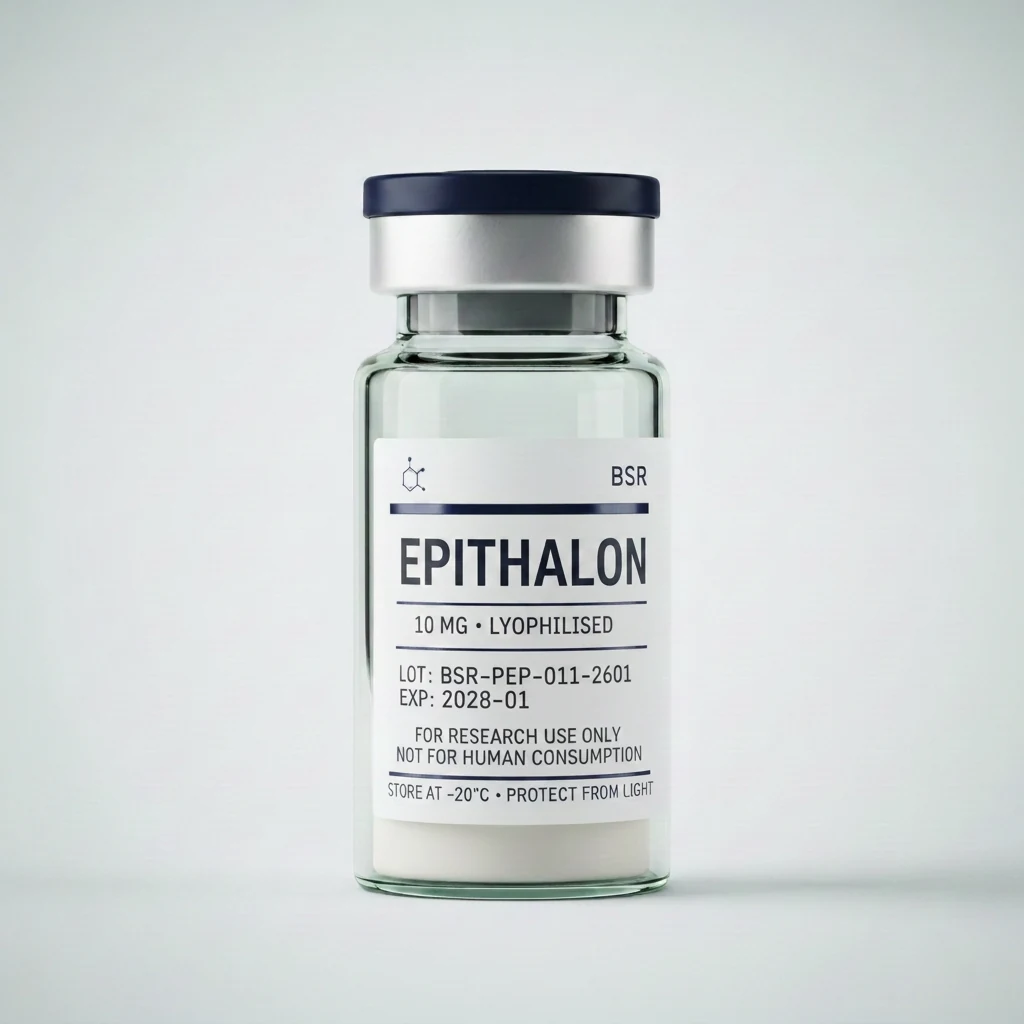
Purity and characterisation. As a small tetrapeptide (four amino acids, approximately 430 Da), Epitalon is straightforward to synthesise but equally susceptible to inconsistency between lots. Certificate of Analysis documentation should include HPLC purity (typically ≥98% for research-grade material), mass spectrometry confirmation of the correct molecular weight, and residual solvent data. Lyophilised powder should be stored at −20°C. Reconstituted solution should be refrigerated at 2–8°C. As a small tetrapeptide, Epitalon is relatively stable compared to larger peptides, though investigators should nonetheless validate stability under their specific assay conditions.
Regulatory status of research-grade material. The PCAC vote in the United States relates to compounded human-use preparations under a prescription model. Research-only products are not approved for human use, and the vote does not alter the legal status of research-grade Epitalon supplied to laboratories.
Evidentiary considerations for study design. Investigators designing studies around Epitalon's telomerase biology should note the mechanistic complexity: one mechanism is telomerase activation, particularly through increased expression of the catalytic subunit hTERT. Since oxidative damage accelerates telomere erosion and broader cellular dysfunction, a peptide with antioxidant effects could indirectly influence aging-related pathways — making it difficult to attribute observed effects to a single mechanism in the absence of appropriate controls.
Summary
Epitalon occupies a distinctive position among peptides under current regulatory review: it carries the most extensive geroprotection research base of any compound considered at the July 2026 PCAC meeting, yet that research base originates almost entirely from a single institute and is largely centred on a related but distinct natural extract. The PCAC's favourable vote reflects a pragmatic judgement about regulated access rather than an endorsement of the clinical evidence as complete. Research procurement teams should monitor the FDA's formal rulemaking response — and any enforcement discretion announcement — in the coming months, while continuing to treat Epitalon as a research-stage compound for laboratory use.
Research-grade material, HPLC verified, certificate of analysis with every order.
The week's Intelligence in one email, every Friday morning.
Regulatory moves, trial readouts, supply-chain news. No product pitches. Unsubscribe in one click.
More in Research Pipeline
Thymosin Alpha-1: What 35 Countries of Clinical Use and a Lopsided PCAC Vote Mean for Research Access in 2026
07 Oct 2026
Viking Therapeutics Initiates Oral Maintenance Dosing Study for VK2735: What the GLP-1/GIP Dual Agonist's Two-Part Programme Tells Researchers About the Weight-Regain Problem
06 Oct 2026
GHK-Cu: What a Fresh Diabetic Wound Study and a Recruiting Phase 2 Trial Mean for the Copper Peptide's Research Standing
03 Oct 2026