Regulatory & Policy · 07 Sep 2026
Orforglipron (Foundayo) Receives MHRA Authorisation: What the UK's First Oral Small-Molecule GLP-1 Approval Means for Research and Procurement
The MHRA authorised orforglipron (Foundayo) on 10 August 2026, making the UK the first country in Europe to approve the once-daily oral GLP-1 receptor agonist for weight management and type 2 diabetes. A NICE appraisal is expected by 18 November 2026, meaning NHS access remains a 2027 prospect at the earliest. Simultaneously, the FDA is moving to permanently exclude semaglutide, tirzepatide, and liraglutide from the 503B Bulks List, closing the last large-scale compounding pathway in the…
18 sources cited
Key takeaways
- The MHRA authorised orforglipron (Foundayo) on 10 August 2026, making the UK the first country in Europe to licence the once-daily oral GLP-1 tablet.
- Authorisation covers weight management in eligible adults and glycaemic control in insufficiently controlled type 2 diabetes.
- The drug is currently available only via private prescription; NHS funding requires a separate NICE appraisal, with guidance expected on 18 November 2026.
- Orforglipron is a small-molecule, non-peptide compound — structurally distinct from peptide-based GLP-1 formulations — which has direct implications for manufacturing, supply-chain procurement, and regulatory classification.
- In the United States, the FDA has simultaneously proposed the permanent exclusion of semaglutide, tirzepatide, and liraglutide from the 503B Bulks List, closing the last industrial-scale compounding route for those agents.
The MHRA decision: what was authorised and on what evidence
The Medicines and Healthcare products Regulatory Agency (MHRA) authorised orforglipron (Foundayo) on 10 August 2026, making the UK the first country in Europe to approve the GLP-1 tablet for weight management and type 2 diabetes.
Orforglipron is authorised for weight loss and weight maintenance in adults with a BMI of 30 or above, or a BMI of between 27 and 30 with at least one weight-related comorbidity, alongside a reduced-calorie diet and increased physical activity. It is also authorised to improve glycaemic control in patients with insufficiently controlled type 2 diabetes mellitus.
The pivotal Phase 3 evidence base underpins both indications. In the ATTAIN-1 trial, people taking the highest studied dose lost an average of 11.2% of their starting body weight over 72 weeks, compared with 2.1% with placebo, using the treatment-regimen analysis. A separate diabetes-focused trial provided further support: the ACHIEVE-3 study, published in February 2026, showed that orforglipron offered greater weight loss than oral semaglutide in patients with insufficiently controlled type 2 diabetes.
The MHRA summarised its position clearly: "Following rigorous assessment of orforglipron's safety, quality, and effectiveness, we are pleased to be the first regulator in Europe to authorise this tablet for weight management and type 2 diabetes. As with all GLP-1 receptor agonists, this is a prescription-only medication, and the MHRA will keep the safety and effectiveness of orforglipron under close review."
Why orforglipron is structurally distinct from peptide GLP-1s
This point carries practical significance for research-procurement teams evaluating the compound's regulatory classification and supply profile.
Orforglipron is a small-molecule, non-peptide GLP-1 receptor agonist. It is taken once daily and, unlike some oral peptide therapies, can be taken at any time of day without food or water restrictions. It is a small molecule, not a peptide. Most GLP-1 medications, including semaglutide and tirzepatide, are peptides, which means they get broken down by stomach acid. Because orforglipron is chemically synthesised as a small molecule rather than produced via solid-phase peptide synthesis, it does not face the same manufacturing bottlenecks that have constrained peptide API capacity throughout 2025 and 2026.
Unlike the oral peptide form of semaglutide, it can be taken any time of day without food or water restrictions, and as a small molecule, it is easier to manufacture at scale. This distinction from oral semaglutide (the Wegovy tablet), which requires a fasting window, is commercially relevant and will likely influence competitive positioning once NHS access opens.
The UK access pathway: private prescription first, NHS later
The MHRA authorisation does not translate automatically into NHS availability. The National Institute for Health and Care Excellence decides whether the NHS should fund a medicine, given what it costs and what it delivers compared with existing options. A medicine can be authorised and never recommended for NHS use. Both decisions are legitimate and they answer different questions, which is why an approval headline tells you nothing about NHS access.
NICE's appraisal committee met on 14 July 2026, almost a month before the MHRA announced its approval, and NICE's timetable lists 18 November 2026 for its final guidance. For weight-loss medications, longer phased rollouts have been agreed instead. The precedent set by tirzepatide (Mounjaro) is instructive: GP prescribing started in June 2025, with the highest-need patients first, and the full rollout is planned over 12 years.
NICE has decided not to run a separate technology appraisal of orforglipron for type 2 diabetes because its guideline NG28 already includes recommendations for GLP-1 receptor agonists at a class level. This is a practical nuance: the diabetes indication sits within existing NHS prescribing pathways, whereas the obesity indication requires the dedicated appraisal process (reference ID6516) now under way.
On the commercial side, Eli Lilly launched Foundayo in the UK for weight management and type 2 diabetes, making it the first country in Europe where the treatment is available. The pill is available via private prescription after the MHRA's authorisation, making it the second GLP-1 oral pill to be cleared in the UK after Novo Nordisk's Wegovy. Private-prescription pricing is estimated at £129–£179 per month depending on dose, which would substantially undercut injectable Mounjaro at approximately £330 per month.
The UK launch places Lilly in direct competition with Novo Nordisk, whose oral Wegovy (semaglutide) is already approved in Britain. If NHS-approved, the two leading GLP-1 players will be competing in the same oral segment, with efficacy, tolerability, price, and supply likely to shape prescribing and uptake.
Efficacy in context: how orforglipron compares with approved alternatives
Research procurement decisions increasingly require familiarity with comparative efficacy data, particularly when colleagues assess compounds for metabolic-disease models. Roughly ranked by average weight loss in pivotal trials: the triple agonist retatrutide (~28%) leads, followed by CagriSema (~23%), tirzepatide (around 21% in SURMOUNT-1), injectable and oral semaglutide (~15–17%), survodutide (~17%), and orforglipron (~12%). These figures derive from different trial populations and are not directly comparable, but they provide orientation.
As a small molecule, orforglipron is easier to manufacture at scale. Its weight loss, around 12% at the top dose, trails the leading injectables, but its significance is about access rather than maximum efficacy, since fewer than one in ten eligible patients currently receive any approved therapy.
The parallel US regulatory context: FDA moves to close GLP-1 compounding
Whilst the MHRA was finalising the orforglipron authorisation, US regulators were tightening the framework around the GLP-1 compounding industry. On 30 April 2026, the FDA announced that it is proposing to exclude semaglutide, tirzepatide, and liraglutide from the 503B Bulks List, finding no clinical need for outsourcing facilities to compound these drugs from bulk drug substances.
The agency's proposal to exclude semaglutide, tirzepatide, and liraglutide from the 503B Bulks List signals that large-scale compounding of these agents has no regulatory future, and carries immediate implications for pharmacy practice.
The public comment period was extended. On 26 June 2026, the FDA extended the comment period from 29 June to 30 July, after a request for more time to prepare comments. No final rule has been published as of the date of this article; the proposal remains pending.
A concurrent safety concern reinforces the direction of travel. FDA safety data (2026) document over 100 hospitalisations and at least 10 deaths linked to compounded semaglutide, primarily from dosing errors. Quality concerns about compounded GLP-1s have also been raised at a chemical level: a 2026 study found that when tirzepatide is compounded with B12, the two substances can chemically bond, forming a new molecule not found in the FDA-approved drug. Some compounders use chemically distinct structures known as salt forms — rather than semaglutide, for instance, they might use semaglutide sodium, a version of the drug that has a sodium salt attached.
Implications for UK research laboratories
For UK research-procurement teams, the practical conclusions from this week's developments are as follows.
Classification clarity. Orforglipron is a small molecule, not a peptide, and is not subject to the same UK or EU peptide regulatory classification questions that currently surround compounded peptide APIs. Research-use-only procurement of orforglipron reference standard or comparator material should be evaluated under the standard small-molecule framework.
Comparator availability. New formulations of GLP-1 medications, including FDA-approved Wegovy and Foundayo pills, as well as the ongoing development of next-generation formulas, are reshaping obesity care. Laboratories running in vitro or in vivo GLP-1 receptor agonism models now have an additional authorised small-molecule comparator available under UK marketing authorisation, which may simplify ethical and supply considerations when using the compound in recognised assay formats.
Timing. NICE's committee met in July, and its final guidance is expected on 18 November 2026. If it recommends Foundayo, NHS prescriptions would most likely begin during 2027, with strict eligibility criteria. Procurement teams supporting NHS-affiliated research programmes should note this timeline when planning supply agreements.
Supply-chain distinction. Because orforglipron is a small molecule manufactured via conventional organic synthesis rather than solid-phase peptide synthesis, it does not depend on the GLP-1 peptide API capacity currently subject to acquisition activity (including Samsung Biologics' pending tender for PolyPeptide Group). Supply risk for orforglipron reference material is therefore structurally different from that of semaglutide or tirzepatide.
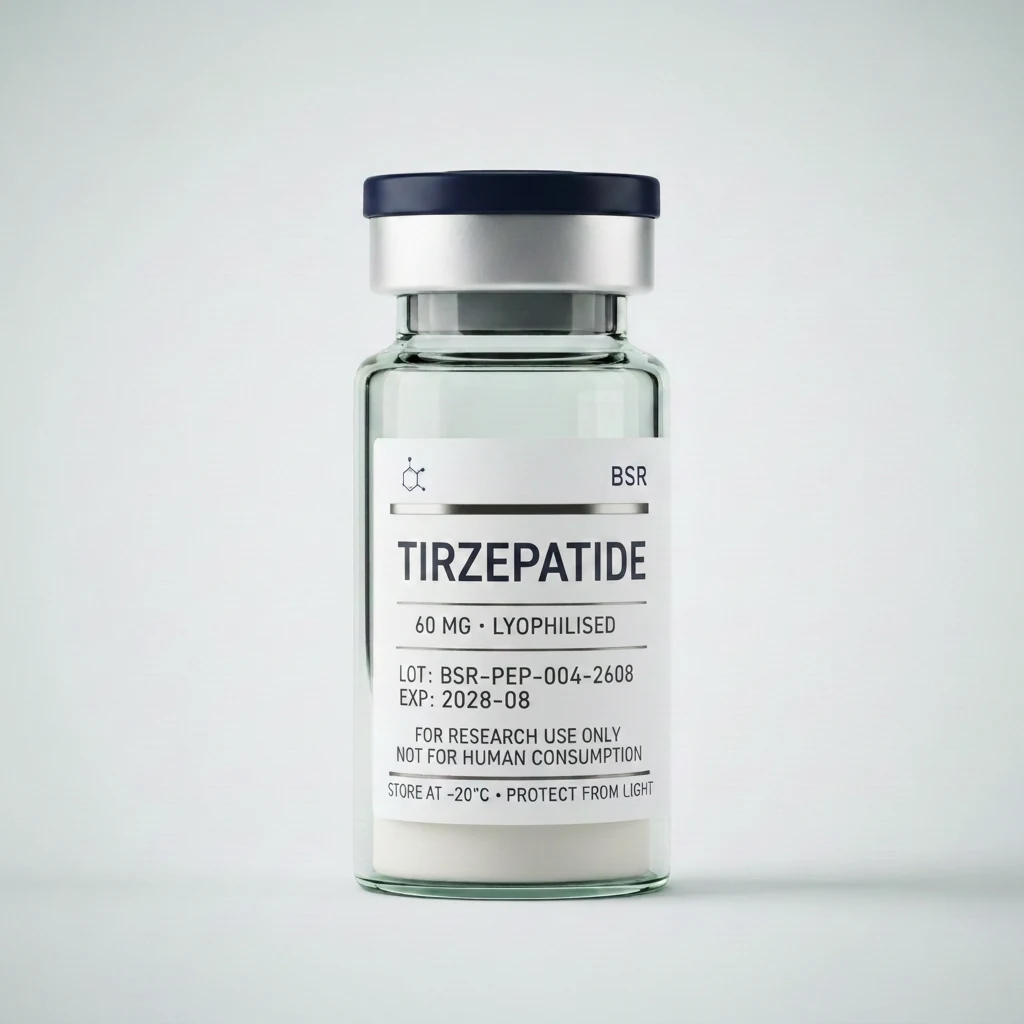
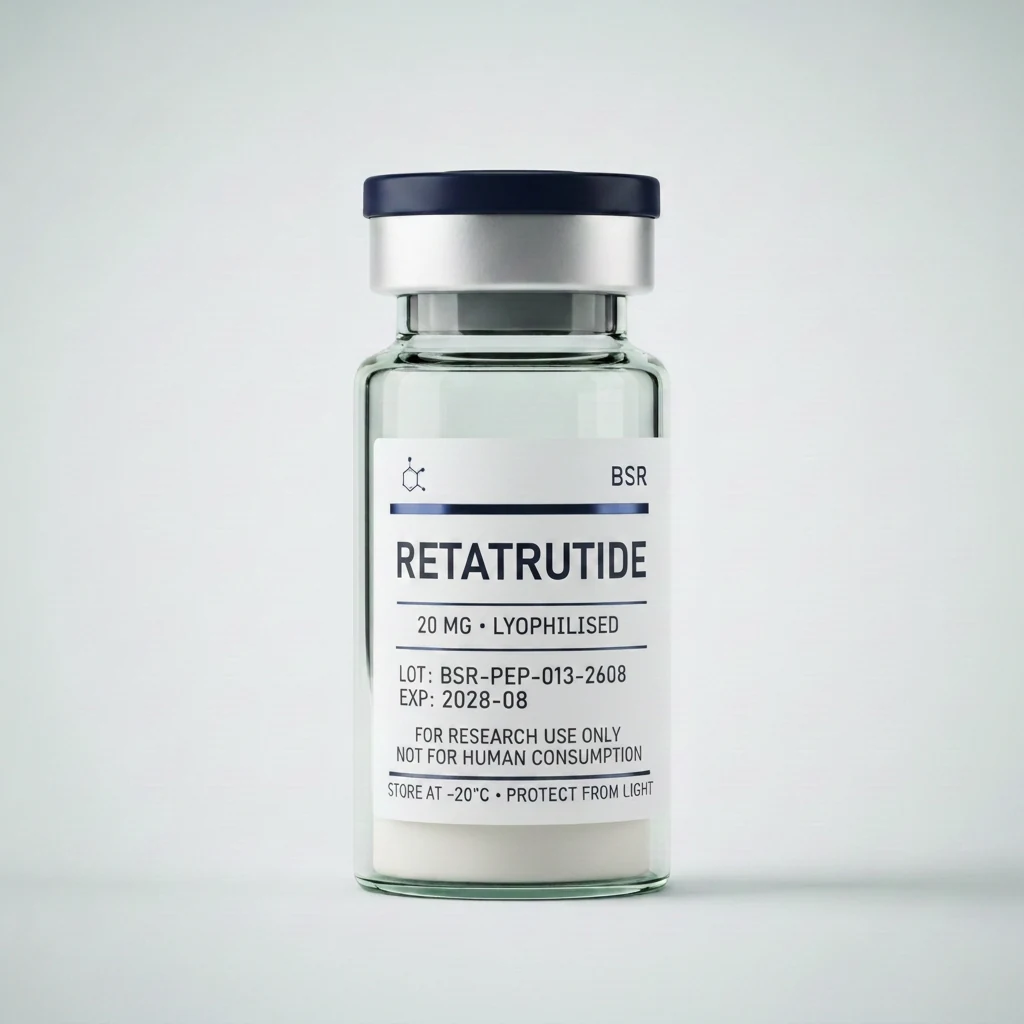
Research-grade material, HPLC verified, certificate of analysis with every order.
The week's Intelligence in one email, every Friday morning.
Regulatory moves, trial readouts, supply-chain news. No product pitches. Unsubscribe in one click.
More in Regulatory & Policy
Peptide Interim Access Policy Enters White House Review: What the OIRA Submission and This Week's OMB Meeting Mean for Research Procurement
19 Oct 2026
One Amino Acid, Three High Stakes: What the Seventh Circuit's Pending Retatrutide Ruling Means for Exclusivity, Medicare Pricing, and Compounding Access
12 Oct 2026
FDA Career Scientists Formally Oppose Administration's Interim Peptide Dispensing Plan — and What the Internal Split Means for Research Procurement
11 Oct 2026