Research Pipeline · 16 Aug 2026
MOTS-c: The Mitochondrial-Encoded Peptide With a PCAC Vote, an Active Human Trial, and an Unresolved Regulatory Path
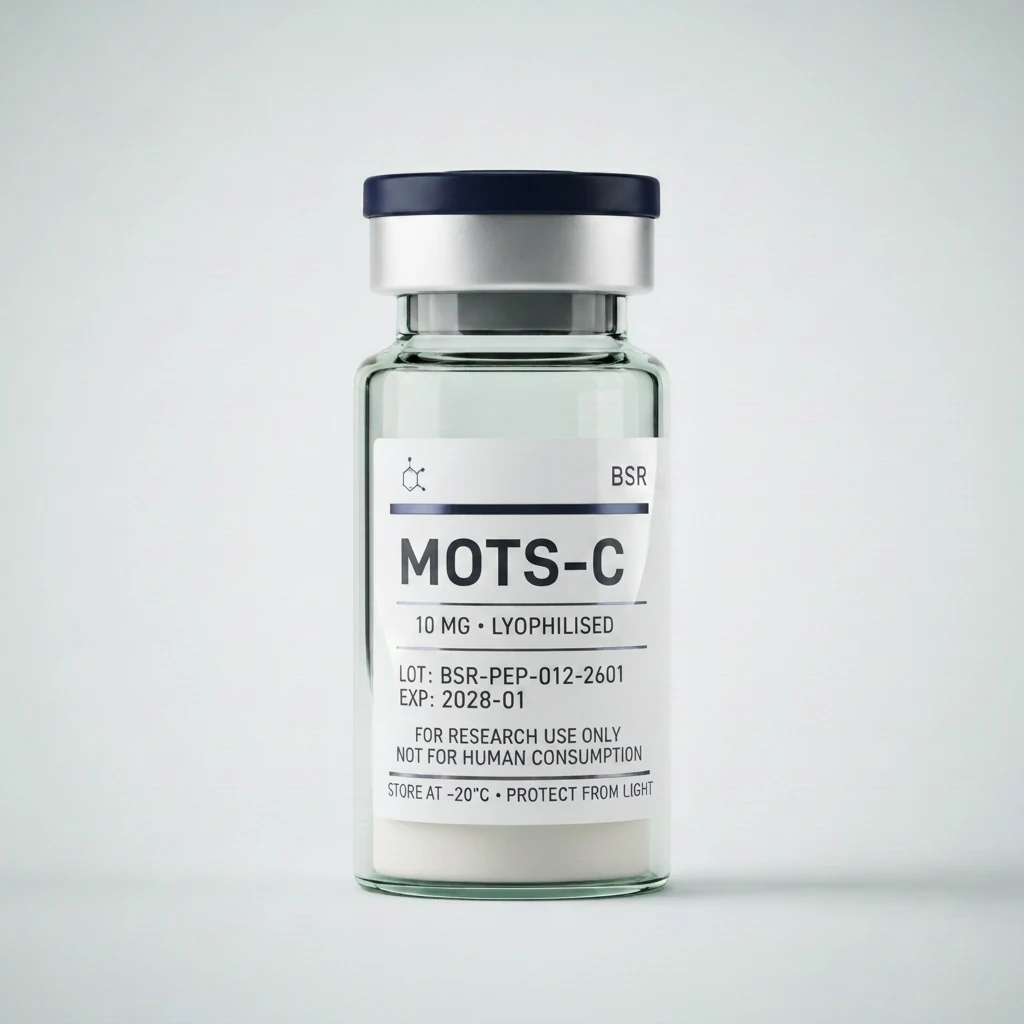
MOTS-c is a 16-amino-acid peptide encoded within mitochondrial DNA that has drawn sustained research interest for its role in metabolic regulation and exercise adaptation. Following the July 2026 PCAC vote recommending it for the FDA 503A Bulks List, procurement teams should understand where the evidence base stands and what remains unresolved before any lawful compounding pathway exists.
10 sources cited
Key takeaways
- MOTS-c is a 16-amino-acid peptide encoded by the mitochondrial genome that acts as a stress-responsive metabolic messenger, activating AMPK and modulating nuclear gene expression during low-glucose or oxidative conditions.
- The FDA's Pharmacy Compounding Advisory Committee voted 7–5 on 23 July 2026 to recommend MOTS-c for the 503A Bulks List, overruling FDA staff, but the recommendation is non-binding and rulemaking typically takes six to twelve months.
- At least one human interventional trial (NCT07505745) is actively evaluating MOTS-c's effect on insulin sensitivity in adults with prediabetes and overweight or obesity; no completed Phase 2/3 efficacy data in humans have been published.
- In both the US and UK, MOTS-c is not an approved drug, has no active Investigational New Drug application, and remains a research-use-only compound; procurement teams should treat its regulatory status as unchanged by the PCAC recommendation until FDA completes formal rulemaking.
What is MOTS-c?
MOTS-c (Mitochondrial Open Reading Frame of the 12S rRNA-c) is a 16-amino-acid peptide encoded within the MT-RNR1 gene of the mitochondrial genome. It was first identified by Dr Changhan David Lee's laboratory at the University of Southern California in 2015 and belongs to a class of signalling molecules now termed mitochondria-derived peptides (MDPs). The fact that MOTS-c is encoded in mitochondrial rather than nuclear DNA gives it a distinctive profile: it represents the first mitochondrially encoded peptide subjected to clinical-stage investigation, highlighting the mitochondrial genome as a potential source of therapeutic targets.
What distinguishes MOTS-c from most other research peptides is its functional role as an interoganelle messenger. Under conditions of low glucose, oxidative stress, or inflammation, mitochondria increase production of MOTS-c, which then enters the nucleus to modulate transcription of genes associated with antioxidant defences — including NRF2 targets — and activates AMPK, the central energy sensor, promoting glucose uptake and fatty acid oxidation when ATP is low. In this sense it functions as part of a feedback loop linking mitochondrial metabolic status to whole-cell energetic adaptation, rather than acting through a canonical receptor-ligand mechanism.
Preclinical evidence
The animal data for MOTS-c are substantive but come primarily from rodent models. In animal models, administration of MOTS-c improved insulin sensitivity and enhanced endurance performance. Circulating MOTS-c levels in blood have been reported to be lower in individuals with type 2 diabetes (T2D), gestational diabetes, coronary endothelial dysfunction, and obesity compared with healthy controls, according to a 2025 study from the University of Auckland published in Frontiers in Physiology.
That same University of Auckland paper — conducted by Pham, Taberner, Hickey, and Han — investigated whether exogenous MOTS-c therapy could restore cardiac mitochondrial function in diabetic models. The researchers noted that mitochondrial dysfunction has been linked to decreased contractile performance in the diabetic heart, partly due to a disturbance in the mitochondrial capacity to supply adequate metabolic energy to contractile proteins, and that MOTS-c has shown promise as a therapeutic for restoring energy homeostasis and muscle function in metabolic diseases. Cell culture work has also demonstrated that MOTS-c administration increases mitochondrial ATP content in doxorubicin-induced senescent human fibroblasts and in HEK293 cells, as well as protecting against inflammation and oxidative stress in H9C2 cells.
Despite the breadth of preclinical signals — covering insulin sensitivity, obesity, muscle metabolism, and exercise — the gap between preclinical promise and clinical translation remains significant, primarily due to delivery system challenges and the lack of pharmaceutical company investment in mitochondrial-derived peptide therapeutics. Oral bioavailability, plasma stability, and the characterisation of appropriate pharmacokinetic parameters in humans remain outstanding questions, according to a review in the Diabetes & Metabolism Journal.
Human clinical evidence
Human data for MOTS-c are sparse. The most prominent clinical-stage programme was CB4211, a MOTS-c analogue developed by CohBar, Inc., which completed a Phase 1a/1b study in healthy non-obese volunteers and subjects with non-alcoholic fatty liver disease (NAFLD), registered as NCT03998514. That study is recorded as completed on ClinicalTrials.gov; full results data in the public domain are limited, and CB4211 has not advanced to Phase 2.
A more recently registered trial — NCT07505745 — is testing whether twelve weeks of MOTS-c administration improves oral glucose tolerance test (OGTT)-derived insulin sensitivity versus placebo in adults with prediabetes and overweight or obesity. This is the study most directly evaluating the metabolic claims that underpin clinical interest in the compound. Key outcome variables being tracked include insulin sensitivity, HbA1c, fasting glucose, two-hour OGTT glucose, body weight, waist circumference, and safety signals. Results are pending.
The FDA's own reviewers, in briefing materials prepared ahead of the July 2026 PCAC meeting, noted that FDA had identified no human exposure data for MOTS-c drug products — a characterisation consistent with the absence of published Phase 2 or Phase 3 efficacy data. FDA staff reviewed MOTS-c specifically for the indications of obesity and osteoporosis, according to materials published on FDA.gov.
The July 2026 PCAC vote
The FDA's Pharmacy Compounding Advisory Committee met at the agency's White Oak campus in Silver Spring, Maryland on 23–24 July 2026 to consider seven peptide nominations for the Section 503A Bulk Drug Substances List. MOTS-c was among the four compounds reviewed on Day 1.
MOTS-c passed 7–5 with two abstentions, making it the narrowest of the four Day 1 votes. BPC-157, TB-500, and KPV each passed 8–6 with one abstention. On Day 2, Semax passed 8–5 and Epitalon 7–5, while Emideltide (DSIP) was the only rejection, voted down 6–7.
The committee's recommendations ran counter to FDA staff positions. Ahead of the meeting, FDA staff published briefing documents recommending against adding any of the seven compounds to the 503A Bulks List, citing a lack of safety and efficacy data and concerns about immunogenicity risk. The committee's majority sided with public commenters who argued that regulated compounding was preferable to driving demand toward unregulated grey-market supply.
What the recommendation means in practice
Procurement teams and UK-based research laboratories should note several important distinctions.
First, the PCAC vote is advisory, not binding. The FDA must now review the recommendation and decide whether to initiate formal notice-and-comment rulemaking. Even a positive committee vote does not legalise compounding immediately; rulemaking typically takes six to twelve months, and there is no guarantee the FDA will follow the panel's advice.
Second, compounds that were removed from the Category 2 list but have not yet been formally added to the 503A Bulks List exist in a regulatory grey zone: they are no longer designated as posing a "significant safety risk," but they have not been affirmatively authorised for compounding. Compounders who interpret removal from Category 2 as implicit permission to compound do so at considerable enforcement risk, according to analysis from the law firm Sheppard.
Third, a second PCAC meeting has been scheduled before the end of February 2027 to review five additional peptides for the 503A list; MOTS-c's own rulemaking timeline will proceed in parallel with that cycle.
Regulatory status in the UK
MOTS-c has no approved medicinal product status in the United Kingdom. The MHRA has not issued any specific guidance on MOTS-c, and it is not listed as an approved active substance in any current UK marketing authorisation. Like other unapproved peptides supplied by UK vendors, MOTS-c is permissible for in vitro research use only, and any product bearing a "research use only" (RUO) label may not lawfully be administered to humans or animals in a clinical or therapeutic context. The US PCAC recommendation has no bearing on UK regulatory status.
Implications for procurement
For UK research laboratories procuring MOTS-c as a research reagent, several quality-assurance considerations are relevant. Because MOTS-c is a 16-amino-acid peptide with no approved reference standard against which commercial lots can be benchmarked, procurement teams should request certificates of analysis confirming identity by mass spectrometry (LC-MS or ESI-MS), purity by HPLC (commonly ≥98% for research-grade material), and the absence of common residual solvents and endotoxins. The distinction between free-base and acetate salt forms — both of which were considered at the PCAC hearing — matters for accurate dosing in in vitro protocols, since the two salt forms carry different molecular weights.
Given the depth of preclinical signal and the existence of at least one active human trial, MOTS-c is a compound worth tracking closely. However, it remains — in both the US and UK — an investigational substance with no approved therapeutic application, and its regulatory position will not be materially resolved until the FDA completes rulemaking on the 503A nomination.
Research-grade material, HPLC verified, certificate of analysis with every order.
The week's Intelligence in one email, every Friday morning.
Regulatory moves, trial readouts, supply-chain news. No product pitches. Unsubscribe in one click.
More in Research Pipeline
Thymosin Alpha-1: What 35 Countries of Clinical Use and a Lopsided PCAC Vote Mean for Research Access in 2026
07 Oct 2026
Viking Therapeutics Initiates Oral Maintenance Dosing Study for VK2735: What the GLP-1/GIP Dual Agonist's Two-Part Programme Tells Researchers About the Weight-Regain Problem
06 Oct 2026
GHK-Cu: What a Fresh Diabetic Wound Study and a Recruiting Phase 2 Trial Mean for the Copper Peptide's Research Standing
03 Oct 2026