Regulatory & Policy · 25 Jul 2026
Semax: The Russian Neuropeptide Facing Its First US Compounding Vote in Six Days — and a Hostile FDA Briefing Document
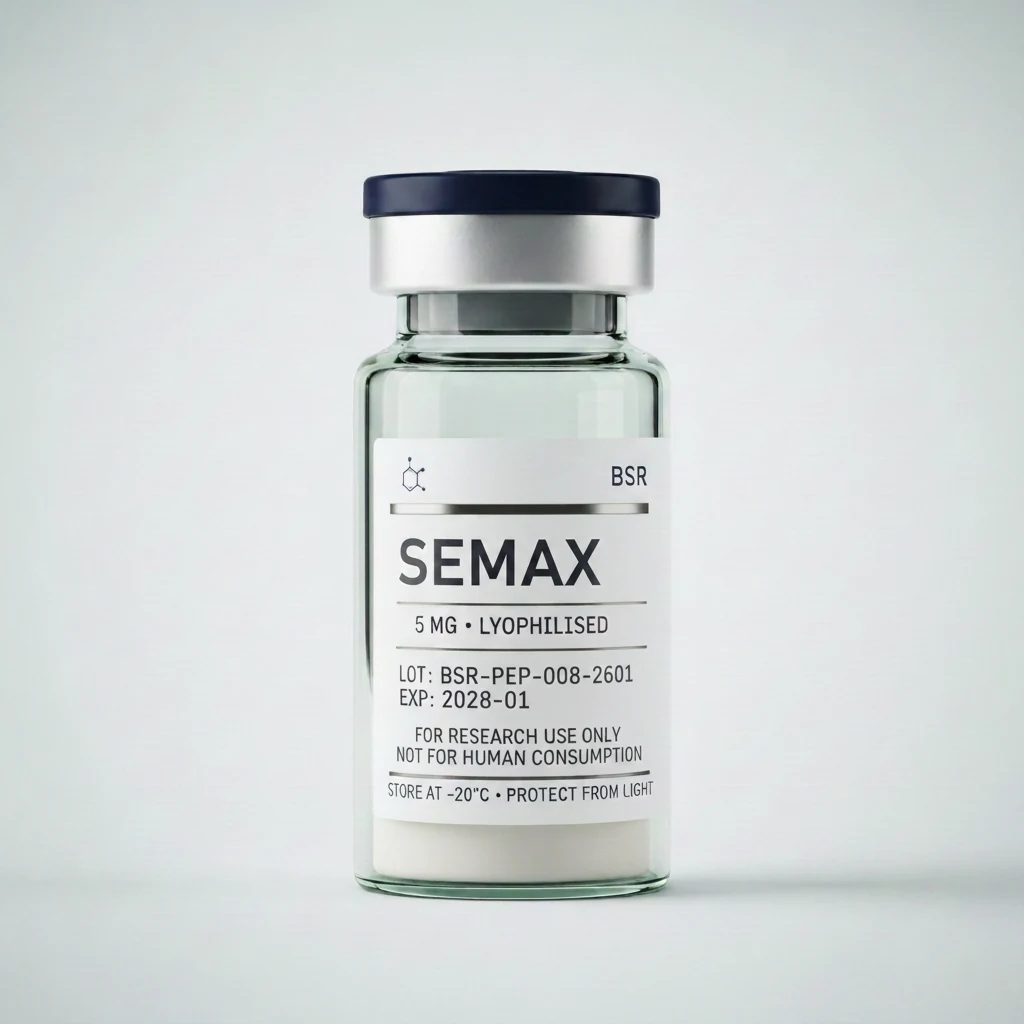
Semax, a synthetic heptapeptide approved in Russia since 2011 for neurological indications, goes before the FDA's Pharmacy Compounding Advisory Committee on 24 July 2026. FDA career scientists have already recommended against adding it — and six other peptides — to the 503A Bulks List, citing inadequate characterisation and absent human safety data. The committee's non-binding vote will nonetheless shape the regulatory trajectory for compounding access in the US and, indirectly, procurement…
10 sources cited
Key takeaways
- The FDA's Pharmacy Compounding Advisory Committee (PCAC) convenes on 23–24 July 2026 to vote on whether seven peptides — including Semax on day two — should be added to the Section 503A Bulk Drug Substances List.
- FDA career scientists posted pre-meeting briefing documents recommending against listing all seven substances, citing incomplete characterisation, little or no human efficacy data, and unresolved immunogenicity concerns.
- The PCAC's recommendation is non-binding; even a favourable vote would require subsequent notice-and-comment rulemaking before compounding pharmacies could legally produce Semax.
- Semax has been an approved pharmaceutical in Russia since 2011 but lacks a USP monograph or an FDA-approved drug equivalent — the two pathways that would otherwise make it compoundable without PCAC approval.
- For UK research-procurement teams, Semax remains a research-use-only substance under MHRA jurisdiction with no approved medicinal product status in Great Britain or the EU.
What is Semax?
Semax is a synthetic analogue of the adrenocorticotropic hormone (ACTH) fragment 4-10, with a modified molecular structure that enhances its stability and bioavailability. The modification retains the core sequence Met-Glu-His-Phe-Pro-Gly-Pro but adds a C-terminal Pro-Gly-Pro extension, which is understood to slow enzymatic degradation and prolong central nervous system activity, though the precise in vivo mechanism in humans remains incompletely characterised.
Developed at the Institute of Molecular Genetics of the Russian Academy of Sciences in the 1980s, Semax has been an approved pharmaceutical in Russia since 2011, prescribed for conditions including ischaemic stroke, cognitive impairment, and optic nerve disease. This decades-long track record of clinical use — with a safety profile documented in Russian medical literature — is one of the arguments advanced by proponents of its inclusion on the US 503A compounding list.
Despite that regulatory history, the FDA placed Semax in Category 2 of the 503A list, citing significant safety concerns. Semax has a long history of use outside the United States for neurological and cognitive conditions, yet the FDA's evidentiary standards diverge from those applied by Russian regulators, and the agency has consistently required controlled human data generated to Good Clinical Practice standards.
The 24 July PCAC vote: what is actually being decided
On 24 July 2026, the Committee will discuss Semax-related bulk drug substances — both Semax (free base) and Semax acetate — alongside Emideltide (DSIP) and Epitalon, all being considered for inclusion on the 503A Bulks List.
Section 503A of the Federal Food, Drug, and Cosmetic Act sets the conditions that must be met for a compounded drug product to be exempt from three key federal requirements: current good manufacturing practice standards, labelling with adequate directions for use, and approval under a new drug application. A licensed pharmacist or physician can compound a drug product under Section 503A only if the bulk drug substance meets one of three criteria. For peptides like Semax, none of the first two conditions apply. There is no USP monograph. There is no FDA-approved drug that contains it. That leaves the 503A Bulks List as the only legal pathway for compounding pharmacies to work with these substances.
A PCAC recommendation in favour of a substance does not itself confer compounding rights. Notably, PCAC's recommendation is non-binding, and formal rulemaking is what comes next. Even if PCAC recommends adding these peptides to 503A's Category 1 list, and even if FDA agrees, notice-and-comment rulemaking is still required — a process that, under standard timelines, can take more than a year.
FDA staff scientists' position: recommend against listing
The most significant pre-meeting development is the stance of FDA's own scientific reviewers. In briefing documents posted ahead of the meeting, FDA reviewers concluded that none of the seven substances should be added to the Section 503A Bulks List.
Across all seven, FDA cited that the substances are not well-characterised, that there is little or no human evidence of effectiveness for the proposed — mostly injectable — routes, and that there is insufficient human safety data, including unassessed immunogenicity risk.
In the briefing documents, FDA scientists underscored the lack of human data for many of the peptides being considered by the advisory committee. This directly mirrors the concern raised during the 2023 Category 2 designation that triggered the entire current review cycle.
The committee composition controversy
The PCAC convening to vote on these substances is not the same panel that conducted previous peptide reviews. The reconstituted advisory panel now includes several members with financial or professional ties to peptide businesses, raising concerns about conflicts of interest and potential divergence from prior, more restrictive recommendations.
Many of its members have ties to the peptide industry and work for clinics that offer injectable peptides. "I think what's going on here is the advisory committee may be stacked with people who are known to have certain viewpoints on a topic rather than who are coming at this in an unconflicted and unbiased way," said Dr Aaron Kesselheim, an expert on FDA law and professor at Harvard Medical School and Brigham and Women's Hospital.
In a statement to NPR, a spokesperson for the Department of Health and Human Services said all the committee members have "undergone an ethics and vetting process."
"It's a really big deal if the advisory committee ends up striking out on its own," going against the conclusions of FDA scientists, said C. Michael White, head of the department of pharmacy practice at the University of Connecticut.
The political context: RFK Jr. and the Category 2 reversal
The July meeting is the procedural culmination of a process set in motion by the current HHS Secretary. The announcement comes after public remarks by HHS Secretary Robert F. Kennedy Jr. championing the use of peptides. During a podcast on 27 February, he described himself as a "big fan" of peptides, claimed that the FDA illegally reclassified 19 peptides to Category 2 during the Biden administration, and asserted that these peptides do not pose any safety risks.
The FDA formally announced the action on 15 April 2026, with twelve peptides coming off the Category 2 list effective 23 April 2026. However, that procedural removal should not be read as a go-ahead to compound these peptides. Under FDA's current policy, removal of a bulk drug substance from Category 2 does not, on its own, authorise use of that substance in compounding.
Of note, FDA has also been notably silent concerning Section 503B outsourcing facilities' ability to compound using peptides — FDA has not indicated that these 12 peptides will be reviewed for or otherwise moved to the Agency's separate 503B Category 1 list.
What the PCAC outcome means in practice
The review focuses on three key areas: safety — is there enough evidence to support safe use? — clinical need — is there a legitimate reason to compound this substance? — and available alternatives — is there already an FDA-approved drug that makes compounding unnecessary?
Should the committee recommend against inclusion (the outcome the FDA's own briefing documents propose), if PCAC recommends a peptide for inclusion and the FDA ultimately adds it, compounding becomes lawful under Section 503A; if not, the substance remains outside the compounding framework. A negative vote would reinforce the grey-market status quo that the entire review was ostensibly designed to address. Expanding licensed compounding access may displace unregulated or offshore sourcing, yet could broaden patient exposure to agents with uncertain benefit–risk profiles and heterogeneous product quality.
A second PCAC meeting is scheduled for no later than the end of February 2027. A second PCAC meeting will be scheduled before the end of February 2027 to discuss an additional five peptides — including GHK-Cu, Melanotan II, Cathelicidin (LL-37), and Dihexa acetate, according to regulatory commentary. That batch will face the same evidentiary threshold.
UK and EU regulatory position
Semax carries no approved medicinal product status in the United Kingdom. The MHRA has not published specific guidance on Semax, and it does not appear on any UK national formulary. In the EU, the European Medicines Agency has likewise issued no opinion on the substance. Researchers sourcing Semax in the UK do so under research-use-only conditions, which require that the material not be administered to humans and that adequate documentation — including a Certificate of Analysis from a qualified analytical laboratory — accompanies each lot.
The July 2026 PCAC outcome will not alter UK or EU status directly, but a favourable US ruling would likely increase the volume of peer-reviewed human data available globally, which could in turn inform future MHRA or EMA assessments.
Procurement considerations for UK research labs
Research teams procuring Semax should verify that suppliers provide third-party mass spectrometry confirmation of identity and HPLC purity data, ideally with a certificate referencing a specific lot number. Given the absence of pharmacopoeial monographs, there is no standardised reference against which to benchmark purity claims. Lot-to-lot variability is a known issue in non-GMP peptide synthesis, and research teams should request comparative analytical data across sequential lots where possible.
The PCAC meeting commences on 23 July 2026 at the FDA White Oak campus in Silver Spring, Maryland. BSR Intelligence will report on the committee's recommendations once the vote records are publicly available.
Research-grade material, HPLC verified, certificate of analysis with every order.
The week's Intelligence in one email, every Friday morning.
Regulatory moves, trial readouts, supply-chain news. No product pitches. Unsubscribe in one click.
More in Regulatory & Policy
Peptide Interim Access Policy Enters White House Review: What the OIRA Submission and This Week's OMB Meeting Mean for Research Procurement
19 Oct 2026
One Amino Acid, Three High Stakes: What the Seventh Circuit's Pending Retatrutide Ruling Means for Exclusivity, Medicare Pricing, and Compounding Access
12 Oct 2026
FDA Career Scientists Formally Oppose Administration's Interim Peptide Dispensing Plan — and What the Internal Split Means for Research Procurement
11 Oct 2026