Research Pipeline · 04 Sep 2026
Epitalon: The Pineal Tetrapeptide With a Favourable PCAC Vote, Telomere-Focused Preclinical Data, and No Approved Human Indication
On 24 July 2026, the FDA's Pharmacy Compounding Advisory Committee voted to recommend Epitalon for the 503A Bulks List — overriding FDA staff's written objection. The tetrapeptide's evidence base remains almost entirely preclinical and concentrated in a single research group, making the path from advisory vote to compounding approval, let alone clinical adoption, a lengthy one.
13 sources cited
Key takeaways
- On 24 July 2026, the FDA Pharmacy Compounding Advisory Committee (PCAC) voted to recommend Epitalon for inclusion on the Section 503A Bulks List, overriding a written FDA staff recommendation against inclusion.
- The vote was narrow, and the recommendation is not binding; FDA has yet to publish a proposed rule, and no final listing has been made.
- The nominated clinical use under review was insomnia; broader longevity and anti-ageing claims circulating in the research community have no established clinical trial basis.
- Evidence for Epitalon as a synthetic tetrapeptide is almost entirely preclinical. The most-cited human data relate to a parent pineal extract (Epithalamin) rather than the isolated synthetic peptide.
- Epitalon holds no approved indication in the United States or the United Kingdom. In the UK it falls outside MHRA authorisation and is classified as an unlicensed medicine; it may not be sold for human use.
What Epitalon is and where it comes from
Epitalon (also rendered as Epithalon) is a synthetic tetrapeptide composed of the amino acids alanine, glutamic acid, aspartic acid, and glycine — commonly denoted by its sequence, AEDG. Researchers at the St Petersburg Institute of Bioregulation and Gerontology derived it from Epithalamin, a polypeptide complex extracted from bovine pineal glands. The compound was first detected in physiological pineal gland extract and shares properties with Epithalamin, though the two are distinct: Epithalamin is a crude mixture and its contents can vary between preparations, while Epitalon is a defined four-residue chain.
This distinction matters for evidence appraisal. Because Epithalamin contains a mixture of polypeptides, it is difficult to determine which effects are attributable solely to the synthetic Epitalon sequence, and the two should not be treated interchangeably when evaluating clinical data.
Mechanism and proposed biological actions
Preclinical and in vitro studies have proposed several mechanisms. The most frequently cited is telomerase activation: a 2003 in vitro study by Khavinson and colleagues reported that Epitalon raised telomerase activity in human fibroblasts and extended the number of times they could divide. A 2025 independent study published in Biogerontology reported telomere lengthening in human cell lines — notable because it came from outside the group that developed the compound, providing the first externally replicated signal for this mechanism.
Additional in vitro work has linked Epitalon to antioxidant activity. A study using mouse oocytes found that Epitalon reduced intracellular reactive oxygen species, decreased frequency of spindle defects, and preserved mitochondrial membrane potential during in vitro ageing. A 2022 Italy-Russia collaboration published in International Journal of Molecular Sciences examined Epitalon in LPS-stimulated THP-1 human monocytes and reported reduced TNF and IL-6 secretion, along with decreased monocyte adhesion to activated endothelium — providing a mechanistic signal for anti-inflammatory activity in human immune cells.
A March 2025 comprehensive review published in International Journal of Molecular Sciences by Araj, Brzezik, Mądra-Gackowska, and Szeleszczuk from the Medical University of Warsaw catalogued these geroprotective, neuroprotective, and antimutagenic effects, noting that they appear to arise from both specific receptor interactions and non-specific antioxidant mechanisms.
The state of human clinical evidence
The gap between preclinical signals and clinical evidence is wide and should be assessed carefully.
Every human clinical study of meaningful size used Epithalamin — the polypeptide complex — not the synthetic tetrapeptide Epitalon. The most frequently cited human dataset is a 6–8 year follow-up of 266 elderly persons treated with thymic and pineal peptide preparations including Epithalamin, published by Khavinson and Morozov in 2003 in Neuroendocrinology Letters. Reported mortality reduction ranged from 1.6- to 4.1-fold versus controls depending on regimen. However, the study was unblinded, lacked a placebo arm, reported no p-values in the abstract, used the parent pineal extract rather than synthetic Epitalon, was conducted by the same group that developed the compound, and has not been independently replicated — methodological limitations that prevent this data from being treated as established clinical evidence.
A 12-year study in elderly patients by Korkushko and colleagues (Bulletin of Experimental Biology and Medicine, 2006) reported approximately 28% lower overall mortality and roughly 2-fold lower cardiovascular mortality in the treated group, though both programmes were non-blinded and were not double-blind randomised trials.
A systematic review published in 2025 concluded that "information regarding critical issues about this peptide's safety is missing", reflecting the consensus among independent evaluators. Preclinical and early human data are regarded as compelling in the context of longevity research, but without large-scale trials, validated delivery methods, and long-term safety data, Epitalon remains experimental and not ready for mainstream clinical adoption.
The July 2026 PCAC vote and what it means
On 23 and 24 July 2026, the FDA's Pharmacy Compounding Advisory Committee met at FDA's White Oak Campus to consider seven peptide bulk drug substances for potential inclusion on the Section 503A Bulks List. Epitalon — reviewed in both free base and acetate forms — was discussed during the 24 July morning session.
The PCAC voted to recommend BPC-157, KPV, TB-500, MOTS-c, Epitalon, and Semax for the 503A Bulks List, while voting against Emideltide. For each of the six peptides receiving favourable votes, the committee's recommendation differed from FDA's position presented in the briefing materials: FDA had proposed that none of the fourteen peptide forms under consideration be included on the 503A Bulks List. The FDA's position that Epitalon should not be listed was based on the same safety and evidence concerns that career scientists raised about the wider peptide group.
The July 2026 votes represented a significant development for the compounding industry, particularly because FDA staff had recommended against inclusion before PCAC reached a different conclusion. According to AJMC's reporting, Semax and Epitalon were cleared by similarly tight margins to the other compounds at the July meeting.
The nominated clinical use under review for Epitalon was specifically insomnia. The specific indications under review at the July 2026 PCAC meeting included, for Epitalon, insomnia.
What the vote does not confer
Regulatory procurement teams should note several caveats clearly:
PCAC serves an advisory role; FDA retains the authority to ultimately decide whether a substance is placed on the 503A Bulks List. The PCAC vote should not be described as FDA "approval" of Epitalon, because FDA has not approved the peptide through the drug approval process, nor has it been added to the 503A Bulks List. Before deciding whether to add any peptide to the 503A Bulks List, FDA will continue reviewing comments and documentation submitted to the public docket, publish a proposed rule, and — after another public comment period — issue a final rule. That rulemaking process is measured in months to years, not weeks.
Regulatory status: US and UK
United States. Epitalon is not FDA-approved for any indication. It was placed in Category 2 under Section 503A in September 2023, signalling significant safety concerns in compounding. In April 2026, FDA removed it from Category 2 as part of a broader action affecting multiple peptides, pending the PCAC review. Following the July 2026 advisory vote, it now awaits FDA's formal rulemaking before any compounding pharmacy could legally use it under Section 503A.
United Kingdom. Epitalon holds no MHRA marketing authorisation and is not the subject of any known UK or European Medicines Agency clinical programme. Under UK law, it is an unlicensed medicine. Epithalamin, the parent extract from which Epitalon is derived, holds Russian regulatory approval for menopause-related symptoms, anovulatory infertility, and hormone-dependent tumours — but this approval does not extend to the synthetic tetrapeptide, and it has no equivalent in the UK or EU.
Research-use-only supply in the UK sits in a legally distinct category from clinical or therapeutic use. Procurement professionals at UK research institutions should ensure supplier documentation accurately describes intended use and that imports are assessed against current MHRA border guidance on unlicensed medicines.
Implications for research procurement
For laboratories sourcing Epitalon as a reference standard or research reagent, the PCAC vote has no direct bearing on the legal framework governing research-use-only supply in the UK. The vote's practical significance is confined to the US compounding pharmacy pathway and, even there, will require additional regulatory steps before it has operational effect.
What the vote does signal — particularly in combination with the wider PCAC outcomes on related peptides — is a shift in the regulatory environment for this class of compounds in the United States. Research organisations monitoring the space for compounds likely to advance toward clinical use should note that the evidence base for Epitalon, while generating continued scientific interest, currently lacks the randomised human trial data that would typically underpin a clinical development programme in Western jurisdictions.
The next formal milestone for Epitalon in the US context is FDA's publication of a proposed rule on the 503A Bulks List — a date that, as of early September 2026, has not been announced.
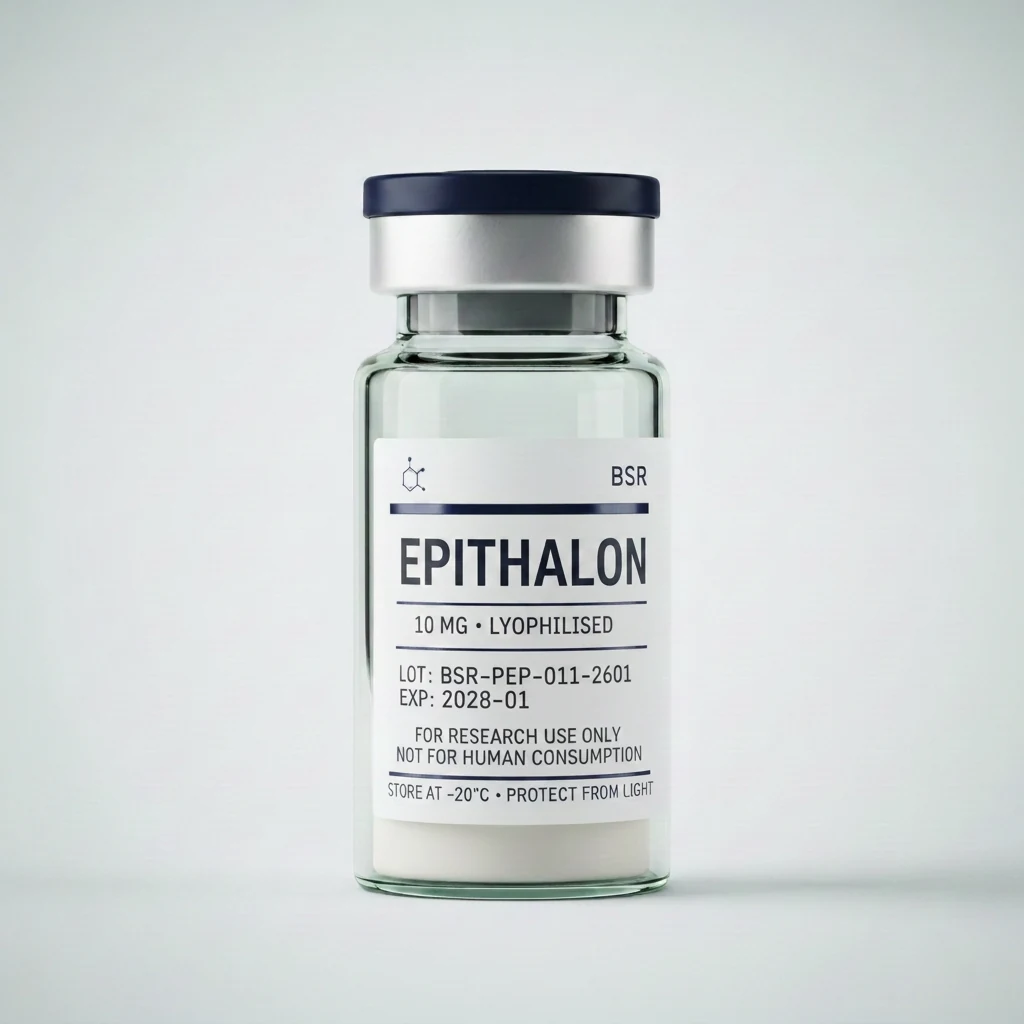
Research-grade material, HPLC verified, certificate of analysis with every order.
The week's Intelligence in one email, every Friday morning.
Regulatory moves, trial readouts, supply-chain news. No product pitches. Unsubscribe in one click.
More in Research Pipeline
Thymosin Alpha-1: What 35 Countries of Clinical Use and a Lopsided PCAC Vote Mean for Research Access in 2026
07 Oct 2026
Viking Therapeutics Initiates Oral Maintenance Dosing Study for VK2735: What the GLP-1/GIP Dual Agonist's Two-Part Programme Tells Researchers About the Weight-Regain Problem
06 Oct 2026
GHK-Cu: What a Fresh Diabetic Wound Study and a Recruiting Phase 2 Trial Mean for the Copper Peptide's Research Standing
03 Oct 2026