Research Pipeline · 13 Sep 2026
MOTS-c: The Mitochondria-Encoded Peptide With a 7-5 PCAC Vote, a Metabolic Evidence Base Built Largely in Rodents, and No Human Drug-Product Data on Record
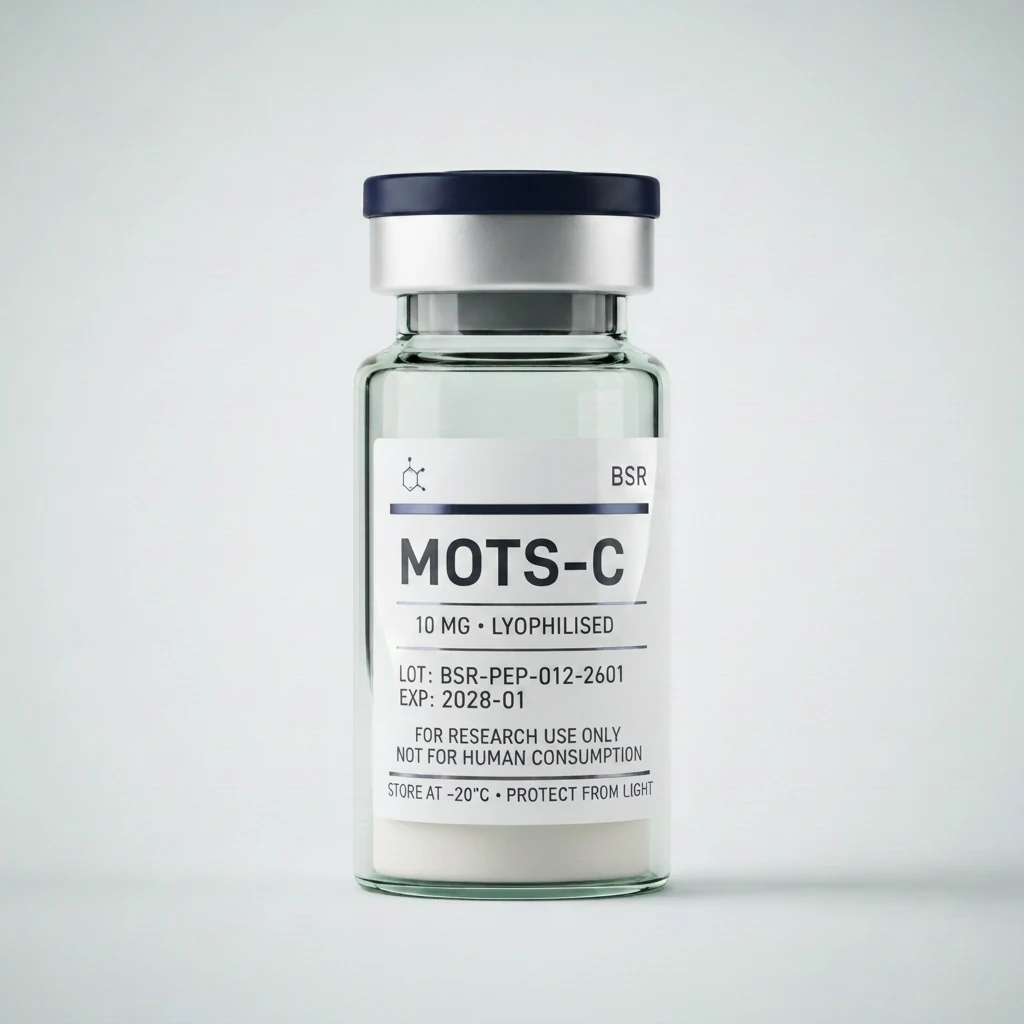
MOTS-c is a 16-amino-acid peptide encoded within mitochondrial DNA and studied for metabolic regulation, insulin sensitivity, obesity, and bone health. On 23 July 2026 the FDA's Pharmacy Compounding Advisory Committee voted 7-5, with two abstentions, to recommend it for the 503A Bulks List — a narrow margin that reflects both scientific interest and the thinness of the human evidence base.
12 sources cited
Key takeaways
- MOTS-c is a 16-amino-acid peptide encoded within the 12S rRNA gene of mitochondrial DNA — an unusual origin that distinguishes it from all nuclear-gene-derived research peptides.
- On 23 July 2026, the FDA's Pharmacy Compounding Advisory Committee (PCAC) voted 7-5, with two abstentions, to recommend MOTS-c for the 503A Bulks List, evaluated specifically against proposed indications of obesity and osteoporosis.
- That vote overrode FDA staff's written recommendation against inclusion — a pattern seen across all six peptides that received favourable votes at the July 2026 meeting.
- The FDA's own briefing document reported no identified human exposure data for MOTS-c as a drug product at the time of review, placing the compound in an unusual position: a favourable advisory vote with a preclinical-dominant evidence base.
- A PCAC recommendation is not FDA approval, does not immediately authorise compounding, and does not change UK regulatory status, where MOTS-c has no approved indication and falls under general medicines legislation as an unlicensed substance.
What MOTS-c is
MOTS-c — an acronym for mitochondrial open reading frame of the 12S rRNA type-c — is a 16-amino-acid peptide encoded by a short open reading frame within the mitochondrial genome, not the nuclear genome that encodes the vast majority of human proteins. Restorative Compounding Pharmacy notes that it is encoded within mitochondrial DNA and participates in cellular stress and metabolic signalling.
That genomic origin has practical implications for research procurement. Unlike synthetic analogue peptides (which are manufactured to replicate a sequence already documented in human biology at standard sites), MOTS-c's mitochondrial provenance means that endogenous circulating levels, tissue distribution, and the physiological consequences of exogenous supplementation are all areas where the evidence base is still being developed. The distinction also matters for regulatory classification: peptides of mitochondrial origin do not fit neatly into established drug-class frameworks, a point the FDA noted in its pre-meeting briefing materials.
Mechanism: metabolic and anti-ageing signalling
Animal and cell-study evidence positions MOTS-c as a regulator of systemic metabolic homeostasis. USADA's reference to the foundational 2021 study by Reynolds et al. in Nature Communications — titled "MOTS-c is an exercise-induced mitochondrial-encoded regulator of age-dependent physical decline and muscle homeostasis" — captures the two properties that attract research interest: the peptide rises with physical exercise and appears to decline with age.
Preclinical studies have proposed several downstream effects. Restorative Compounding's summary of the animal literature highlights "strong interest from animal studies involving insulin sensitivity, obesity, muscle metabolism, and exercise." Published work cited in the FDA's briefing materials includes data on AMPK pathway activation, reduction of myostatin expression, and attenuation of muscle atrophy signalling — all effects with mechanistic plausibility given the peptide's apparent role in communicating mitochondrial metabolic status to nuclear and systemic targets.
The peptide has also been studied in the context of ageing and bone metabolism. Human observational data exist — circulating MOTS-c concentrations have been measured in cohort studies — but these describe a correlation between MOTS-c levels and metabolic outcomes, not an interventional result from an administered drug product. As Restorative Compounding confirms, "human observational studies do not prove that injecting synthetic MOTS-c improves health."
The July 2026 PCAC vote
The July 2026 PCAC meeting — held across 23–24 July — was the first formal FDA advisory review of MOTS-c as a candidate bulk drug substance. AJMC's account of the vote tallies records that MOTS-c passed 7-5 with two abstentions on 23 July, the same day the committee voted on BPC-157, KPV, and TB-500. PharmExec confirms the tight margin, noting that "narrow votes supported compounding of BPC-157, KPV, and TB-500 (8-6; one abstention) and MOTS-c (7-5; two abstentions), without constituting FDA approval or demonstrated clinical benefit."
The specific indications presented to the committee for review were obesity and osteoporosis, according to Rite Aid's regulatory summary of the meeting record. The FDA's own briefing document, as cited by Restorative Compounding, reported "no identified human exposure data for MOTS-c drug products" — meaning the committee was recommending a path toward compounded human use for a substance with cell-study and animal data, a registered (but not yet reporting) clinical trial, and no pharmaceutical-grade human study in the published record.
Critically, the PCAC vote overrode FDA staff's position. Staff had proposed that none of the fourteen peptide forms under consideration (covering free-base and acetate forms of each compound) be included on the 503A Bulks List. The committee's recommendation to the contrary for MOTS-c — and for the five other peptides that received favourable votes — represents an unusual divergence between expert advisory opinion and agency staff analysis.
What the vote does and does not change
Buchanan Ingersoll & Rooney's post-meeting legal analysis is instructive on this point. The firm notes that the PCAC vote in favour of adding MOTS-c to the 503A Bulks List "did not immediately make these peptides lawful for compounding under Section 503A." The regulatory road ahead involves FDA reviewing the vote, the meeting record, and public comments before publishing any interim policy, proposed rule, or final rule — a process PharmExec estimates typically requires 8–12 months for unambiguous legality via notice-and-comment rulemaking.
Rite Aid's summary of the post-vote position sets out the practical consequence clearly: "The vote did not change current federal access rules. Pharmacies should continue applying the existing compounding requirements, and patients should not interpret a favourable recommendation as approval of a product, use, dosage, or schedule."
A further complicating factor, flagged in PharmExec's coverage, is that "FDA scientists highlighted a core barrier: absent universally accepted chemical definitions or formulas, basic identity, quality, and comparability are unclear, undermining safety and effectiveness assessment." For a peptide with no established pharmacopoeia monograph and no approved drug-product history, this is a material gap that would need to be addressed in any final rulemaking.
Evidence base: what exists, what is missing
The published literature on exogenous MOTS-c administration in humans is sparse. Restorative Compounding's review confirms that at the time of the PCAC review, a registered clinical trial existed but had not posted outcomes. No completed, peer-reviewed human interventional trial of synthetic MOTS-c — at any dose or route — had been published in a major journal as of the date of this briefing.
By contrast, the animal and cell literature is more developed. Work on MOTS-c's role in exercise physiology, insulin sensitivity, and skeletal muscle metabolism has been published in Nature Communications and other peer-reviewed journals. USADA's reference list for MOTS-c includes the 2021 Reynolds et al. Nature Communications paper alongside a 2021 paper by Kumagai et al. on MOTS-c reducing myostatin and muscle atrophy signalling. These papers describe endogenous biology and rodent interventions, not human drug studies.
A 2026 Sports Medicine narrative review published by Mendias and Awan, covering approved and unapproved peptides marketed for musculoskeletal use, characterised the broader class as showing "rigorous human safety data are scarce, and there is potential for serious harm" — a framing applicable to MOTS-c given the absence of human drug-product safety studies.
UK regulatory position
MOTS-c has no approved indication from the MHRA and is not listed as a licensed medicine in Great Britain or Northern Ireland. In the UK, any substance presented for or with an implied therapeutic purpose falls within the scope of the Human Medicines Regulations 2012 if it meets the definition of a medicinal product, regardless of how it is labelled. A "research use only" designation does not exclude a substance from regulatory scrutiny if its presentation, marketing, or accompanying materials imply a therapeutic use — a principle the MHRA has applied in enforcement actions against unlicensed injectable products.
For UK research laboratories procuring MOTS-c for genuine in vitro or preclinical in vivo research, the substance must be sourced from a reputable supplier providing a full Certificate of Analysis with identity confirmation (ideally by mass spectrometry), purity data, and batch-specific documentation. The absence of a pharmacopoeia reference standard for MOTS-c means that lot-to-lot consistency cannot be verified against any official comparator, placing additional weight on supplier-specific analytical documentation.
What to watch
The FDA is expected to publish its next formal step — whether an interim policy, proposed rule, or other action — following review of the PCAC record. No timeline has been publicly announced. A second PCAC meeting is expected before the end of February 2027, covering a different set of peptides including injectable GHK-Cu, LL-37, DiHexa, Melanotan II, and PEG-MGF; MOTS-c will not be re-reviewed at that meeting, as its advisory question has been addressed.
For research procurement, the practical position is unchanged by the July vote: MOTS-c remains an unlicensed substance in the UK with a preclinical-dominant evidence base, a favourable but non-binding US advisory recommendation, and a rulemaking process that will determine whether any compounding pathway opens in the United States. UK laboratories should treat procurement decisions as research-use-only and document that basis accordingly.
Research-grade material, HPLC verified, certificate of analysis with every order.
The week's Intelligence in one email, every Friday morning.
Regulatory moves, trial readouts, supply-chain news. No product pitches. Unsubscribe in one click.
More in Research Pipeline
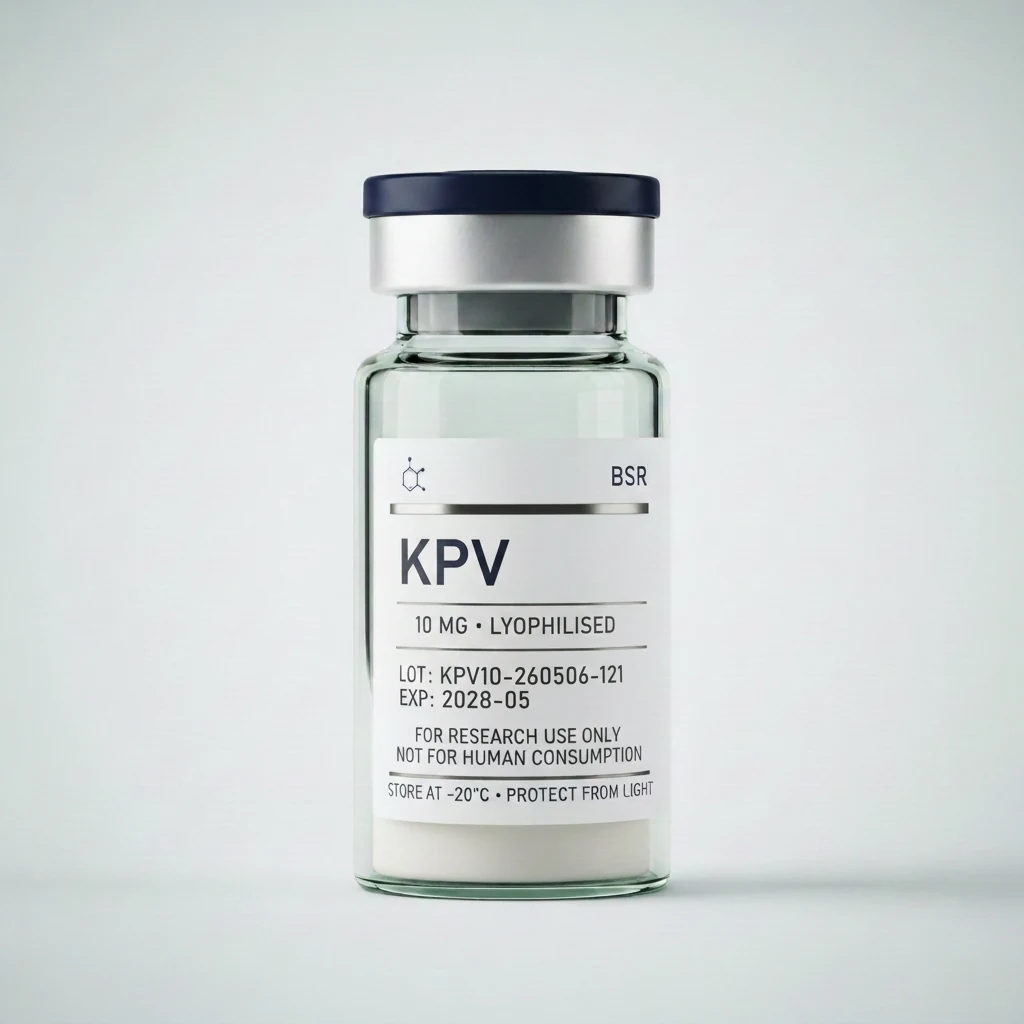
KPV: The Alpha-MSH Tripeptide With a Favourable PCAC Vote, an Intracellular NF-κB Mechanism, and No Completed Human Trial
12 Sep 2026
Semax: The ACTH-Derived Heptapeptide With an 8-5 PCAC Vote, Russian Clinical Approval, and a Research-Use-Only Status in the UK
09 Sep 2026
Thymosin Alpha-1: The 28-Amino-Acid Immune Modulator With Approval in 35 Countries, an Unsettled US Compounding Status, and Active 2026 Clinical Trials
08 Sep 2026