Research Pipeline · 24 Nov 2026
Muscle Loss and Joint Pain: Two November Phase 3 Publications Reframe the Musculoskeletal Profile of GLP-1 and Incretin Peptide Therapy
Two peer-reviewed phase 3 publications from November 2026 — the T-REx trial in Nature Medicine and the TRIUMPH-4 / TRIUMPH-1-OA results in the New England Journal of Medicine — provide fresh clinical evidence on how incretin-class peptides affect muscle and joint tissue, with implications for research endpoint design and Eli Lilly's imminent retatrutide regulatory filing.
12 sources cited
Key takeaways
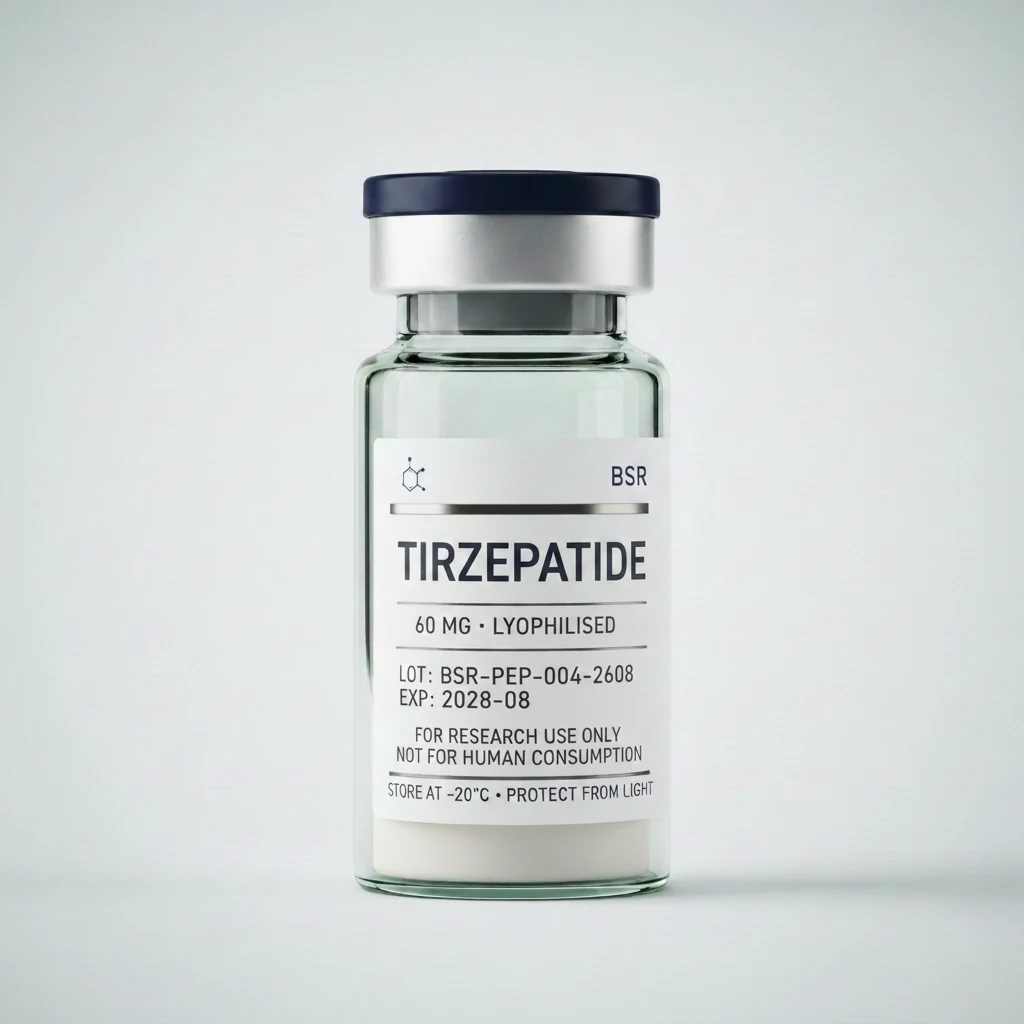
- The T-REx randomised controlled trial, published in Nature Medicine on 9–10 November 2026, found that supervised resistance training three times per week reduced lean tissue loss by 25 per cent and converted a strength decline into a 10 per cent strength gain in adults taking tirzepatide for obesity.
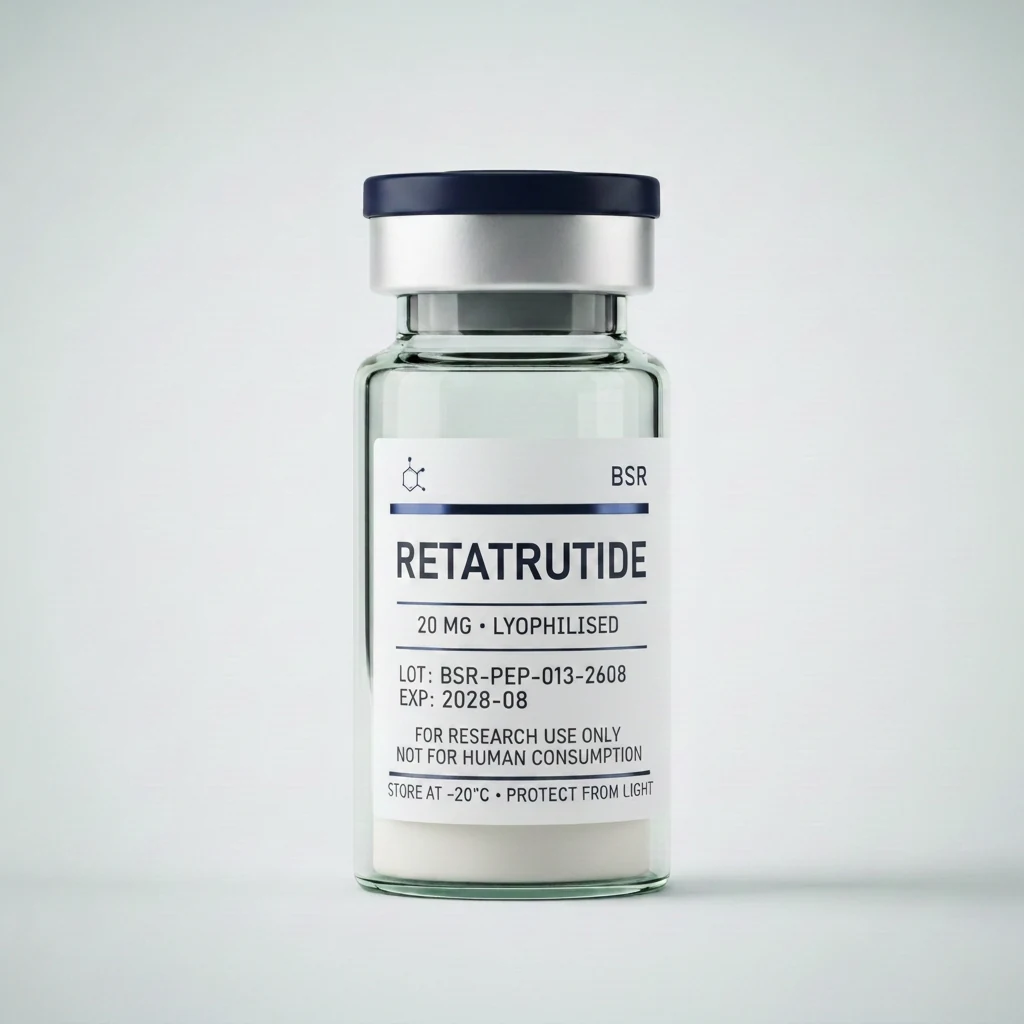
- Two phase 3 trials — TRIUMPH-4 and TRIUMPH-1-OA — published simultaneously in the New England Journal of Medicine on 8 November 2026 showed that retatrutide, Eli Lilly's investigational triple GIP/GLP-1/glucagon receptor agonist, produced 17–25 per cent weight loss and significantly reduced WOMAC knee pain scores in adults with obesity and painful knee osteoarthritis.
- Retatrutide's planned regulatory submission to the FDA — expected as a New Drug Application in Q1 2027 — is intended to cover obesity, knee osteoarthritis pain, and obstructive sleep apnea; the MHRA may review thereafter, with UK availability estimated no earlier than 2028.
- The two papers together sharpen the research question for labs designing body-composition and musculoskeletal endpoints in GLP-1/incretin studies.
T-REx: muscle preservation on tirzepatide
The question of lean-mass loss during GLP-1 therapy has circulated in the research community since the first large obesity trials reported that 25–40 per cent of total weight lost on semaglutide and tirzepatide comprised lean tissue. The T-REx trial, led by Professor Danny Green and colleagues at the University of Western Australia and published in Nature Medicine on 9 November 2026, is described by its authors as the first study to characterise the combined effect of a GLP-1 medicine and resistance training on body composition, muscle mass, strength, and cardiovascular health measures.
The trial enrolled 120 adults aged approximately 50 to 70 — 60 men and 60 postmenopausal women — all receiving tirzepatide. Fifty-nine participants were assigned to add supervised resistance training over a 40-week period, with 91 per cent average session adherence.
Both groups lost comparable amounts of weight and fat. The divergence was in lean tissue and strength. Participants who undertook resistance training lost 25 per cent less lean tissue (including muscle) than those who did not; more significantly, upper- and lower-body strength in the training group improved by 10 per cent, whereas it declined by 10 per cent in those who received tirzepatide without the supervised programme.
Participants who did not engage in resistance training lost approximately 5 kg of lean tissue and muscle — an amount the investigators characterised as equivalent to roughly 10 years of ageing.
The safety interpretation requires care. Because all participants received tirzepatide, the study cannot isolate a direct drug effect on muscle from the effects of substantial weight loss or changes in dietary intake. It did not establish a muscle-toxic mechanism; the randomised result concerns what happened when the supervised training programme was added.
A European follow-on trial — RESIST, registered at the Technical University of Munich (ClinicalTrials.gov NCT07777575) — is currently recruiting and will evaluate thigh muscle volume by MRI as its primary endpoint, with an estimated completion date of August 2027.
Research procurement implications. T-REx's design highlights a methodological consideration for preclinical and translational peptide studies: lean mass measured by DEXA or bioelectrical impedance can mask divergent functional outcomes. Any research programme using GLP-1 or dual/triple agonist peptides as a comparator or reference compound, and assessing body composition as a secondary endpoint, should distinguish appendicular lean mass from functional strength readouts. Lot-to-lot consistency in peptide reference standards matters here: a 5 per cent purity variance across a 40-week dosing protocol could confound between-arm comparisons in rodent models where caloric restriction interacts with GLP-1R signalling.
TRIUMPH-4 and TRIUMPH-1-OA: retatrutide's musculoskeletal readout
The more expansive musculoskeletal story of November belongs to retatrutide. Published on 8 November 2026 in the New England Journal of Medicine, the data from TRIUMPH-4 and TRIUMPH-1-OA evaluate retatrutide — an investigational triple agonist of GIP, GLP-1, and glucagon receptors — in adults with painful knee osteoarthritis and obesity.
Participants in both trials were adults without type 2 diabetes with a BMI of at least 27 and painful knee osteoarthritis. TRIUMPH-4 randomised 445 participants to 9 mg or 12 mg retatrutide or placebo; TRIUMPH-1-OA randomised 574 participants to 4 mg, 9 mg, or 12 mg or placebo.
In people with obesity and painful knee osteoarthritis, retatrutide reduced knee pain and improved function significantly more than placebo, and produced weight loss of approximately 17 to 25 per cent across the two trials over 68 to 80 weeks.
Specifically, pivotal results from TRIUMPH-1 and TRIUMPH-4 showed retatrutide delivered substantial reductions in knee pain and weight, with some participants experiencing no knee pain at the end of the trials. In TRIUMPH-4, WOMAC pain scores fell by 3.96 points in the 9 mg group and 3.74 points in the 12 mg group after 68 weeks; in TRIUMPH-1-OA, pain scores fell by 3.22, 3.48, and 3.64 points after 80 weeks in the 4 mg, 9 mg, and 12 mg groups respectively.
Serious adverse events were more frequent than with placebo; common side effects included nausea and diarrhoea. The trials were not designed to test whether retatrutide slows joint damage or prevents knee replacement. Whether the observed pain benefit derives principally from weight reduction, from direct joint-tissue pharmacology, or from some combination of the two remains unresolved.
Retatrutide activates receptors for GIP, GLP-1, and glucagon — three distinct hormone pathways — whereas existing GLP-1 medications such as semaglutide or tirzepatide target one or two receptors and typically produce 10–20 per cent weight loss.
The osteoarthritis results were presented in part at the annual meeting of the American College of Rheumatology, held 6–11 November 2026, giving the data simultaneous peer-reviewed and conference visibility.
Regulatory pathway: NDA vs BLA, and what comes after
The TRIUMPH osteoarthritis data feed directly into Lilly's near-term regulatory strategy. On 23 July 2026, Eli Lilly stated it plans to submit an application for retatrutide to the FDA in Q1 2027 for obesity, knee osteoarthritis pain, and obstructive sleep apnea.
However, the application pathway is contested. On 2 October 2026, the FDA ruled that retatrutide is a drug rather than a biologic, meaning the application must be a New Drug Application rather than a Biologics License Application; Lilly is contesting the FDA ruling in court and has not stated definitively which pathway it will use. The distinction matters for exclusivity periods and biosimilar competition timelines once approval is granted.
MHRA approval may follow FDA action by six to twelve months, with potential UK availability estimated no earlier than 2028, according to publicly available regulatory timeline analyses — though no official guidance has been issued by either Lilly or the MHRA. A separate cardiovascular outcomes trial, TRIUMPH-Outcomes (NCT06383390), is active and not yet recruiting, with a projected primary completion date of February 2029.
What both papers mean for peptide research procurement
The pairing of T-REx and the TRIUMPH osteoarthritis readouts is instructive for research teams using incretin-class reference peptides. Several practical points follow.
Endpoint selection. T-REx demonstrates that total lean mass and functional strength are not interchangeable endpoints. Research programmes measuring body-composition effects of GLP-1R, GIPR, or dual/triple agonist peptides should specify which construct they intend to measure and power accordingly.
Comparator selection. Retatrutide's weight-loss magnitude — up to 25 per cent at 68–80 weeks — substantially exceeds typical semaglutide benchmarks (approximately 15 per cent) and tirzepatide benchmarks (approximately 21 per cent). Studies designed around a "standard GLP-1 effect size" assumption derived from earlier semaglutide data may need re-specification if retatrutide enters the approved comparator landscape from late 2027 onwards.
Comorbidity modelling. The osteoarthritis population in TRIUMPH is distinct from the cardiovascular and metabolic populations that dominated earlier GLP-1 trial design. This broadens the phenotypes against which preclinical peptide work might appropriately be validated.
Supply and purity considerations. Retatrutide is not yet commercially available as a research-grade reference standard from regulated suppliers. Procurement teams sourcing the peptide for in-vitro receptor binding or rodent pharmacology studies should verify that any available material carries independently verified mass spectrometric sequence confirmation and HPLC purity documentation — the triple-agonist structure is markedly more complex than a single GLP-1R agonist and is commensurately susceptible to truncation impurities that may alter receptor selectivity profiles.
All clinical trial data cited refer to industry-funded studies. Retatrutide is not approved by any regulatory authority as of 24 November 2026. This briefing is for research intelligence purposes only and does not constitute clinical or regulatory advice.
Research-grade material, HPLC verified, certificate of analysis with every order.
The week's Intelligence in one email, every Friday morning.
Regulatory moves, trial readouts, supply-chain news. No product pitches. Unsubscribe in one click.
More in Research Pipeline
Retatrutide's November Evidence Surge: TRIUMPH-4 in Full, First Head-to-Head Data Against Semaglutide, and TRIUMPH-5 Poised to Report
27 Nov 2026
STEP Young Phase 3 Results: Semaglutide Reduces BMI in Children Aged 6 to Under 12, but Regulatory and Safety Questions Remain Open
26 Nov 2026
Avexitide Phase 3 LUCIDITY Results and the FDA's Class-Wide NAION Warning: What GLP-1 Receptor Pharmacology Looks Like in Both Directions
21 Nov 2026