Research Pipeline · 27 Nov 2026
Retatrutide's November Evidence Surge: TRIUMPH-4 in Full, First Head-to-Head Data Against Semaglutide, and TRIUMPH-5 Poised to Report
Eli Lilly's triple receptor agonist retatrutide has accumulated an unusually dense cluster of Phase 3 publications and data releases in November 2026 — including full NEJM results from the knee osteoarthritis TRIUMPH-4 trial and topline data from the first head-to-head comparison against semaglutide. With TRIUMPH-5, the direct comparison against tirzepatide, estimated to reach primary completion this month, and an NDA filing targeted for Q1 2027, the drug's regulatory trajectory is coming into…
14 sources cited
Key takeaways
- Full results from TRIUMPH-4, the Phase 3 trial in obesity with knee osteoarthritis, were published in the New England Journal of Medicine on 8 November 2026, reporting 23.7% body-weight reduction at the 12 mg dose against 4.6% on placebo.
- Topline results from TRANSCEND-T2D-2 — the first Phase 3 comparison of retatrutide directly against another approved incretin medicine — were released on 28 October 2026 and show retatrutide out-performed semaglutide on both weight loss and glycaemic control in adults with type 2 diabetes.
- TRIUMPH-5, the head-to-head trial against tirzepatide in adults with obesity, carries an estimated primary completion of November 2026 on ClinicalTrials.gov; no topline announcement has been made as of 27 November.
- Eli Lilly has repeatedly guided towards an NDA submission in Q1 2027, though no filing has yet been confirmed.
- Retatrutide is not approved anywhere as of this date.
What retatrutide is and how it differs from existing agents
Retatrutide (LY3437943) is an investigational once-weekly injectable peptide developed by Eli Lilly. It takes a different approach from approved GLP-1 medicines by targeting three hormones involved in appetite, blood sugar, and metabolism, rather than one or two. Specifically, retatrutide targets GLP-1 and GIP alongside a third receptor: glucagon.
That third receptor is the structural distinction that distinguishes the compound from tirzepatide, which is a dual GLP-1/GIP agonist, and from semaglutide, which acts solely at GLP-1. Semaglutide, the active ingredient in Ozempic and Wegovy, mimics a hormone called GLP-1; tirzepatide, sold as Mounjaro and Zepbound, goes a step further by targeting both GLP-1 and GIP. Whether the addition of glucagon agonism translates into a clinically meaningful advantage over these approved agents is precisely what the late-stage TRIUMPH programme is designed to determine.
TRIUMPH-4 published in full — the osteoarthritis signal
The full results of TRIUMPH-4 and TRIUMPH-1-OA, the knee osteoarthritis substudy run within TRIUMPH-1, were published in the New England Journal of Medicine on 8 November 2026 (manuscript NEJMoa2610676), the same day as their presentation at the ACR Convergence plenary in Orlando.
TRIUMPH-4 reported 28.7% body-weight reduction at the 12 mg dose on the efficacy estimand, the Lilly-reported topline figure from December 2025; the NEJM paper of 8 November reports 23.7% at 12 mg versus 4.6% on placebo — a figure that reflects the treatment-policy (intention-to-treat) estimand rather than the efficacy estimand. The gap between the two figures reflects the trial's withdrawal rate and illustrates a methodological distinction that procurement professionals and investigators should note when comparing published efficacy numbers across trials.
People receiving the highest dose of retatrutide lost an average of approximately 25% of their body weight. When researchers combined the findings from both trials, they found that approximately two-thirds of participants treated with retatrutide reported a reduction in knee pain of at least 50%.
An unanswered question remains whether retatrutide does more than relieve symptoms — specifically, whether it modifies joint structure — and whether it might benefit people with painful knee osteoarthritis who are not overweight. These questions are not addressed by the current TRIUMPH-4 data set and would likely require dedicated long-term imaging sub-studies.
First Phase 3 head-to-head data: retatrutide versus semaglutide
Prior to November, all Phase 3 efficacy figures for retatrutide came from placebo-controlled trials. The October 2026 topline from TRANSCEND-T2D-2 changed that.
In a Phase 3 trial of 1,298 adults with type 2 diabetes, Eli Lilly's experimental drug retatrutide produced more than twice the average weight loss of Ozempic over 80 weeks. The trial randomised participants to weekly retatrutide at 9 or 12 milligrams or semaglutide at 2 milligrams over 80 weeks, with approximately 6.5% of the highest-dose retatrutide group experiencing dysesthesia.
Glycaemic outcomes also favoured retatrutide. Retatrutide reduced HbA1c by 2.2%, compared with 1.8% among participants taking semaglutide. However, it is worth noting that the semaglutide comparator arm used the 2 mg diabetes dose, not the 2.4 mg dose approved for weight management, and the population was adults with type 2 diabetes — a group whose weight-loss response to GLP-1 agents typically differs from the broader obesity population studied in TRIUMPH-1.
The November 2026 update to the drug's regulatory timeline also confirmed that the FDA ruled again that retatrutide is not a biologic, with an NDA submission still planned for Q1 2027. That regulatory classification matters commercially: a small-molecule NDA rather than a biologic licence application carries different data-exclusivity and biosimilar-entry provisions.
TRIUMPH-5: the head-to-head against tirzepatide remains unreported
The most commercially consequential piece of remaining data is TRIUMPH-5. TRIUMPH-5 is a Phase 3 head-to-head efficacy trial comparing retatrutide to tirzepatide in adults with obesity, with percent change in body weight as the primary outcome.
The trial is comparing retatrutide directly against tirzepatide in approximately 800 adults with obesity, measuring percentage of body weight lost at week 80. It began in November 2024, is no longer recruiting, and is scheduled to complete in December 2026, so results are expected in late 2026 or 2027.
As of the date of this briefing, the estimated primary completion for TRIUMPH-5 is November 2026, but no topline date has been announced by Lilly. The gap between trial completion and topline announcement has typically been four to ten weeks across other Phase 3 incretin studies, suggesting a topline is plausible before the end of Q1 2027 — though Lilly has given no guidance on timing.
Until TRIUMPH-5 reports, a direct head-to-head conclusion between retatrutide and tirzepatide remains unavailable. Cross-trial comparisons — retatrutide's 28.3% at 80 weeks from TRIUMPH-1 against tirzepatide's approximately 20.9% at 72 weeks from SURMOUNT-1 — involve different durations, different populations, and different placebo run-in designs and should not be treated as definitive.
The adverse event profile: dysesthesia and tolerability
The dysesthesia signal identified in TRIUMPH-4 and confirmed in TRANSCEND-T2D-2 is the most prominent safety observation to emerge from the Phase 3 programme. Retatrutide's dropout rate due to adverse events was approximately 11.3% at its top dose versus 6.2% for tirzepatide in separate Phase 3 trials — a raw difference of roughly one extra person in twenty, though this is not a head-to-head estimate.
FDA has received two reports of deaths following use of products purportedly containing retatrutide. Critically, those reports concern compounded, unapproved preparations sold outside any clinical trial context rather than the pharmaceutical-grade material used in Lilly's TRIUMPH programme, and causality has not been established. Nonetheless, the reports illustrate the risks associated with the growing grey market for research-use-only peptide materials, a problem that regulators in multiple jurisdictions are actively addressing.
Regulatory pathway and what comes next
Lilly expects to file its FDA application between January and March 2027, according to company guidance issued in September 2026. Based on this guidance, FDA approval could come as early as mid-2027 if Priority Review is granted, or late 2027 to early 2028 under standard review.
As of November 2026, Lilly reports six positive Phase 3 studies supporting the submission package. The outstanding items before filing are the full journal publication of TRANSCEND-T2D-2 topline data, and the TRIUMPH-5 topline — though Lilly has not indicated whether TRIUMPH-5 results are required for the initial NDA.
For research procurement teams, the near-term regulatory calendar also includes a second FDA Pharmacy Compounding Advisory Committee meeting scheduled before the end of February 2027. An outside FDA panel is expected to review LL-37, GHK-Cu, dihexa acetate, Melanotan II, and PEG-MGF before the end of February 2027. The committee's recommendations are non-binding, and formal FDA notice-and-comment rulemaking must still be completed before pharmacies can compound any of these peptides under the 503A bulks list.
Retatrutide is not on that compounding agenda. The drug remains investigational, is not on the 503A bulks list, and any product labelled as retatrutide sold outside a clinical trial carries the same legal and safety caveats as any other unapproved peptide in the current regulatory environment.
All efficacy figures cited in this briefing are from sponsor-reported toplines or peer-reviewed publications as noted. Cross-trial comparisons between retatrutide and other approved agents are presented for context only and should not be treated as head-to-head evidence. This briefing does not constitute investment, clinical, or procurement advice.
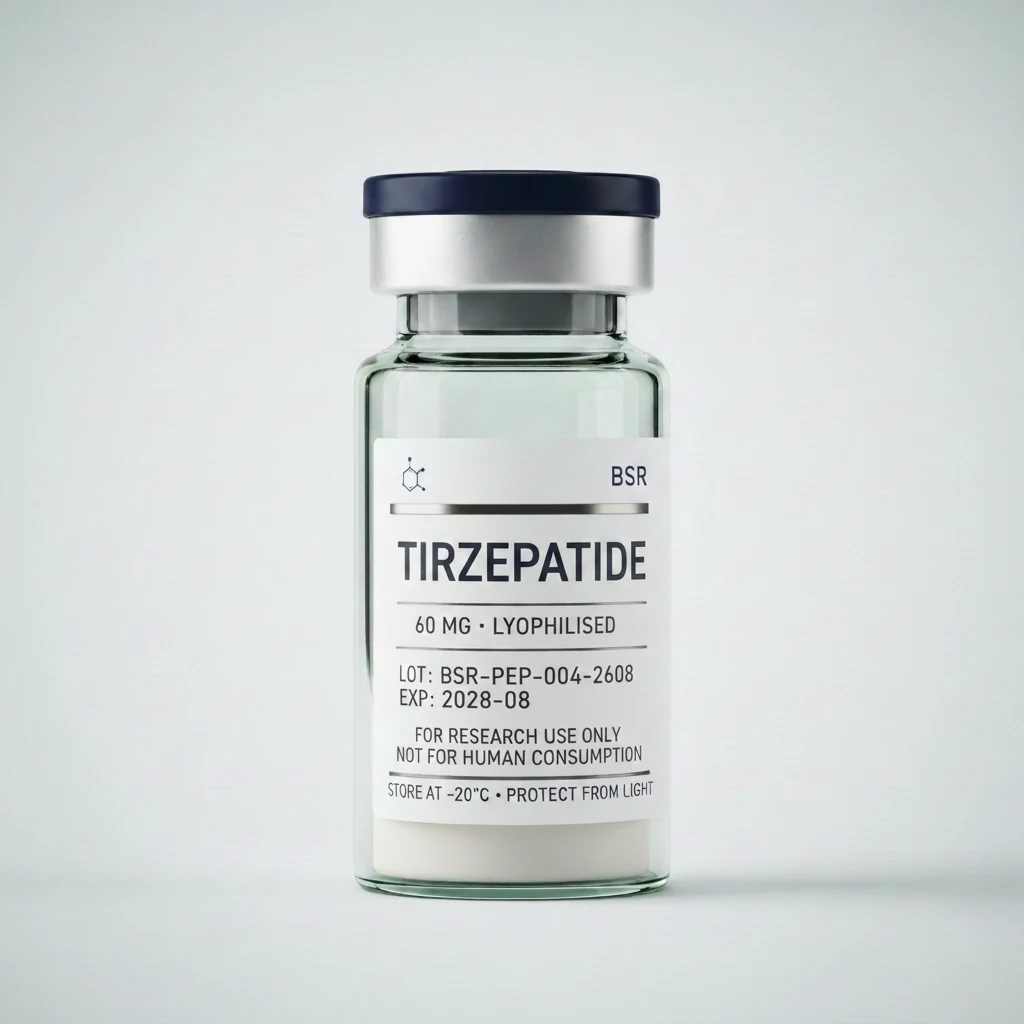
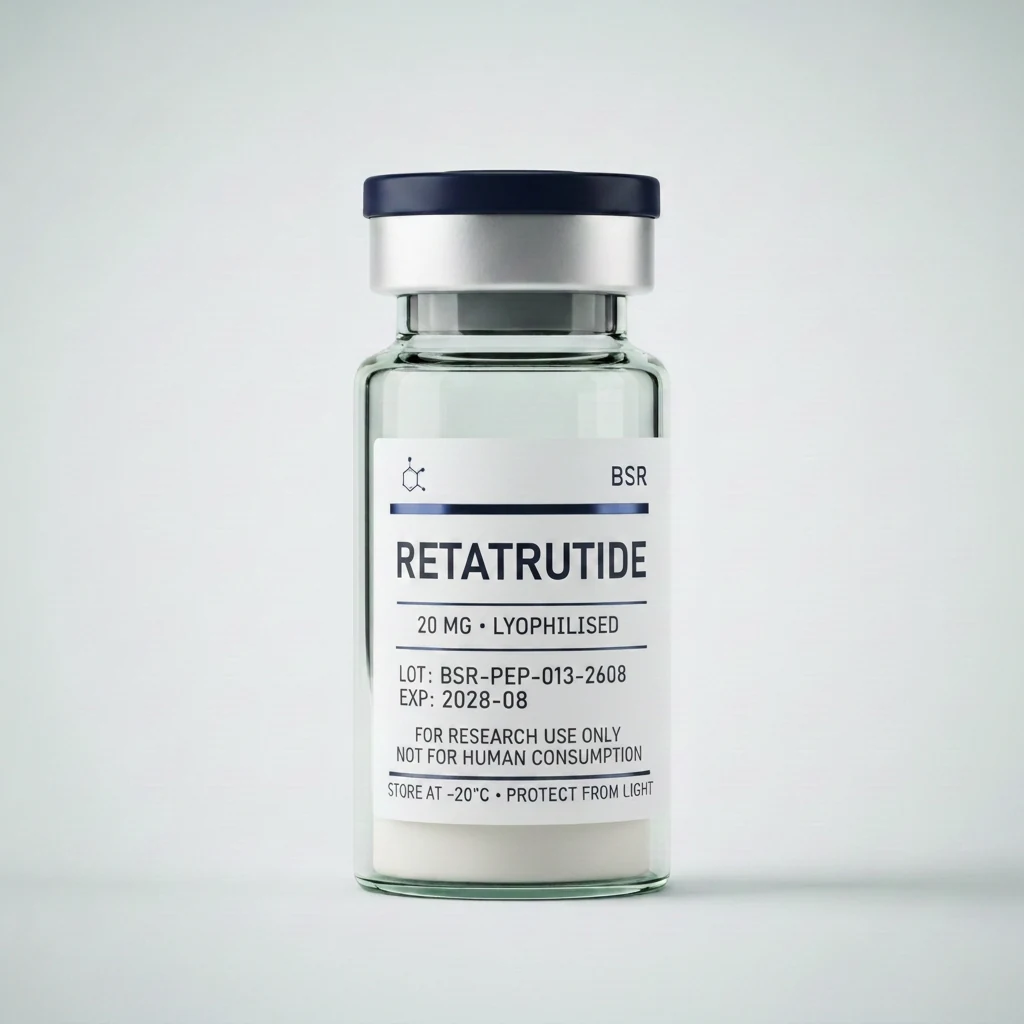
Research-grade material, HPLC verified, certificate of analysis with every order.
The week's Intelligence in one email, every Friday morning.
Regulatory moves, trial readouts, supply-chain news. No product pitches. Unsubscribe in one click.
More in Research Pipeline
STEP Young Phase 3 Results: Semaglutide Reduces BMI in Children Aged 6 to Under 12, but Regulatory and Safety Questions Remain Open
26 Nov 2026
Muscle Loss and Joint Pain: Two November Phase 3 Publications Reframe the Musculoskeletal Profile of GLP-1 and Incretin Peptide Therapy
24 Nov 2026
Avexitide Phase 3 LUCIDITY Results and the FDA's Class-Wide NAION Warning: What GLP-1 Receptor Pharmacology Looks Like in Both Directions
21 Nov 2026