Regulatory & Policy · 10 Nov 2026
FDA Mandates Class-Wide NAION Warning for All GLP-1 Receptor Agonists: What the Labelling Change Means for Research and Procurement
The FDA has required all GLP-1 receptor agonist manufacturers — including Novo Nordisk and Eli Lilly — to add a warning about non-arteritic anterior ischemic optic neuropathy (NAION) to their product labelling, following a meta-analysis of 126 clinical trials and two years of accumulating real-world evidence. The action extends a signal first identified with semaglutide to the entire class, including orforglipron.
11 sources cited
Key takeaways
- The FDA issued a Drug Safety Communication on 9 November 2026 requiring all GLP-1 receptor agonist (GLP-1 RA) manufacturers to add information about non-arteritic anterior ischemic optic neuropathy (NAION) to the Warnings and Precautions section of their product labelling.
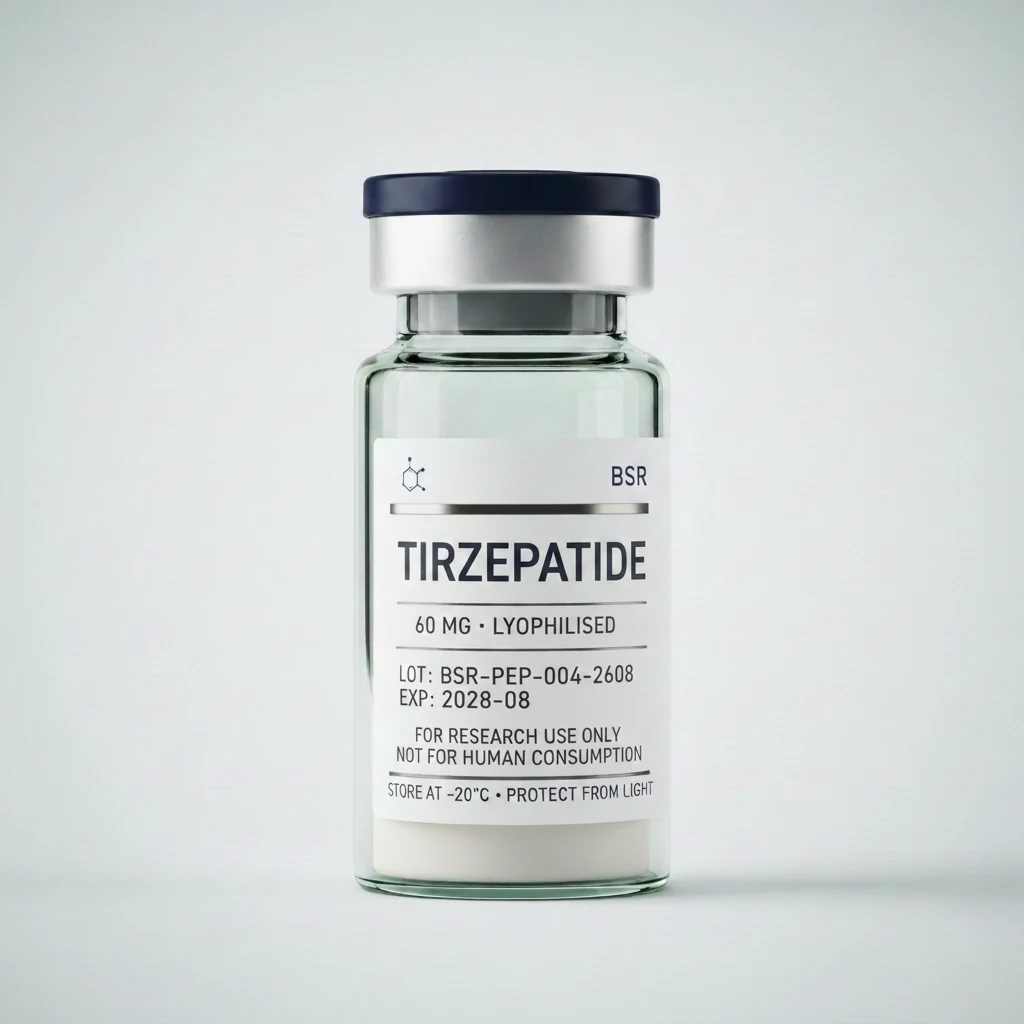
- The requirement applies to twelve approved products, spanning semaglutide, tirzepatide, liraglutide, dulaglutide, exenatide, and orforglipron (Foundayo).
- The FDA's decision rested on a meta-analysis of 126 randomised clinical trials and a body of published observational studies; the evidence is consistent in direction but mixed in magnitude.
- Novo Nordisk has stated publicly that it does not believe the data establish a causal relationship, a position analysts broadly share; Citi's view is that the action is "likely to attract attention but should have limited impact on GLP-1 uptake."
- UK research procurement teams sourcing GLP-1 peptide reference standards or in-vitro assay reagents should note that the labelling change reshapes clinical prescribing context and may affect future institutional risk assessments of GLP-1 related compounds.
Background: what is NAION?
Non-arteritic anterior ischemic optic neuropathy is a vascular condition in which perfusion to the optic nerve head is acutely reduced, resulting in sudden, painless, unilateral vision loss that may be permanent. The FDA describes NAION as a rare condition that can produce acute, painless, decreased vision in one eye, including permanent vision loss. Background incidence in the general population is estimated at 2.3 to 10.2 cases per 100,000 adults older than 50 years, according to Medscape's coverage of the FDA communication.
Established risk factors for NAION include hypertension, diabetes, sleep apnoea, tobacco use, anaemia, and kidney disease — conditions that are overrepresented in the GLP-1 RA treatment population. The FDA lists smoking, diabetes, high blood pressure, sleep apnoea, anaemia, and kidney disease as potential risk factors. This comorbidity overlap has been a central methodological challenge throughout the research literature.
The evidence base: from a semaglutide signal to class-wide action
The regulatory action traces to a 2024 study published in JAMA Ophthalmology that compared NAION risk in 16,827 patients. The study found a substantially elevated hazard ratio for NAION among patients prescribed semaglutide versus those receiving non-GLP-1 RA medications for diabetes (HR 4.28; 95% CI, 1.62–11.29) and a higher hazard ratio in the obesity subgroup (HR 7.64; 95% CI, 2.21–26.36). The authors noted that future study was required to assess causality.
Subsequent larger analyses produced more modest, though still directionally consistent, findings. A large multicenter study spanning 37.1 million adults with type 2 diabetes across 14 databases found "a small increase in the relative incidence of NAION from exposure to semaglutide compared with nonexposure," characterising the risk as smaller than that previously reported. A US veterans cohort study published in JAMA Ophthalmology found that semaglutide initiators had a 2.33-fold higher risk of incident NAION compared with SGLT-2 inhibitor initiators (HR 2.33; 95% CI, 1.54–3.54) over a median follow-up of 2.1 years, while noting the absolute risk remained low. Conversely, at least one large multinational population-based study found semaglutide was not associated with an increased risk of NAION compared with non-GLP-1 RA users, illustrating the genuine uncertainty in the literature.
Faced with this mixed picture, the FDA conducted its own meta-analysis. The agency reviewed 126 randomised clinical trials including 134,253 participants, of whom 78,217 received a GLP-1 RA, and identified 15 probable NAION events. From this, the risk was estimated at approximately 6.4 NAION cases per 100,000 person-years with GLP-1s, versus 3.8 per 100,000 person-years with placebo or other glucose-lowering medications. Notably, the FDA's real-world analysis found no statistically significant increase in risk when GLP-1 RAs were compared with SGLT-2 inhibitors (HR 1.19; 95% CI, 0.91–1.54), though an elevated risk was found versus DPP-4 inhibitors.
The FDA also noted a postmarketing dimension: NAION cases have been reported for all currently marketed GLP-1 RA products through surveillance reporting. It is this combination of clinical trial meta-analysis, observational study consistency, and spontaneous adverse event reports that informed the class-wide decision.
Scope of the labelling requirement
The FDA is requiring application holders for all GLP-1 RA medications to add information to the Warnings and Precautions section of labelling about the potential increased risk of NAION. The labelling requirement applies to: exenatide; liraglutide (Victoza, Saxenda); liraglutide plus insulin degludec (Xultophy); dulaglutide (Trulicity); lixisenatide plus insulin glargine (Soliqua); semaglutide (Ozempic, Rybelsus, Wegovy); tirzepatide (Mounjaro, Zepbound); and orforglipron (Foundayo).
This regulatory change is based on an FDA assessment launched after the 2024 study published in JAMA Ophthalmology found an association between semaglutide and higher risk of NAION, and extends the labelling requirement beyond semaglutide to all marketed GLP-1 RA products. The breadth of the action is notable: it encompasses the newest approved agent in the class — orforglipron, a small-molecule oral GLP-1 RA — alongside established injectable and oral formulations.
The FDA's clinical guidance accompanying the labelling change is specific. Clinicians are advised that if NAION is suspected, they should promptly refer the patient to an ophthalmologist, and should consider discontinuing the GLP-1 RA unless the benefits of treatment clearly outweigh the risk. Patients with a history of NAION are at increased risk of recurrence in the fellow eye, and this history should be part of prescribing assessment. The FDA is additionally encouraging clinicians to report NAION cases associated with GLP-1 RAs through its MedWatch programme.
Manufacturer and analyst responses
Novo Nordisk stated that it "continues to believe the data do not establish a cause-and-effect relationship, and we remain confident in the benefit-risk profile of our GLP-1 medicines". This position reflects the genuine scientific uncertainty: no mechanism has been confirmed by which GLP-1 receptor activation would consistently reduce perfusion to the optic nerve head, and several large population-based studies have failed to replicate the high hazard ratios seen in earlier clinic-based cohorts.
Commercially, Citi analysts characterised the FDA's class-wide labelling action as "likely to attract attention but should have limited impact on GLP-1 uptake", pointing to the rarity of the absolute event rate and the established cardiovascular, glycaemic, renal, and sleep apnoea benefits of the drug class. That view is broadly consistent with how the clinical community has treated NAION in the context of risk-benefit discussions for other systemic treatments.
Implications for UK research procurement
The immediate operational impact of the FDA's action on UK research laboratories will be limited: GLP-1 peptide compounds used in research settings are procured as reference standards and tool compounds, not as labelled medicines subject to US pharmaceutical product requirements. However, the development is relevant to procurement professionals on several grounds.
First, the labelling change may accelerate MHRA attention to the same signal. The MHRA typically reviews FDA Drug Safety Communications promptly and may issue its own guidance for UK-licensed GLP-1 products (Wegovy, Ozempic, Rybelsus, Mounjaro) or update UK Summary of Product Characteristics documents, which could affect institutional risk governance frameworks.
Second, GLP-1 receptor agonist compounds are increasingly used as in-vitro research tools in metabolic disease and appetite regulation studies. Any shift in the clinical liability environment tends to prompt tighter documentation requirements from institutional review boards and procurement offices for related research materials.
Third, the action illustrates a broader pattern relevant to any peptide used in research: even a well-characterised class of approved molecules can generate late-emerging safety signals detectable only through large-scale postmarketing surveillance and meta-analysis. This underscores the importance of robust adverse event reporting infrastructure and the value of sourcing research peptides from suppliers who maintain current certificates of analysis and lot-specific purity data.
Procurement teams should monitor the MHRA's Yellow Card scheme and any forthcoming updated product information for licensed GLP-1 RA medicines in the UK for guidance on whether any parallel domestic labelling requirement follows.
Sources
- FDA Drug Safety Communication — NAION and GLP-1 RAs (Drugs.com / FDA, 9 November 2026)
- Pharmacy Times — FDA Requires Class-Wide GLP-1 RA Labelling Changes (9 November 2026)
- Medscape — FDA Requires GLP-1 Labels to Add Rare Eye Condition Risk (9 November 2026)
- CNBC — FDA warns of vision loss risk linked to popular GLP-1 drugs (10 November 2026)
- BioSpace — FDA orders class-wide GLP-1 label update (9 November 2026)
- Pharmacally — FDA Requires Class-Wide NAION Warning (10 November 2026)
- Endocrine News — FDA Safety Labelling Changes for GLP-1 RAs (9 November 2026)
- JAMA Ophthalmology — Risk of NAION in Patients Prescribed Semaglutide (Hathaway et al., 2024)
- JAMA Ophthalmology — Semaglutide and NAION in 37.1 million adults (2025)
- JAMA Ophthalmology — NAION in US Veterans with T2D (2026)
- American Journal of Ophthalmology — No NAION risk difference in semaglutide vs matched controls (2025)
Research-grade material, HPLC verified, certificate of analysis with every order.
The week's Intelligence in one email, every Friday morning.
Regulatory moves, trial readouts, supply-chain news. No product pitches. Unsubscribe in one click.
More in Regulatory & Policy
First Commercial Pharmacy Secures API Supply for All Six PCAC Peptides: What the Corexa Health Announcement Means for Research Procurement
02 Nov 2026
HHS Issues Enforcement Discretion Policy for Six Peptides: What the 28 October Announcement Means for Research Procurement
29 Oct 2026
Safety Group Challenges PCAC Integrity as Peptide Access Policy Sits at the White House: What the PSM Citizen Petition Means for the Regulatory Outlook
25 Oct 2026