Research Pipeline · 11 Nov 2026
Retatrutide Phase 3 Data: What TRIUMPH-4 and TRIUMPH-1-OA Mean for the Triple-Agonist GLP-1 Pipeline
Phase 3 trials of Eli Lilly's investigational triple agonist retatrutide, presented at ACR Convergence 2026 and simultaneously published in the New England Journal of Medicine, show significant reductions in knee osteoarthritis pain alongside substantial weight loss. With a biologics licence application targeted for Q1 2027, the compound represents the most advanced triple-agonist peptide in the obesity and musculoskeletal pipeline.
14 sources cited
Key takeaways
- Two Phase 3 trials — TRIUMPH-4 (68 weeks) and TRIUMPH-1-OA (80 weeks) — demonstrated that once-weekly retatrutide produced significant, clinically meaningful reductions in knee osteoarthritis pain and body weight versus placebo.
- Results were presented in plenary and poster sessions at ACR Convergence 2026 in Orlando (6–11 November) and published simultaneously in the New England Journal of Medicine on 8 November 2026.
- Retatrutide remains investigational; Eli Lilly has targeted a Biologics Licence Application (BLA) submission to the FDA in Q1 2027, putting a potential approval decision no earlier than late 2027.
- Adverse events were predominantly mild-to-moderate gastrointestinal effects; dysaesthesia was recorded at a higher rate than placebo and warrants monitoring in future trials.
- For UK research procurement teams, retatrutide is unavailable as an approved product in any jurisdiction; research-use supply chains remain at an early stage, and no MHRA-authorised indication exists.
Background: What Is Retatrutide?
Retatrutide is a triple agonist of the glucose-dependent insulinotropic polypeptide (GIP), glucagon-like peptide-1 (GLP-1), and glucagon receptors. This triple mechanism distinguishes it from approved incretin-based therapies: semaglutide targets only GLP-1 receptors, and tirzepatide targets two. By simultaneously activating all three receptor pathways, retatrutide is designed to produce greater reductions in energy intake and body weight, while also exerting direct anti-inflammatory and cartilage-protective effects that researchers hypothesise may be relevant in osteoarthritis, independent of weight loss alone.
The initial TRIUMPH Phase 3 global registrational clinical development programme is evaluating the safety and efficacy of retatrutide for the treatment of obesity and overweight, obstructive sleep apnoea, and knee osteoarthritis in people with obesity and overweight across four global registrational trials. The TRIUMPH programme includes five doses of retatrutide: 2 mg, 4 mg, 6 mg, 9 mg, and 12 mg.
TRIUMPH-4: 68-Week Phase 3 Randomised Controlled Trial
TRIUMPH-4 (NCT05931367) is a Phase 3, randomised, double-blind, placebo-controlled trial that enrolled adults with painful knee osteoarthritis (WOMAC Pain subscale score ≥4 and ≤9 on a numeric rating scale of 0–10, indicating moderate to severe pain) and obesity or overweight. Participants were randomised 1:1:1 to receive retatrutide 9 mg, retatrutide 12 mg, or placebo subcutaneously once weekly for 68 weeks.
Overall, 445 participants were randomised to retatrutide 9 mg (n=148), retatrutide 12 mg (n=148), or placebo (n=149).
On the primary endpoint, retatrutide demonstrated a reduction in knee osteoarthritis pain by up to an average of 4.5 points (75.8%) from a baseline average of 6.0 on the WOMAC pain subscale over 68 weeks. On body weight, participants with obesity and knee osteoarthritis taking retatrutide 12 mg lost an average of 28.7% of their body weight at 68 weeks.
In this randomised controlled trial of people with painful knee osteoarthritis and obesity or overweight, retatrutide treatment led to significant and clinically meaningful improvements in body weight and knee osteoarthritis pain compared with placebo.
TRIUMPH-1-OA: 80-Week Phase 3 Basket Trial
This 80-week, Phase 3, multinational, randomised, double-blind, placebo-controlled basket trial of three doses of once-weekly subcutaneous retatrutide (4, 9, or 12 mg) enrolled and randomised adults (1:1:1:1) with painful knee osteoarthritis (WOMAC Pain subscale score ≥4) and obesity or overweight.
Baseline demographics and clinical characteristics were balanced among the 574 randomised participants, with a mean age of 56.1 years, 75.8% female, mean WOMAC Pain subscale score of 5.97, and mean body weight of 112.5 kg.
Across all three active doses, the primary endpoint was met with high statistical significance. The primary endpoint for mean change in WOMAC Pain subscale score was −3.66 (retatrutide 4 mg), −4.19 (retatrutide 9 mg), −4.30 (retatrutide 12 mg), and −2.24 with placebo; p<0.001 for all retatrutide arms versus placebo.
In a pooled analysis, 63.2% to 69.6% of retatrutide-treated participants achieved at least a 50% reduction in WOMAC pain at week 68, compared with 37.8% with placebo.
Percentage body weight loss, a secondary outcome in this trial, ranged from 18.6% to 28.7% with retatrutide compared with 1.5% with placebo at week 80.
The TRIUMPH-1-OA basket trial demonstrated significant and substantially reduced pain sustained to week 80 and clinically meaningful weight reduction in participants treated with 4, 9, or 12 mg of retatrutide compared with placebo in people with painful knee osteoarthritis and obesity.
Adverse Event Profile
The most common adverse events were mild to moderate gastrointestinal events. This profile is consistent with the GLP-1 receptor agonist class. Of greater note, dysaesthesia occurred in 8.8% and 20.9% of the retatrutide groups, compared with 0.7% with placebo. The dose-dependent rate of dysaesthesia — an abnormal skin sensation — is a signal that investigators will need to characterise further in longer-term follow-up and in the broader indication programme. Its mechanism in the context of glucagon receptor activation is not yet established.
Publication and Peer Review
The results were published on 8 November 2026, in the New England Journal of Medicine and presented at ACR Convergence 2026, held 6–11 November in Orlando, Florida. Philip G. Conaghan presented results from TRIUMPH-4 on 8 November 2026, and the TRIUMPH-1-OA data on 10 November 2026, both at the American College of Rheumatology 2026 Annual Meeting. Conaghan, who leads the NIHR Leeds Biomedical Research Centre and holds a chair in musculoskeletal medicine at the University of Leeds, is among the principal investigators, lending the presentation particular relevance to the UK research community.
Regulatory Status and Approval Timeline
Retatrutide is not currently approved by the FDA or any regulatory agency worldwide. Lilly has targeted a BLA submission in Q1 2027, having earlier guided to a 2026 filing before pushing it back to complete manufacturing data. Counting from a Q1 2027 filing, that puts a decision between roughly late 2027 and mid-2028.
As of November 2026, the FDA again confirmed retatrutide is not classified as a biologic, though the submission is still planned for Q1 2027.
No MHRA-authorised indication exists for retatrutide in the United Kingdom, and no EMA marketing authorisation application has been announced to date. Research teams in the UK procuring GLP-1 compounds for preclinical or in vitro work should note that retatrutide sits firmly in the investigational category, with no approved formulation, no licensed manufacturer for clinical supply outside Lilly's own network, and no compounding pathway under MHRA guidelines.
Context: The GLP-1 Pipeline and Competitive Landscape
The TRIUMPH data further differentiate retatrutide from both semaglutide and tirzepatide in the osteoarthritis indication. The trials follow the Phase 3 STEP 9 trial, in which semaglutide reduced knee osteoarthritis pain in persons with obesity. Retatrutide's weight loss magnitude in Phase 3 — up to 28.7% at 80 weeks — has not been matched by any approved agent to date.
Late-stage multi-agonist candidates, including retatrutide and CagriSema, could further reshape treatment standards. For research procurement teams, the evolving pipeline means demand for reference standards, analytical comparators, and research-grade GLP-1 agonist peptides is likely to intensify over the next 12 to 18 months as multiple NDA and BLA filings converge on the FDA calendar.
Procurement Considerations for UK Research Laboratories
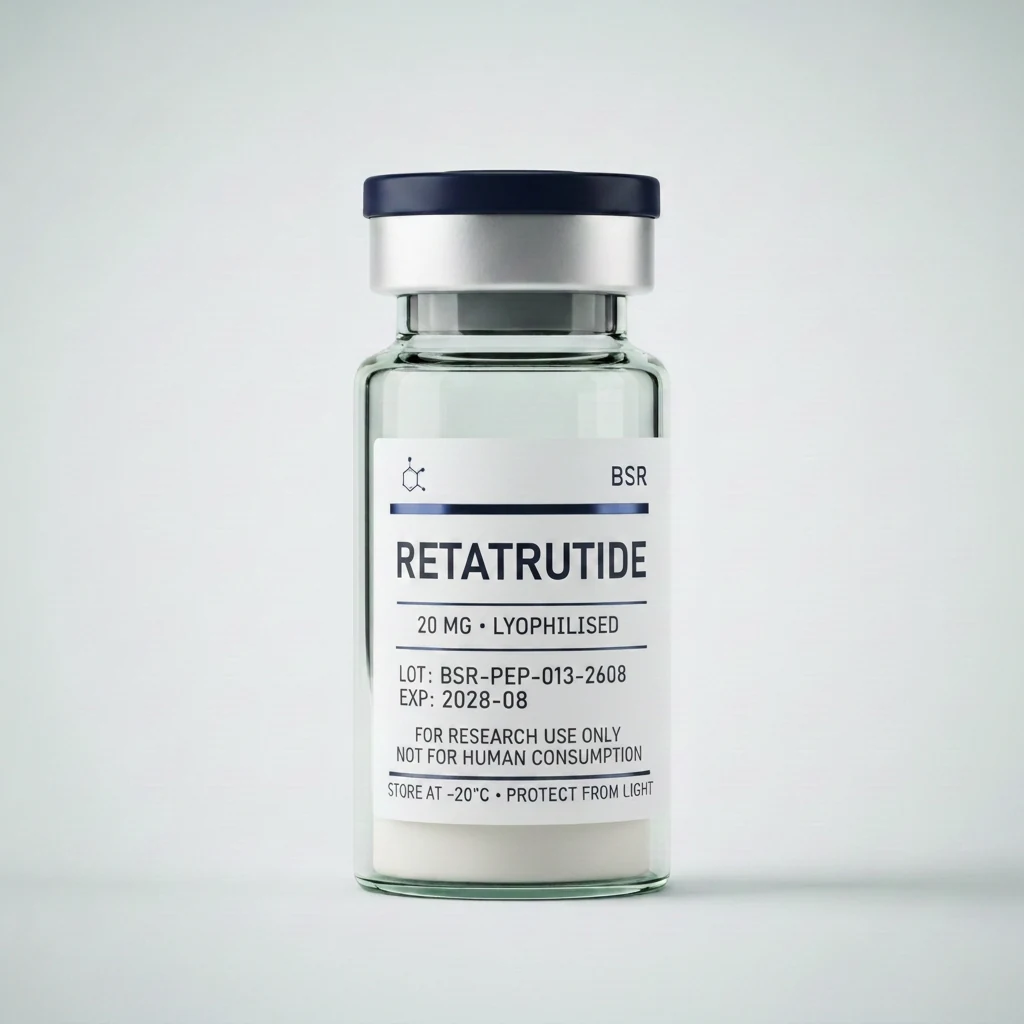
Research-grade retatrutide is currently available from a small number of specialist peptide manufacturers as a custom-synthesised compound for in vitro and animal model studies, subject to the standard research-use-only declarations and appropriate institutional governance. Procurement teams should verify:
- Purity and characterisation: Given retatrutide's complexity as a 39-amino acid peptide with a C18 fatty acid chain, HPLC purity ≥98% and mass spectrometry confirmation of molecular weight are the minimum credible quality criteria.
- Regulatory classification: In the UK, retatrutide has no current marketing authorisation and no approved active pharmaceutical ingredient status. It falls outside the MHRA's unlicensed specials regime for clinical use; institutional ethics approval and research licensing are required for in vivo work.
- Supply chain volatility: As Lilly approaches the BLA filing window, attention from compounding pharmacies — particularly in the United States, where the HHS enforcement discretion policy now covers six other peptides but not retatrutide — could affect availability and pricing of related GLP-1 reference compounds.
The TRIUMPH readouts mark a significant milestone in the evidence base for triple-agonist peptides. Research teams tracking the GLP-1 agonist space should log the Q1 2027 BLA filing date as a key procurement planning horizon.
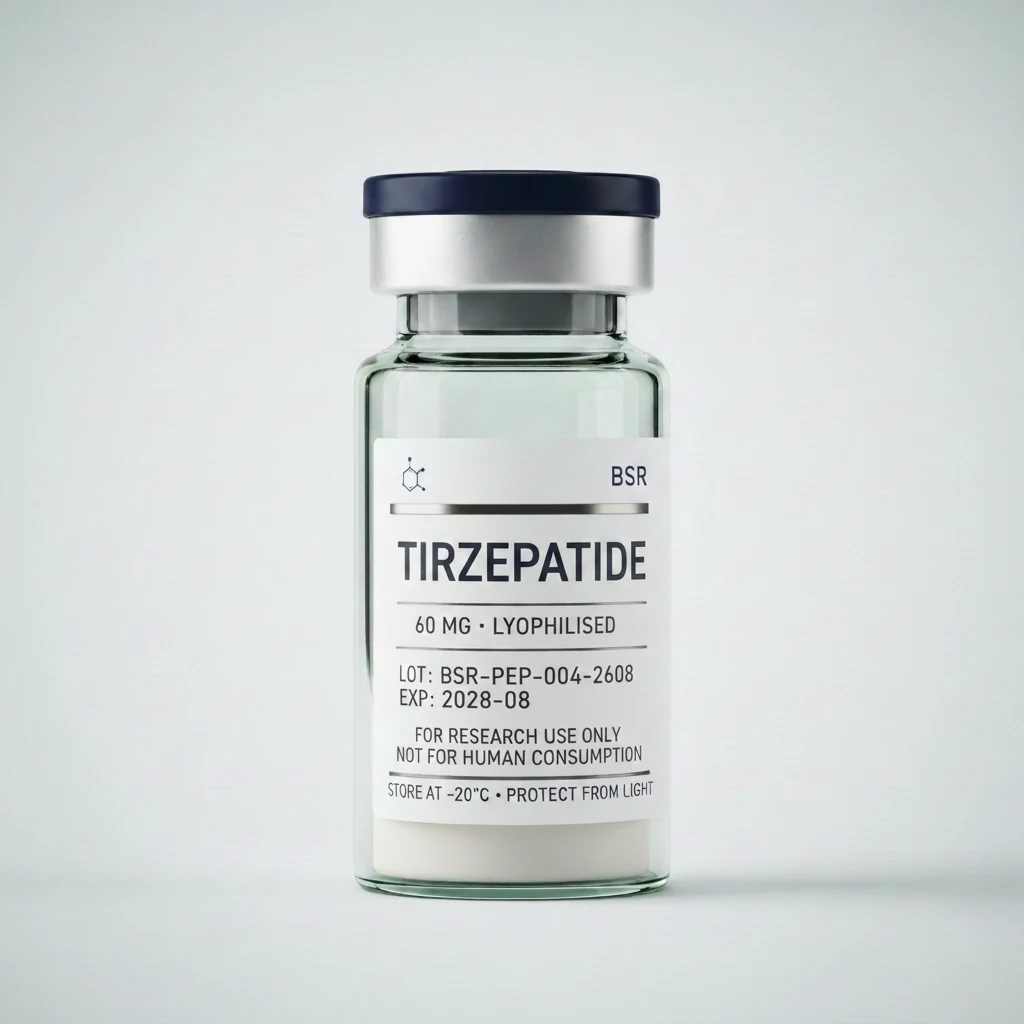
Research-grade material, HPLC verified, certificate of analysis with every order.
The week's Intelligence in one email, every Friday morning.
Regulatory moves, trial readouts, supply-chain news. No product pitches. Unsubscribe in one click.
More in Research Pipeline
BPC-157: Evidence Base, Regulatory Status, and Procurement Considerations for UK Research Laboratories
07 Nov 2026
Thymosin Alpha-1: Mechanism, Clinical Evidence, and Regulatory Status for UK Research Procurement
03 Nov 2026
GHK-Cu: Evidence Base, Regulatory Status, and Procurement Considerations for UK Research Laboratories
01 Nov 2026